

Maintaining Sustainability In The Pet Industry With Allison Reser Hamburger

We may not think much about our pets' carbon footprint because they are just small and innocent creatures, but they also have a significant collective impact on the health of the planet. Christine Yeager sheds light on how the entire pet industry can make better choices to build a more sustainable future with Allison Reser Hamburger, Director of Sustainability & Innovation at the Pet Sustainability Coalition (PSC). Together, they discuss what it takes to improve ingredient sourcing and packaging in pet food and products, even if it requires a huge amount of compromise from companies and corporations. Allison also explores how to solve the disconnect between public values and industry actions, often caused by powerful forces like capitalism, materialism, and short-sightedness.
---
Watch the episode here
Listen to the podcast here
Maintaining Sustainability In The Pet Industry With Allison Reser Hamburger
I’m super excited for our guest. Her name is Allison, and she is the Director of Sustainability and Innovation at the Pet Sustainability Coalition. There, she leads climate action, packaging, and responsible sourcing initiatives that directly influence how pet food brands operationalize sustainability across their value chains.
With over a decade of experience and a Master’s degree in Sustainability Management from Columbia University, she sits at the intersection of brand ambition and the hard constraints of cost, infrastructure, and evolving regulation. The uncomfortable truth in the pet industry is that good intentions around packaging and sourcing don’t survive contact with fragmented recycling systems, rising material costs, and increasing EPR pressure. Someone has to translate commitments into execution.
Alison works with companies that are staring down that reality and asking what it takes to move from pledges to measurable change. She’s here to help the pet industry navigate the shift from sustainability as a membership benefit to sustainability as a market signal, where packaging decisions, climate strategy, and EPR readiness become competitive requirements and not optional add-ons.
How Allison Lives With Intention
Welcome to the show, Allison. Thank you for being here. I’m super excited to dig into this conversation. You and I are going to meet in person in at The Pet Summit, which is a conference that will be in Orlando. In preparation for that, I am super excited to dive a little bit more into what sustainability means in the pet industry. I do have a pet and always have had a pet. She’s laying on the floor next to me. I’m personally excited to hear about this as well. We always like to start with, how does Allison live with intention?
First, thank you so much for having this conversation with me. I’m also very excited for the Pet Summit coming up in March 2026. I also have been a forever pet lover. My cat is not here with me in the office. She would hate it, but she’s happy at home. I love the question about how I live with intention because I try to live with intention. One story I would love to share is that I got married not long ago.
Congratulations.
Thank you. It was this space that I was able to create with my now-husband that was the most intentional space I’ve ever been in. I felt this intense feeling of presence. I was reflecting on how we created that space and how there are similarities between that very personal experience with my career. There are two things that jumped out at me right away.
The first one is about making it a team effort, asking for help, and learning from others. For me, being intentional about my work means that I need to work with other people. It needs to be collaborative to address big worldly problems. We need to be learning from each other and growing with each other. The second thing is always coming back to the why and staying grounded in that.
For my wedding, that was an important part of the planning process because it’s easy to get lost in the logistics, the menu, and all of this. We had some touchpoints along the way that were like, “Why are we doing this?” In crafting our vows and whatnot. Similarly, in my profession, that’s important. If I’m going through my emails or something that’s not super exciting or compelling. There is a connection back to the why. I can say, “I’m sending this email, but we’re talking about a company’s climate strategy.” Reminding myself of the big picture has been important for staying intentional.
What Sustainability Means In The Pet Industry
That’s great. That’s a great reminder about the why. When I was getting married, it was always like, “As long as we have the marriage certificate and somebody to marry us, we’re fine.” Back to the basics. To your point, why are you even doing this when it gets stressful? Wedding planning definitely gets stressful. Can you give the audience a little rundown of what sustainability means in the pet industry?
I’ll start by admitting that I didn’t think about the sustainability of my cat until I joined the Pet Sustainability Coalition. I have been an avid recycler. It’s part of my lifestyle as a human. As I’ve joined the pet industry, I learned that there are a lot of opportunities for us to make sustainable choices for our pets. That’s what PSE’s mission is. It’s a sustainable future where every choice for pets supports a thriving planet.
I love that because it means that as a pet owner, you wouldn’t have to do any mental calculation about like, “I need to feed my pets something that’s healthy, but I also want to include it in my values of sustainability. How do I balance that with costs?” We’re working towards a future where those pet products don’t harm the planet.
What that means a lot of times is ingredient sourcing. The food that we feed our pets is probably their biggest environmental impact. Being mindful of protein sources, feeding the right amount, and all of that is a key factor of sustainability in this industry. Packaging is important as well. All of the pet food and products come in packaging. Making sure that that can be part of a circular economy is something we focus on. Also, the way that companies in this industry are governed is important as well.
It isn’t natural for some reason to think about the carbon footprint of your pet.
It’s because they’re so small.
At the same time, it’s also very natural to connect your pet’s health with the health of the earth. You work with brands that publicly care about animals, nature, and well-being. I know you’ve also noticed that system-level change can feel very painfully slow. Not just in the pet industry, but in general. Where do you see the biggest disconnect between what individuals say they value? How the industry as a whole is behaving?
It’s a big question. It bothers me, to be honest with you. I believe that most people, both with pets and running companies, are good people who are living out their values. A lot of people have values of love for nature, love for animals, and love for the planet. They want to take care of things in their life. However, at the same time, when we look at what is happening on a societal level, I would call it a pandemic of selfishness and short-sightedness.
People have this value of nature but do not act on it because we are up against powerful forces like capitalism and materialism.
I’m not calling out any one company, but at scale, it seems like there is a lack of respect for life on earth, to say it bluntly. I find that painful. This is not connected directly to the pet industry, but I watched the 2025 documentary with David Attenborough called Ocean. It left me with this feeling of how do we allow so much death and destruction to keep happening?
I know it’s the point of a documentary to make you feel emotions. I am a sucker for these nature documentaries. They always get me. The image that sticks with me from that particular documentary is this stingray that’s swimming as fast as it can to try to get out of this massive bottom trawling net. It breaks my heart because that stingray was living its stingray life, and it died because we need to eat fish out of the ocean.
It’s complicated because we need food. Death has to come from us eating food from some level, but we can do it in a way that is respectful and continues to sustain life for the future. That’s what I find confusing. People have this value of nature, but we don’t act on that in a lot of choices for society. That’s because we’re up against powerful forces like capitalism, materialism, convenience, and power. I will stop by saying that sometimes, those good, positive values do come through. New wildlife areas are being protected and created.
One very small thing I do at PSC is that we lead a sustainability one-on-one training for our members, where I talk to pet industry professionals about what they need to know about sustainability. I always start those sessions with a question of, “What do you care about?” I hope that gives these pet industry professionals a connection to why what they’re doing for sustainability isn’t just a thing on their job description. It probably does connect back to some value that they have.
It’s true. I always joke that sustainability topics aren’t lacking passion. They’re lacking scale usually to make it easy to make these choices for the earth. Almost everyone has some type of passion for either their own piece of dirt around their house or something else more meaningful. Usually, people have something that they care about related to the environment.

Well said. My favorite part of my job is that I get to work with so many people who bring so much passion for this work into their jobs. I can see them making the difference and inching towards having that respect and continued life on earth.
Living During Colorado’s Most Disruptive Climate Season Yet
We are both based in Colorado, which I didn’t know until we were doing the prep work. For those that don’t live here, can you share a little bit about how the winter is hitting differently for folks and how climate change doesn’t feel theoretical during the winter? Also, can you share about how living through this very visible climate disruption is changing the way you show up at work? Also, maybe share a little bit about grief, fear, anger, and any of these emotions that it’s stirring up.
I want to start by acknowledging that what we’re experiencing in Colorado is scary and bad. I’ll talk about what’s happening. I also know that other people have experienced much more extreme climate disruption. It’s sad. I’m sorry if that has happened to anyone tuning into this show. What’s happening in Colorado is that we’re having the warmest winter on record, ever. We also have extremely low snowpacks. It’s a bleak outlook for our summer.
Some of the things that have happened in December are that we had extreme fire danger. My electricity was cut off in case a power line went down and it would immediately start a fire. That was an apocalyptic experience. Also, the fact that it happened in December when it’s supposed to be cold, snowy, and wet. It’s upsetting. The snowpack also matters, not just for the ski industry. Colorado is a headwater State. California, Arizona, and all of those states that are downstream from us. We’ll have less water coming at them from the mountains of Colorado.
It also matters for wildlife. The pika is my favorite animal. I could talk about pikas for a long time. They live in the high mountains. They rely on snowpacks to insulate them. They don’t hibernate. They stay awake during the winter. They are in little snow caves that keep them warm. If there’s not enough snow, they can’t stay warm enough. It’s very sad to think about them not having enough snow to keep warm. On a personal note, I love winter. I love it being cold and snowy. It feels like summer here in Colorado. People are wearing T-shirts and shorts. It’s depressing.
On most days, I can approach my work logically. I know that we are facing extreme consequences of climate change, and I know that our people have already suffered. They’ve already lost their homes. That’s part of what fuels my work, but this winter is bringing a heaviness to my work every day. Logic is still going, but also, my situation and experiencing this disruption is very front of mind.
Mourn is the right word for the lack of snow. I am a skier, and I’m sad about that. I’m also very afraid of our fire risk this summer. Do we have enough water? I’m sad that this is happening. I’m sad that I can’t snap my fingers, turn on winter, and fix our problems. There’s anger brewing around there, too. Why have we not already fixed this? We’d have known about this for so long. Why are we still dealing with it? It exposes this emotional underside to this work that I feel strongly is underacknowledged in the industry.
I studied sustainability in school, and never once in any of my classes did a professor check in on how people are feeling about this work. I also believe that if we accept and bring forward our feelings of mourning, fear, sadness, and anger, we’d probably be more effective in this work. A quick shout-out to the group called the Good Grief Network. They’re an organization that is tackling this emotional side of climate change. I recommend looking into their resources.
That’s great. For context, the base of Breckenridge has half the amount of snowpack that they normally do by this time of 2026. The amount of snow is very low. To your point, in casual conversation, it’s all about like, “Skiing sucks in 2026.” For most of us thinking about climate change, it’s fires. I live next to a big field that is next to an open space that is already dry in the summer. There are no trees or anything. It’s a plateau. If something catches fire, it’s going to go up very quickly. It’s all grasslands.
I’ve been working hard on my backyard since I moved here to turn it into something from this book I read called Soil: The Story of a Black Mother’s Garden. She called it her prairie project. She lives in Colorado Springs. It’s a great book. I’ve been working on my own prairie project, trying to put native grasses in the ground and put more plants in the backyard to retain water there. It’s downhill, so all the water runs down to the street. I’m trying to catch it more so that I can be less afraid of my house burning down.
It sounds like you’re being very intentional with your garden. That’s awesome.
I am. I have killed a lot of things, don’t get me wrong. I am not very good at it, but I am trying. I hadn’t heard of the Good Grief Network, so thanks for bringing up that resource. I do know a lot of sustainability professionals often will try to come together and talk about this, and trying to build a community. If you sit in crushing fear of what’s happening, it makes the work hard. It already feels like heavy boulders on a steep hill. If you sit in, “We’re not moving fast enough,” then it can be immobilizing. To your point, you have to lift your head up every once in a while, and also recognize the successes.
The power shutdown situation happened throughout all of Jefferson County, also, which is where I live. The power company was sued because the wind came. It knocked over a power line and started a fire. The power company was sued in Colorado and in California. Their response to that is, “Let’s proactively shut off the power in winter for three days.”
They brought it back and then shut it off again. This was the last week before school was out. Kids didn’t go to school for 3 or 4 days. It was very disruptive. Can they do that every time? Probably not. Is that the right solution? I don’t know. There were a lot of downed power lines, so there could have been a fire that started if they hadn’t.
It’s such a game of trade-offs. I wish I could be a fly on the wall or somehow understand the decision-making behind those utility companies. If a fire were started, it would be more inconvenient than not having power for three days, but we need power. There are consequences for not having electricity for three days.
Maybe they’ll bury the lines. We’ll see. That’s also a big expense.
It costs money.
Encourage us all to bury the lines. Speculative. Let’s get to something a little more exciting and positive.
I’m ready.
Navigating The Frictions That Come With Circularity
Maybe it’s only exciting for me because I love circularity. The pet industry has a unique circularity story. There’s upcycling, whole animal utilization, and byproduct recovery. Can you talk a little bit about that? Also, talk about some of the frictions that come with circularity, where circularity ambition may compete with product performance or cost.
The pet industry has some great opportunities for circularity most creatively in the ingredient space. It’s mostly because we can feed our pets things that are healthy, safe, and good for them that are not commonly preferred by human eaters. In that way, the pet industry can complement the human food industry. To give an example of that, if there is a cow, we will send delicious steak cuts to the human industry.
There are a lot of byproducts or things that go to the human food industry too, but things like tripe, lungs, and other weird, potentially icky seeming parts of cows that we wouldn’t want to eat, we can put in pet food. That story happens a lot. It happens with produce. It happens with all sorts of different types of meat. A lot of companies are already doing that.
Byproducts and co-products have long been an ingredient in pet food and rendered ingredients as well. It has been a way to reduce waste or help the human food or our whole supply chain of food be more circular and keep those ingredients at their highest value. However, there are a few challenges with that. The word byproduct needs a rebranding because that is not super trendy in an era where people want to treat their pets like members of the family. They want to feed their pets human-grade ingredients. Byproducts sound gross. They’re like subpar. There’s some education that can happen there about how to feed your pet a healthy and sustainable diet.
Byproducts and coproducts have long been an ingredient in pet food. It reduces waste and makes the whole supply chain more circular while keeping ingredients at their highest value.
There’s also a packaging circularity story. The pet food companies and the pet product companies are in a race to figure out how to design circular packaging, especially in the face of the Extended Producer Responsibility laws or EPR laws. That is a State-by-State regulation here in the US that holds any company that sells you packaging financially responsible for the recycling of that packaging. We can talk about that a lot. I know that you’re going to be talking about it a lot more. The circularity of packaging is important for our industry, too.
The main challenge that I see with circularity in the pet industry is, honestly, a relationship with compromise. Switching to sustainable packaging and switching to a more circular protein or ingredient source is sometimes seen as worse. I encourage a mindset change to see it as an upgrade. To give an example of that, a lot of pet food packaging comes in a multi-layer flexible film. It seems like a plastic bag, but secretly, there’s a bunch of different layers of different types of plastic that each do a different thing.
This package does a thousand different things to keep the food inside of it fresh and safe, transport it without breaking, and display it beautifully. We’re asking our packaging to do a lot for us. That’s important because keeping that food fresh and preventing food waste is super important. The packaging is cheap and light, so switching away from that to something better, meaning something more recyclable or refillable, feels like a compromise.
Multi-layer flexible film is very difficult to recycle. Typically, that needs to go to the landfill. There is some innovation in what’s called mono-layer packaging. It would be a plastic film made of one type of plastic, which makes it easier to recycle. There’s also some innovation in the refill space. It’s not very common in the pet industry, but an option.
In either of those cases, there is usually a change. I’m not using the word compromise. I’m using the word change. Potentially, it will have a lower shelf life. It might not look as good. It might have a gray hue to it instead of a perfect white hue for the branding team to make sure it’s beautifully displayed on the shelf. It might cost more. You might have to educate your consumers on some different behavior change if it’s a refill model.
All of those things I said could feel like a compromise to the business, but ultimately, they’re upgrades because they are evolving our packaging to be more sustainable to have less of an impact, which is something that customers want. There is certainly this consumer demand and consumer loyalty angle that is a definite benefit of those. Those EPR laws I mentioned do shift the economic equation to make those sorts of packaging innovations more financially appealing. I encourage all of those to be considered an upgrade.
Pet Industry: Our packaging must be more sustainable to have less of an impact, which is something customers want.
I like thinking about it as an upgrade. To your point, I know that scuffed packaging, for example, sounds like not a big deal. On the shelf, if your package and your label are scuffed, people think it’s old and they won’t buy it then you have food waste. You have to have a coating on your packaging that is sprayed on. That then allows it to not be as scuffed but no longer recyclable, for example.
This is to give a little bit of tactical context for folks. It sounds so simple when we’re talking about it here. To your point, they were asking a lot from our packaging. It’s not random. It’s data-backed, sales-driven research that has gone into why the packaging has evolved into the way that it is now. We’re asking to undo all of that and then go to something a little simpler from a material standpoint that then may affect sales. A small brand can’t handle it, so then they won’t be able to survive in the marketplace.
For reuse or refill, I can’t believe I hadn’t even thought about this before. I always say that yogurt would be a great reuse. If you’re a yogurt eater, especially if you have kids, every time you go to the supermarket, you’re getting yogurt. I could see how that would be a great habit. With pet food, there’s such a barrier to change because you have to cycle your food. You have to slowly change it.
There’s not a lot of behavior change happening. Once you’re with a brand, you’re there. There’s a lot of habitual, ritualistic behaviors there that I can see refill being a great option for pet food. Is that something you are supporting from an industry standpoint, or is it a solution that you are helping companies understand?
It’s in the suite of options we are encouraging the industry to consider. We did a webinar with a company called Searious Business. I don’t want to use a fishing example because I referenced the David Attenborough movie, but we have a net cast or a line out there of when companies are ready to trial that in their supply chain. We do have resources to send them. There’s so much focus on switching to recyclable packaging for good and important reasons. That seems to be where more of the investment is going.
How To Convince Companies And Organizations To Compromise
Building a reuse infrastructure is expensive, but that’s great to hear about. Continuing down the path of talking about trade-offs and convincing organizations and people to act differently or invest in sustainability. Imagine you’re sitting across from a CFO or a business operations leader who sees packaging upgrades as margin erosion. To your point, it’s a compromise. What data point do you lead with? What argument lands the hardest? How do you help them see it as an upgrade instead of a cost?
First, I might slide over to the PSC’s State of Sustainability in the Pet Industry report. We put that together at the end of 2025. That’s full of our research and insights from focusing on this industry and gives a recap of what it means and the business case for sustainability. Some of the points I would point out from that report is if this person, I’m talking to cares about consumer demand, there is a GlobeScan report from 2025 that shows that 84% of pet parents hold companies responsible to address climate change, which, interestingly, is 9% more than non-pet parents. There is something about this industry that holds the companies in it to a higher standard.
If they care more about driving business value, I would reinforce that there’s a cost to inaction. One stat that’s in our report shows that we’re already losing €28 billion each year as a result of extreme weather in our supply chains. That supply chain experts say that sustainability leads to supply chain resiliency. That means things are happening. Your supply chain will be disrupted. There will be costs associated with that, so acting now can help you be more resilient in the face of those.
Specific to the packaging example, I would point them to the Extended Producer Responsibility laws. If they’re not already reporting and compliant with that, they’re behind. Especially if they are selling in certain states or in certain regions across the world. Even if they don’t need to report to that, that’s the trend. Eventually, less sustainable packaging will be charged a higher fee. It’s worth it economically to switch to better packaging.
Trends show that less sustainable packaging will be charged a higher fee. The best economic move is to switch to better packaging.
For example, a multi-layered flexible plastic can be over $1.15 per pound EPR fee in the United States. It can be almost $1.50 too in some cases, depending on the material. On the flip side, paper is closer to $0.4, $0.5, or $0.6 per pound. That’s a great point about EPR, which I love because that’s what we talk about a lot here on this show.
How Brands Respond And React To Supply Chain Resiliency
The supply chain resiliency is such an interesting one that comes up a lot. Do you find people push back on that a little bit, or don’t resonate well enough with it? It seems so obvious to me, but then I don’t know if it always convinces people enough that it’s a risk. We’ll see in 2026 how much of the country is in a drought, and then how much that will impact the ingredients that you’re talking about. I’m curious what reactions you’ve had to the supply chain resiliency when talking to brands.
The closer that someone I’m talking to is to the actual growers of an ingredient or closer to the original source of whatever we’re talking about in their supply chain, the more they get it. It’s probably because they have already experienced those disruptions, and they understand it. Their supply chain is very complicated. Traceability is not yet something that some of the companies I’m working with have achieved. My interpretation of my interactions with them is the same thing about approaching my work logically, versus actively experiencing it full of emotion.
For some companies, feels like a theoretical, hypothetical conversation of like, “Someday, we might experience this risk. Maybe we should do something about it now.” There’s a lack of urgency to it. People understand it logically, but it’s still hard to implement it. Many companies are looking into their risks in specific areas of their supply chain and addressing it head on. Most people get it.
Valuable Advice For People Leading Significant Change
This has been great. We’re going to hit it with our last question. What is your tactical specific advice for people who are leading or experiencing significant change?
The list I will share is inspired by the leadership transition that PSC went through a couple of years ago. That’s what grounded me in this advice of going from one leader to the next and what that does for an organization. My first piece of advice is to be compassionate and to take the time to check in on everyone’s emotions who is going through this change. As we’ve already talked about, those emotions matter. It’s important that people are heard and feel seen throughout a change.
The second complementary one is to be firm in the change, especially if the change that we’re talking about is something that you want to create for the future. Be firm about that. If you’ve made a decision, go with it. Don’t let those emotions derail any positive momentum that you have towards your goal outcome.
The third thing I would say is to put your systems thinking hat on when you’re going through any change, either reactive or proactive change. Ask yourself, how this change is causing ripples of other changes, who else might the change be impacting for good or for bad, and how you can address those things as you’re moving through the process.
Discussion Wrap-up And Closing Words
That’s great. It’s systems-level thinking of the upstream and downstream impacts. Even the way you were describing the challenges of a crappy ski season in Colorado. The fact that water starts here and runs downstream figuratively and physically, and thinking about what that means to farms in Arizona and the Colorado River in general. It’s great advice. Thank you. This was such a great conversation.
We got a lot of good nuggets that I want to reiterate. At the beginning and at the end, in different ways, you talked about this idea of a team effort, thinking about and collaborating across the value chain, but also internally and within your personal life, and thinking about what you can learn from others, how you can come at things together, and how that’s stronger.
You brought up a lot of thinking around ingredients in the concept of circularity and sustainability. In the show, we talk a lot about packaging. It was nice to think of the same philosophies, challenges, and trade-offs, but in a different space around ingredients, and how you can still think about circularity and waste diversion beyond packaging.
You talked about how there are a lot of powerful forces that make things hard. Sometimes, that emotional underside of sustainability can be the right fuel that you need to break through some of those powerful forces. You talked a lot about the logic side and the emotional side. Bringing those two aspects together makes it more powerful in how you drive change and how you lead through sustainability.
Put your systems-thinking hat on when going through change to identify the ripples you are making in other people’s lives.
I also have one nugget about rebranding byproduct that I thought was pretty funny. It’s so true that words matter when it comes to sustainability and the choices that we’re making. Recognizing that it needs a rebrand is something that I think happens a lot. ESG is no longer something we’re talking about, but a lot of the concepts continue to resonate. It’s thinking about storytelling with sustainability then, the insights.
It’s great that you guys put out a report every year. Being armed with insights to drive people’s points of view in a space and tying those insights to their business, to your company, and to the context within your own company can be powerful when you’re trying to change the mind and showcase the trade-offs that come with making sustainable choices. This was great. Thank you for your time and your insights. I can’t wait to see you in person.
Thank you for the wonderful summary. That made me feel smart. I was like, “All those things were said.” I learned the thing from you about smudging and the layer to prevent smudging. That was a new fact for me, so thank you for sharing that.
You’re welcome. I did my undergrad in Graphic Communications at Clemson. We did a lot of packaging and stuff like that.
That makes sense. That’s cool.
This was great.
Important Links
[Webinar] Designing for Circularity: Applying the Waste Hierarchy in Pet Packaging
More Than 2,000 Coloradans Agree to Marshall Fire Settlements with Xcel
About Allison Reser Hamburger
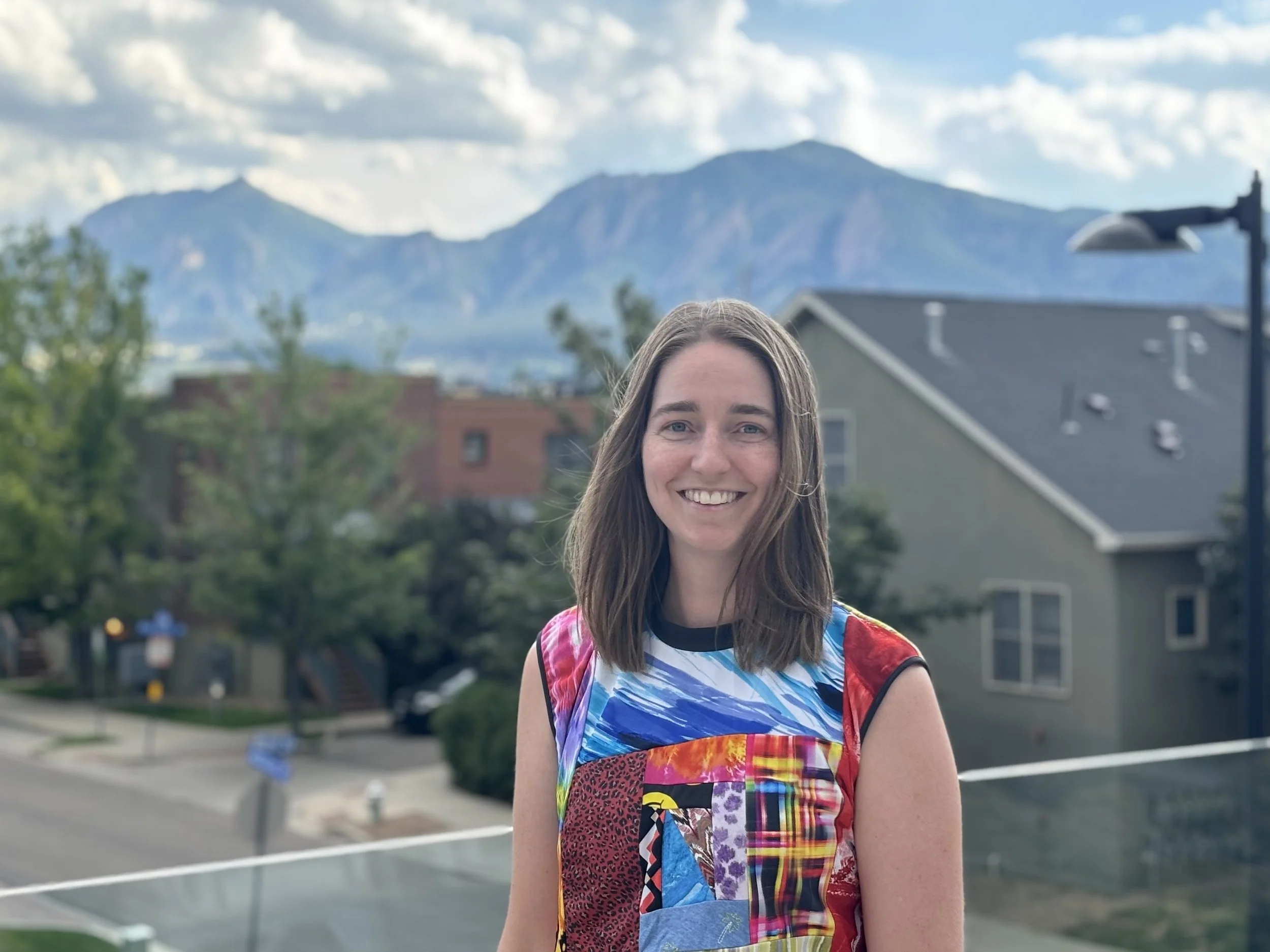
As Director of Sustainability & Innovation at the Pet Sustainability Coalition (PSC), Allison Reser Hamburger leads initiatives in climate action, packaging, and responsible sourcing. Guided by her personal mission to serve collective well-being, she brings over a decade of experience and a master’s degree in Sustainability Management from Columbia University to her role. PSC Members like Hill’s Pet Nutrition, PetSmart, and Instinct, lean on Allison’s expertise to help achieve their sustainability goals. Being based in Boulder, CO, helps fuel her love of pikas and appreciation for wildlife.