

Transforming Mixed Plastics Recycling For Commercial Scale With Dr. Julie Curley

Scaling mixed plastics recycling requires moving past lab experiments into viable commercial operations. In this conversation, host Christine Yeager sits down with Dr. Julie Curley, founder and CEO of EsterCycle, to discuss breaking down complex packaging materials into high-value chemical streams. They explore how low-energy chemical catalyst technology turns hard-to-recycle packaging waste into reliable feedstocks and responsible end markets. Dr. Curley breaks down dense inorganic chemistry into practical operational realities that consumer packaged goods leaders can actually execute. You'll learn what it takes to balance real feedstocks, real offtakes, and realistic cost structures while navigating evolving compliance standards. This episode offers an essential roadmap for sustainability executives seeking progress over perfection in their packaging supply chains.
---
Watch the episode here
Listen to the podcast here
Transforming Mixed Plastics Recycling For Commercial Scale With Dr. Julie Curley
My guest is Julia Curley, Founder and CEO of EsterCycle. There she's responsible for taking a chemical recycling technology she built in the lab and turning it into an operating business with real feedstock, real offtake, and a real cost per ton. She holds a PhD in inorganic chemistry from Yale. She spent three years as a post-doc at the National Laboratory of the Rockies, formerly known as National Renewable Energy Lab. She was developing low energy catalysts to break down plastic waste.
In 2024, she spun one of those projects off into EsterCycle. It's a mixed bioplastics recycling technology. We'll hear a lot more about it in the interview. She comes with fresh ideas and at the same time can break down something as complex as chemical construction into something simple for folks to understand. I hope you enjoy this interview.
---
Welcome, Julia. Thank you so much for being here. I'm excited to dive into this. I met you at Recycle Colorado years ago and you were telling me a little bit about this technology. It sounds like it's advanced a lot. I’m so super excited to dive in, but before we dive into what you've been working on. Can you tell us a little bit about how you live with intention?
Thank you so much for having me. I’m excited to have the conversation. I've always practiced what you preach to people. My work in circularity has always leached into my everyday life. My parents brought me up with sustainability at the forefront of our home. We were always rigorous recyclers. I remember using cloth grocery bags forever. I try to be aware each day of the impact that I'm having on the planet through the food I eat, the waste I generate, and in general, how I move through the world and minimize those things that are possible. That's what makes me feel so much passion for the work that I do as well. It’s combining work at home into a system as well.
Which I know for many folks, it can be hard because they're not sure which thing to do.
It's complicated and there's not always an easy answer. Even if you work in space. I struggle all the time with things like, “Is this recyclable or what is the better decision for me to make here?” It's not easy. Trying to do your best and living with intention. Thinking about the choices that you're making is the most important thing that we can do.
Definitely. It's like, “Do I want to look up the local recycling or would I rather bring it home?”
Which I've done.
We did it. I found where to drop it off locally. Anyway, it doesn't matter. Tell us about EsterCycle.
EsterCycle is a startup company I founded in 2014. I'm a Chemist by training and at heart. During the course of my training, after I finished my PhD, I took a postdoctoral position at the National Renewable Energy Lab, which is now called the National Lab of the Rockies. It would be a whole other conversation. While I was at the lab, I was working in this group called the Bottle Consortium, which is focused on the plastic's problem, and tackling it from all possible angles.
Designing plastics to be more sustainable, bio-based circular and also developing better ways for a cycle the plastic we use. One of the projects that I worked on was figuring out a way to recycle mixed bioplastics. We all were so excited with how well the technology worked and what we thought it could do at scale and make a difference. I decided to spin that out into EsterCycle. It's been a wilder ride since then.
That's awesome. For folks, what’s the difference between bioplastics and plastic?
Most of the plastics that you interact with every day like soda bottles, milk jugs, shampoo bottles, those will be made at the most basic level from oil. You take oil, you refine it, heat it up and crack it open. You do all these different steps and eventually you end up with plastic. There's a growing type of materials called Bioplastics that are called that because they are made from biomass, so from plants. Most often sugar cane or corn. You take that and you ferment it. You do more of a biological process.
You can eventually make plastic from that. This is appealing for a lot of reasons. Biomass, all these corn, and other plants are renewable resources, rather than oil, which is not. There's lots of sustainability aspects there. The other great thing about plastics is they break down at the end of their life. If you take a soda bottle and it goes into a landfill, that's going to sit there for thousands and thousands of years. Whereas bioplastics, since they are made from biomass. That means they tend to be able to degrade under biological conditions back into biomass or other things. They are getting a lot more popular. If you go to coffee shops a lot of times, in your capital say, “I'm made from plants or I am made from corn.” Those are bioplastics.
EsterCycle is a startup company. We are not bringing in revenue yet and we won't bring in enough revenue to support our company and breakeven or even make a profit for, unfortunately, quite a while most likely if several years. Startup companies like mine, tech startups need to raise investment funds in order to grow their process and get to the point where they can be self-sustaining. The preceding funding around that I'm trying to raise is our first time going out to investors, as you said.
I’m trying to convince them to take their hard-earned money or someone else's hard earned money and invest in our company to try and advance bioplastics recycling. It has been very challenging to sell a vision when we're still at a very early stage in our process. We mostly still operate at the lab scale but we're envisioning EsterCycle recycling tons of plastic per day rather than the couple of pounds we’re working with.
What is challenging for any, we call it, hard tech startups like EsterCycle. Rather than being a software company that's selling something that works via computer code. We're selling real hardware, like plastic that needs to be recycled using steel in the ground, manufacturing, machinery, all of that jazz. Any similar type of hard tech startup like us can be more of a challenge to raise money because we're going to need more of it in order to get to a big scale.
It takes a lot of research, development and investment in order to take a chemical process or any other type of physical process and scale it up. Being able to have a good vision for how we're going to achieve each stage in our development and reach commercial scale successfully and start generating a profit has been one of the more challenging parts of pitching to investors.
What have been some of the hardest questions? If they're repetitive, how have you maybe adjusted your answer over time?
Lab breakthroughs don't mean a thing until you build real feedstock supply chains and predictable cost models.
Plastics is just a tough market in general. Not everyone thinks that trash is sexy.
I do, but you are right.
Not everyone lights up when they talk about recycling plastic, especially now.
More people than you think but it is true, not a lot of people do.
For sure. Especially now. The hot topic is AI and all these software startups that are tackling big data and things like that. Wanting to invest in a company that's going to work on a commodities market. Plastics are very cheap as you might imagine and the price also changes quite regularly. Often, it varies with the price of oil.
One of the big questions I get from investors is, “How are you going to be economically viable when the selling price of plastic goes up and down day to day and week to week?” It is such a cheap commodity. One of the biggest headwinds that recycling faces is that virgin plastic. Plastic that's been newly made is so much cheaper than recycled plastic that companies are not motivated to use recycled materials. Trying to enter a new technology into that market is quite challenging.
What do you say that resonates with some of that audience?
There are policies and regulations. Brands are making positive steps towards taking pledges to use recycled content in their packaging and those things do exist. There are tailwinds as far as encouraging the use of recycled materials. There's also a lot to be said for the global stage and how unstable it can be for oil prices and, therefore, plastic prices. For example, the conflict in Iran. It’s having massive impacts on the price of plastic.
It's hard to get materials up and down the supply chain because they're manufactured very internationally. It's a big selling point for me to say, “If I'm recycling this material in the United States, it never has to leave the country.” We take the waste and recycle it. We make new plastic. It goes back to the market to the consumers as new products. There's a lot of stability there. Finally, we do one of the great things about the technology being developed with the National Lab.
We've been able to do in-depth techno economic analysis. Basically, what does this process look like at scale? How much will it cost? We believe once we're able to get to that big scale of recycling, we will be able to compete on the market with the changing price of plastics, and still be able to sell without a green premium without charging more for our recycled products, but still make a profit as well.
That's encouraging. Thanks for sharing that.
Fingers crossed, we just have to get there first.
You were saying you started this in 2014. You left a big team and it sounds like a very smart and dedicated folks. Now, you're largely working on your own. What has been the hardest part of making that type of a shift?
Honestly, I'm a Scientist and I've always worked on teams and bounced ideas off of my colleagues and worked in groups where there's lots of people who know lots of different things than I do. Leaving that for a startup company was a little bit lonely at first, I have to say. I started EsterCycle on my own. It was strange to not go into an office and hear cool ideas flying around. I've built up in order to cope with that. I've built up my own little community of people that I can talk to. I have created advisors on the technical side and the business side who answer my questions.
We are planning grant proposals together and things like that. I still show up at the National Labs sometimes. I have a badge I can get in and sneak on campus and talk to my old teammates. That's always nice. It's been an adjustment, but it's something about a lot. Again, hopefully, EsterCycle continues to grow. That's the type of team environment I want my company to have. I want everyone to feel comfortable bouncing ideas off each other and learning from each other. That's one of the great things about science.
You said you have advisors. How have you found these advisors? What do you look for in an advisor?
I've met some just through my career and some work at the National Lab. Some are collaborators from my time there. I've also been lucky enough to be a part of an accelerator program called West Gate. This is a program that’s funded by the Department of Energy. It's been funding my salary and continued research and development for EsterCycle for the past years.
I've gotten such an amazing network through this program going to local events, meeting people through the Department of Energy, and through the National Lab. It's been great to try and meet as many people as possible. It's been one of the best things about doing EsterCycle, I would say. All the great people have gotten a chance to meet.
Have they challenged your thinking on stuff?
Exactly. As much as I do love being a scientist, I've been a little bit in a bubble. I did my PhD and everyone around me was a super nerd for chemistry, then I did my post October research at Andrell. Again, everybody was working in the same field or related fields. Now, being in the startup world, I'm tackled with a lot of bigger questions like, “You made this cool technology but what's it going to look like at scale? How are you going to go to the market? What's your strategy for acquiring customers? What does that look like?” I've gotten challenged. Unfortunately, not every cool invention in the lab can become a company. There's a lot of other things that have to go right. It’s something I've been challenged by the people I've met.
You don't need a PhD in chemistry to make smart, forward-thinking packaging decisions for your brand.
I've had other people on the show say that the idea is only half of it. That most of your progress comes from the team around you knowing that your people can execute.
Technical development is important but, at the end of the day, it needs a whole lot of other support in order to progress.
Shifting gears a little to the technology at hand. Bioplastics and credibility problems. I'll say that consumers generally like it. The claim around compostable or mead from plants resonates well with consumers. From an industry perspective, like a MRF operator might clean it as contamination or certain types. It depends. Its flag is not recyclable through EPR. There are some concerns around greenwashing. Especially related to compostable because there's very few places that have compostable infrastructure. You're not talking about composting this material. From your perspective, where is the skepticism earned? Where do you think it's wrong?
A complicated question for sure because I agree bioplastics are wonderful materials. They're a great addition to the tool belt that companies have to try and reduce the environmental impacts of their single-use plastic waste. There's so many considerations to the plastics ecosystem. Merv operators see the materials recovery facilities where your plastics and all your other recyclables go after they're picked up from your curb.
They see bioplastic as contamination partially because there's such a small fraction of the plastic stream. Bioplastics account for roughly 1% of all plastic used. Which is still a lot plastic, to be clear. We use a lot of plastic every day, but if you're thinking about the stream of materials that goes to a facility to be sorted. That is such a small fraction. It's not worth it to sort bioplastics into their own stream. That means they end up in the streams and in the bales with other material. That is contamination because instead of having only soda bottles that are made from PET, you also have bioplastics in there which are different materials, so they therefore change the properties.
That can be challenging. Also, the reason why bioplastics end up in MRFs at all when they're not technically recyclable. It’s because consumers are confused about what to do with their plastics as we were talking about at the beginning. That's because it's difficult to know. Even as someone who works in recycling. There are times where I struggle to know if something is recyclable or not. As a PSA, whenever you're not sure and you can't figure out if something is recyclable. The right thing to do is to throw it in the trash. That's because you don't want to contaminate the recycling streams. it's safer to throw it out.
That's only if you don’t have time to call the local MRF.
If you can’t figure it out and you don't have the time and you can't call, but it does happen.
Most people are not calling the MRF.
I've toured the local MRF and I've asked all these questions. It's great to know, but most people don't have the time or the will to do that, which is reasonable because it's very complicated. You get this plastic and it says, “I'm made from plants,” and say you're thinking, “Is this even plastic or is it a plant?” You look on the bottom and it's got the little chasing arrows logo. Most people see that and they think, “It's recyclable.”
It’s hard to know if that goes in the trash, in the compost or in their recycling and it can end up in all three. Educating consumers and trying to make things as simple and streamlined as possible is so critical for making sure these materials end up in the right place. A lot of the skepticism about bioplastics, in my opinion, can be traced back to that. Consumers feeling overwhelmed or not caring about where materials should go and, therefore, they end up everywhere
Where should you throw your bioplastics?
It depends. If you have access to Industrial composting that accepts the certified compostable plastics. Typically, they're certified by an organization called BPI. You should put those plastics in your compost stream. However, not every composter accepts plastics, and this is because they need particular conditions in order to make sure they break down entirely.
They typically don't break down, for example, in a home compost pile because it doesn't get hot enough, and it's not turned over enough. If you have access to that composting stream, that's where it should go. If not, you should put it in the trash. That difficulty of access is part of the reason why EsterCycle could be a great addition to buy plastic and their end of life so that we can recycle that material and keep it in the supply chain.
Would you like to take it from a composter or would you take it from a landfill or both potentially?
Any and all of them eventually. The hope is to try and divert as much of this material as possible. For now, again, because bioplastics are a relatively small fraction of the overall plastic use. The best way to get materials is to go to where it's generated. Either take them from a composter, go to a venue, say a coffee shop or a music venue or sports stadium where they use these compostable plastic mostly for food and collect the material directly from there.
It’s going where there's a constant rate stream of the material. Down the line, I'd love for bioplastic to be used more and more. They could be considered recyclable and go to a MRF where they get sorted and baled and then sent to EsterCycle for recycling. Hopefully, we see a lot of evolution in how these materials are used and handled.

Can it be differentiated with the infrared like if you're doing an infrared sort your MRF? Can it differentiate between bioplastic and oil based polymer?
Yes. Not because the bioplastics are made from biomass and the other plastics are made from oil. That's not exactly what the infrared scanners are detecting but the infrared detection is so cool. It's such an advanced citation technology. It looks at the plastic down to a chemical level. On that level, yes, you can differentiate just because plastics are basically like long chains of molecules like Legos almost. Each type of plastic has different types of Legos that make up their chains.
The infrared sortation can see the different types of Legos, sort them and differentiate them based on that. That type of advanced rotation is capable of separating plastic on their type like bioplastic versus not. Also, there's a lot of cool, up-and-coming sortation technologies that use AI to train robots to sort plastic. Typically, that's using cameras and visual data.
A sustainable packaging material is only as good as the end market ready to buy it back.
A local one in Colorado is AMP is there developing entire sortation facilities that just use robots and this AI software to identify and sort different recyclables. They can identify a say like the certified compostable label or the chasing arrows logo that says what type of plastic it is. They can sort based on that as well. There's multiple different technologies that are being used at scale that could bioplastics.
I know eco products talked about putting a green bar on theirs. More bioplastics are adding this visual layer.
They're trying to make it clear, which is great, like which materials are bioplastics versus not. It can be tough sometimes when there's very literal greenwashing. People will make a plastic product that's not recyclable or compostable. It's a traditional oil-based plastic, but they'll like diet green because that makes you think, “It's sustainable. It's bio-based.” That can be tricky as well. In Colorado, I know some regulations in place that are trying to prevent that from happening and ensure that only compostable bio-based plastics have the green color, the leaf. The wording that says, “This is bio-based. This is compostable,” just to try and make it more clear.
Things are going down that rabbit hole. For those reading, if you haven't seen AMP robotics in action, it is cool. I think it's cool.
If you're in Colorado and anywhere near Boulder, Boulder's MRF, which is operated by eco-cycle, does tours and lets the public go through their facility and see what happens to your recyclables after they are collected. They have a couple AMP robots in action. You can see the little section cups picking things off the belt and sorting them into the different bins. It is neat, but again, I think plastics are sexy.
They have them in Georgia as well. Luckily, they're making them their way across.
They're becoming a lot more common now.
Back to talking about the circular economy. What do you think is needed to make a circular economy? Emphasis on economy or part probably.
That's what it is. It's the economic aspect. There's two ends to it that cover the beginning and the end of the circular economy, which is an oxymoron. When you think about recycling soda bottles, let's say because that's a very tangible example. The infrastructure needs to be in place to get those soda bottles somewhere. You can't recycle plastic without having the material there to begin with. We need better access to curbside recycling pickups. That's something that Colorado again, for my home state as an example, is working hard on.
Up until I believe either in 2026 or 2025, Colorado did not mandate that multifamily homes and apartment complexes had to have curbside recycling pickup. There were tons of apartment complexes that didn't have recycling. Those materials can never make it to be recycled if they're going to landfill. Making sure we're getting better at collecting plastics and sorting them properly. Those feedstocks are there and available, it is huge. That's the top end of it. On the other side, you also need to make sure there's an end market for recycled materials.
I briefly mentioned that there's a struggle because virgin plastic is so much cheaper than recycled plastic. What is to motivate a company who is focused on the bottom line to use recycled materials instead of virgin if they're twice as expensive? You're relying on them caring about the environment, which unfortunately you can't. You can't always do it. Having legislation and policy is huge to mandate recycled content, to make sure that the material that is being collected from consumers is getting recycled and getting used in end products. Again, it's the other huge piece of making a circular economy work.
We talk a lot about how EPR is meant to participate in leveling the playing field there. As someone who is going to be directly impacted on whether this works, what's your point of view? Do you think EPR will give us a more level playing field?
I do. EPR is going to be incredibly impactful in Colorado and the other states where it's being enacted. The great thing about it is that even though EPR has only been passed in 7 or 8 states, that will impact all American states because it's not like brands are selling different products in one state versus another. It will make them comply with the regulations throughout the country.
The fees that are being charged to the producers of packaging waste in particular, are going to be incredibly impactful. That's what's funding Colorado's expansion of curbside recycling, is the EPR fees. That alone is going to massively increase the volume of materials that can be recycled. I'm excited to see how EPR impacts circularity in Colorado recycling rate in the next few years, but I think it will be really good for the state.
For somebody who might be in sustainability leading change, which is generally the people reading this. What are some practical tips for someone stepping into or leading uncomfortable change?
Change for better or worse, is a part of life. The only way to get comfortable and to try and to step into it, is to do it. Unfortunately, you have to jump in feet first. The things I've already spoken about leaning on my network and the people I've met and the advisors that I have for support and guidance has been incredibly helpful for me as I step into change and try to lead a new company. No one is an island. We're all working together. That's a huge thing. I've always been someone who values trusting my gut. I'm making difficult decisions and trying to figure out how best to lead us to success. That is something, at the end of the day, I have to rely on as well.
Thank you, Julia. This great conversation. I love nerding out a little bit.
Thank you. Anytime.
I'm going to run down a couple things that the audience will benefit from. We got a couple of good tangible pieces of advice. First of all, I loved that you talked about practicing what you preach and being aware of your impact at the beginning. It can feel daunting but honing in on like, what's it meant and most important to you and what are the things that you can do.
Change starts with every individual.
Proactive supply chain transformation beats reactive compliance scrambles every single time.
Exactly. You don't have to do everything but you can start with yourself. Start with what's important to you. Also, I'm going to skip forward to this one because it's top of mind. The way you described the infrared and the Lego blocks, it’s like the way that you can be a chemist and also explain something in a way that's so simple and basic for somebody else to understand. That is something that is critical and sustainable because it is so hard and so overwhelming to understand what you're supposed to do and then you get inundated with all of the science and then you're like, “I don't know. I'm not a chemist. What am I supposed to do?”
Being able to make that translation is such a beautiful example of, you can use easy analogies that people can then very quickly relate to. I thought that was so great. You also talked a lot about setting vision but then being able to articulate how and how much it will cost to scale. This is something that when I was at Coca-Cola, I had tons of innovative companies coming to Coca-Cola asking for us to invest. I was like, “I need to deal with a billion pounds of plastic a year. I need a scale.” There's a lot of pilots out there. Everyone's pilot was fatigued. We need scale.
Being able to paint that picture is so powerful for someone who's coming in and trying to wrap their head around how they can participate. You also talked about tackling and clearing headwinds versus tailwind and how even though there might be headwinds being very clear about. There's also these positive things and wind in our sales that can bring us forward to not let the headwinds hold us back.
You talked about advisors and bringing people in that challenge you. You also talked about that from the concept of the technology itself and saying, “You need the technology to be supported by both the advisors, but also the concepts that they bring,” which is thinking through that path to scale. The financial and economic impact. Those were great points. Thank you so much for this conversation.
Thanks. It's been awesome chatting with you.
Important Links
About Dr. Julia Curley
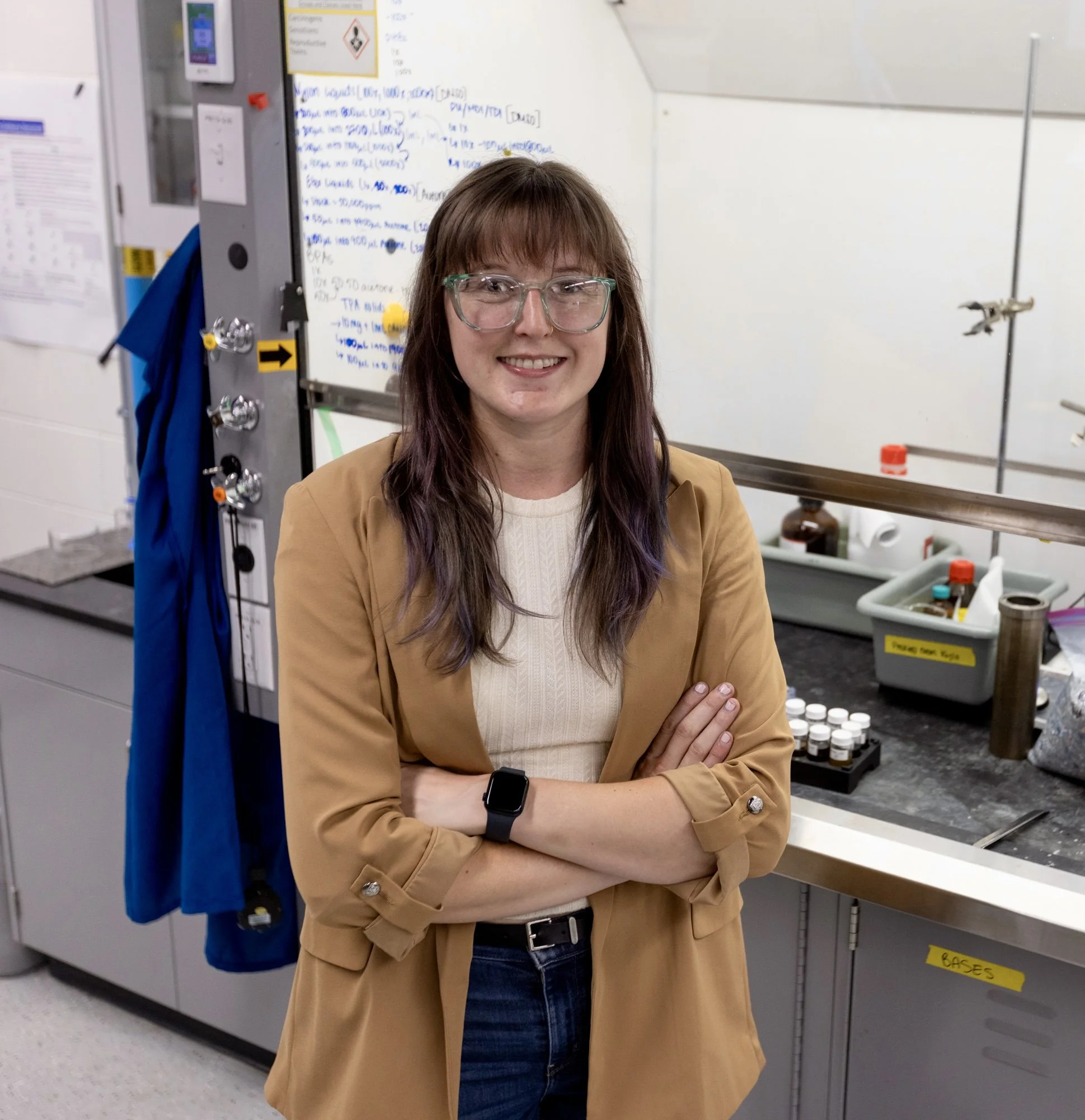
Dr. Julia Curley is the founder and CEO of EsterCycle, a startup company focused on low energy, high efficiency chemical recycling of mixed plastics. Julia received her bachelor's degree in chemistry from Boston College in 2016 before attending Yale University for graduate school. She received her PhD in inorganic chemistry in 2021, and her dissertation focused on the synthesis and study of catalysts used in renewable energy storage. From 2021 to 2024 Julia completed a post-doctoral position at the National Laboratory of the Rockies (formerly the National Renewable Energy Laboratory). Her research there focused on developing improved technologies to recycle plastic waste, and one such technology developed in collaboration with Amazon focused on recycling mixed bioplastics waste. Julia spun out this project into the startup company EsterCycle in 2024, and she has since been working full time on its technical and business development.