

Beyond Policy: The Operational Reality of Recycling Infrastructure
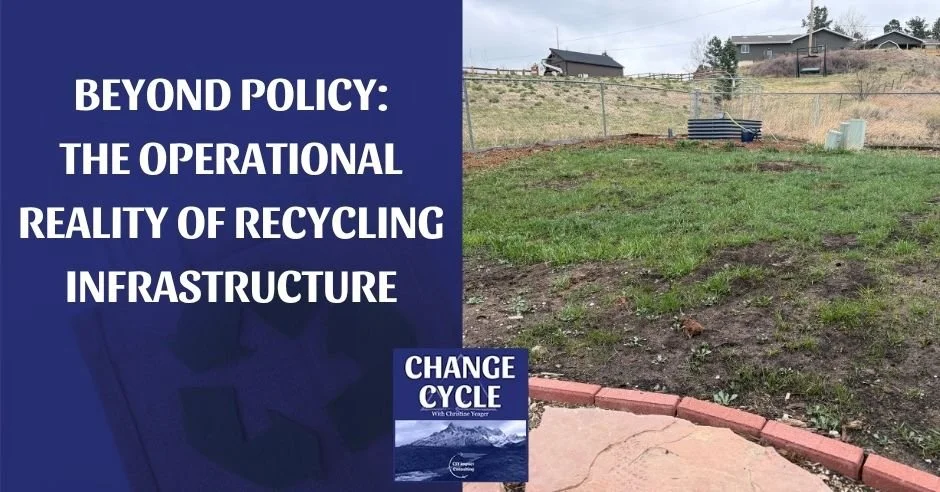
Compost is heavy. So is the impact of food waste rotting in a landfill. Both are worth carrying.
In this episode of Change Cycle, Christine Yeager starts with two cubic yards of finished compost dumped in her Colorado backyard and turns it into a field guide for the circular economy. The same dynamics that played out on her native grass and in her raised bed are playing out in organics policy, city budgets, and compost facility permitting across the country. In 2026, organics is finally having its day in the sun through policy and city actions addressing landfill diversion, curbside composting, anaerobic digestion, soil amendment, soil health, methane, and many other organics-related legislation and ordinances.
The through-line is a hard truth about system change towards the circular economy: some soils you can just spread compost on, and others need years of nurturing first. Mandates without composting infrastructure produce methane and political backlash, not diversion. We close with practical steps to bring composting into your day-to-day and push your city for real organics infrastructure.
—-
Listen to the Podcast here
Beyond Policy: The Operational Reality of Recycling Infrastructure
Welcome back to the show. We're going to talk about something I have mentioned before as one of my favorite particular economies, which is compost. On February 16th of 2026, I had two cubic yards of compost dumped into my backyard. That's the sentence that probably means more to my neighbors than most of you, but stay with me. What happened in my yard over the last few months is the theme story playing out in organic policy, and city budgets and compost facility fermenting and the brand new economic data I want to walk through.
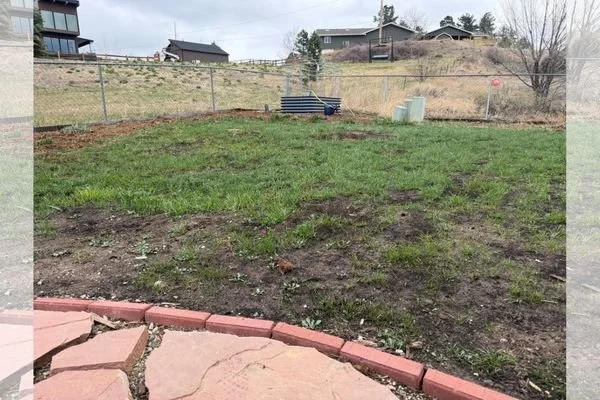
It was a strange winter on the Front Range in Colorado. There was almost no snow. The native grass behind my house, which is something I'm trying to keep alive because I am trying to make a prairie project, which is brutal. I'm on a plane and we get a lot of wind. Not a lot of rain, especially this winter. It was just brown. I've been breathing for a brutally dry summer. Now, there's been a lot more rain this spring than I anticipated, but in February, there was nothing.
Organic Waste Infrastructure: The real story isn't new EPR laws—it's what happens after they're passed.
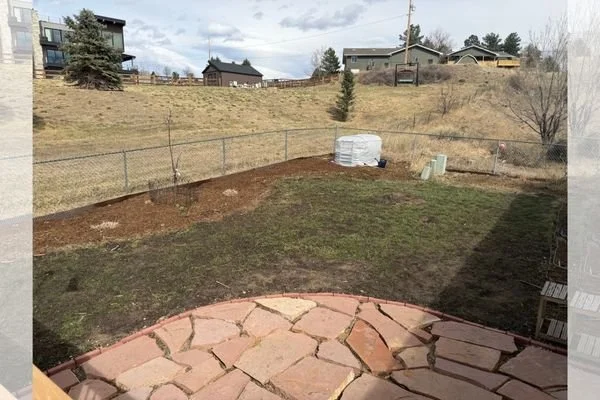
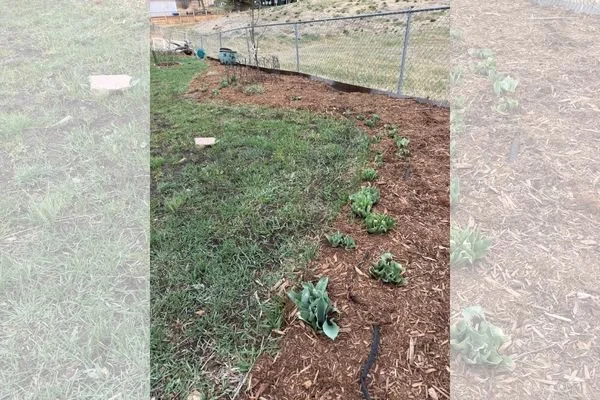
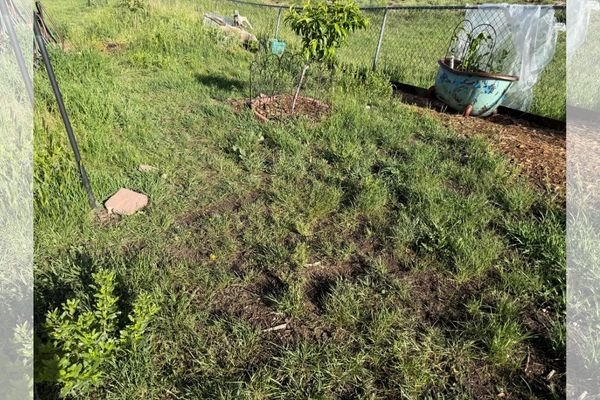
Since it was warm enough, I called Elan Organic and had all of this compost delivered. I've recruited the little people in my life to help me haul wheelbarrow after wheelbarrow into the backyard and spread it across the native grass around the trees and wherever I thought it made sense to help enrich the soil. I also started a new raised bed. I did not reseed in February. I had reseed in the fall, but I did water it when I first put the compost down. It snowed a couple of times after the compost went down but then I waited. What surprised me is that the grass came back thicker and greener than it was in the years I've lived here.
The Real Physical and Financial Weight of Organics
The trees perked up. They had a lot of flowers. The raise was a different story and I'll get to that. The thing I learned is that compost is heavy but so was the impact of food waste in landfills and both are worth talking about here. This is the metaphor I've had in my head since I finished spreading the compost. Compost is physically heavy. A cubic yard runs at 1,000 to 1,500 pounds depending on moisture. The impact of food waste spinning in landfills is heavy in a different way. It has methane, less soil nutrients, less food, and less dollars. Both of them are heavy and both work to move and change. Both of the work that's finally getting done in 2026 in fits and starts, in cities and states across the country.
That's what this episode is about. Buckle up for the compost ride. Quick vocabulary check. Four terms before we go further. The organic space has a vocabulary problem. If you look into my episode with Clinton, he talked a lot about this and I have noticed it as well. The vocabulary matters in this space. There's feedstock. Feedstock is the organic material going into a compost or anaerobic digestion facility before its process. These are your food scraps, your yard waste, your food soil paper, manure, or the raw input. It’s the stuff you put your compost in.
Organic Waste Infrastructure: Fee schedules don't move materials. Infrastructure does.
Understanding Feedstock and Processing Requirements
Feedstock quality determines finished compost quality. Garbage in, garbage out. This is why Washington State is now writing contamination thresholds directly into their organic composting law. Finished compost is the stable screened soil amendment that comes out the back end of a properly managed composting operation. It's what I had to deliver to my house. It's what went in on my native grass. It's distinct from raw organic material.
It's been through a controlled biological process that kills pathogens, breaks down weed seed, stabilizes nutrients and it looks like dirt, but it's very dark and rich and full of things that worms love. In organic, contamination usually means physical contamination like plastic film, glass, produce stickers, and sometimes bioplastic that didn't break down. The twisty tie that someone left on the broccoli stem and things like that.
Upstream contamination is the biggest operational hurdle in compost processing. Garbage in, garbage out.
PFAS is a separate and rapidly escalating concern. When composters say, “We have a contamination problem,” they almost always mean physical contamination first. It's the single biggest operational issue in the sector and it's almost entirely upstream of the composter. They don't have control over it. Diversion is the share of ways that are kept out of landfill. This can happen through lots of things like EPR and recycling is trying to divert recyclables out of landfills.
For composting, we're talking about food waste or feedstock that could be diverted out of landfill or this could be things that go to food rescue or source reduction. Making less food. More accurately estimating how much food needs to be made for a particular event. It's how cities and states measure whether organic programs are working. We're keeping in mind material collected is not the same thing as material diverted. This is true in all sectors of waste diversion.
Organic Waste Infrastructure: Reporting gaps don't just create compliance risks—they distort costs.
Material can be collected and still end up in a landfill. If there's no facility to process it or contamination is too high or maybe the tipping fees. There's the economy that doesn't work out. Quick news roundup for organic, having to stay in the sun. If you're working in this space for any length of time, you've watched organics fit on the policy sidelines while plastics and paper get a lot of the attention but that's changing. Partly because some of these states have passed EPR or deposit return schemes or what have you. In 2026, it’s changing fast. I want to share five things that have stacked up.
Economic Potential of Waste Diversion Policy
The NRDC or the National Resource Defense Council released an Illinois economic study of waste diversion policy scenarios in Illinois early in January. This is super helpful. There's waste diversion policies all over the country but they hyper focused on the three different scenarios at Illinois and to share what the economic impact of these were. The comprehensive scenario is that all generators covered by year seven modeled out to roughly 14,000 jobs, $1.27 million in labor income, $3.8 billion in industry activity and $172 million in state and local tax revenue.
That's not a sustainability number. That's an economic development number. Two more findings that are important from the study. First, the more generous the scope, the bigger the game. The geographic exclusion scenario which carved out generators beyond twenty miles from a processing facility drops to 55% of the comprehensive impact. The small generator exclusion dropped to 58%. The carve out doesn't just affect diversion. They cut the economic key in half. Second, and this is a part I want you to sit with.
Organic Waste Infrastructure: Legal uncertainty isn't operational permission.
The Difference Between Mandates and Infrastructure
Of the first five states to enact food waste ban, only Massachusetts has hit its diversion target so far. The other four states California, Connecticut, Rhode Island, and Vermont produced statistically indistinguishable results from zero. The difference with infrastructure and enforcement, Massachusetts had composting capacity and inspection rates more than triple the next most compliant state. The other four passed the policy without building the back end. A band without a plan.
That's something I want to talk about, and I'm going to come back to that in a few minutes. In San Francisco, they passed the country's first mandatory recycling and composting ordinance in 2009. They've been at this for 25 years if you count the voluntary program that they started in 2001. By 2012, they had food scrap collection at roughly 90% of single family households. They collected a lot of the material. They have diverted more than 2.5 million tons of compostable material from landfill since the program began.
A food waste ban without backend infrastructure is just a band without a plan.
Lessons from San Francisco's Mature Composting System
Herb side composting now surpasses curbside recycling and volume. That's a proof case. That's what maturity looks like. It didn't happen because of the ordinance alone. It happened to be because Recology, the regional hauler, had the infrastructure and the public and private partnership to process the material. They had three bin collection, multilingual outreach and then they had a fine that escalated to $1,000 per day for commercial properties and enforcement audits every three years per large generators. San Francisco is the case study that California SB 1383 was modeled on. It's a case study that the rest of the country is still trying to figure out how to replicate. The answer is not passing an ordinance. The answer is building the infrastructure, passing the ordinance, then enforcing it.
They had a universal recycling ordinance that was adopted in 2012, the zero waste by 2040 goal. The organic piece phased in over years large food businesses in 2016 that all food permitted businesses by October of 2018. Funds run up to $2,000 per day per event. Annual diversion plans required decent enforcement on paper, but the disposal numbers tell a more mixed story. Often estimated at about 37% of what still goes to landfills organic material that could have been composted or donated. That's seven years after commercial organic diversion became mandatory.
Organic Waste Infrastructure: The best recycling systems are designed—not dependent on perfect consumers.
Mandated diversion is necessary but it's not efficient. The lesson from Austin isn't that the URL failed. It's that an ordinance is the start of a long flow infrastructure and behavior change project. Not the finish line. There's also been pushback in the Austin area where surrounding communities didn't want Austin's compost to go to their county for processing, so they passed a law or an ordinance or whatever, that said if you collected in that county it has to be processed in that county. That forces the infrastructure to exist within the county line. It’s often not having the space maybe for that and limited the infrastructure build to support the processing of the material.
On top of that, just like a fundamental like story that the bends are big and they didn't wash them. There’s like this large bin that you had to wash out if you wanted to process it. It started to smell. There's always a little bit of structural challenges that come with managing and processing compost. Things that seem small but can have a real big impact. Washington, DC doesn't have a mandatory residential composting program. What they have is a curbside pilot that was launched in 2023. That started at 9,000 households and expanded to 12,000 in fiscal year 2026.
Nurturing Infrastructure in Emerging Markets
With $2.3 million in the mayor's budget, they have 31 food waste smart bins throughout the city and 24/7 drop off points expanding to 50 locations. The second largest food waste smart bin program in the country after New York City. That is the case study for what happens when a city wants to do this and is building access piece by piece. The waitlist for play collection prioritizes low income and disadvantaged communities. The smart bin locations were chosen with community input. The material goes to the Prince George's County composting facility in Maryland, which is the only large-scale facility in the region. That is a bit of a constraint.
Organic Waste Infrastructure: Progress rarely looks like headlines.
This is what nurturing looks like, though. Slow infrastructure first demands responsiveness and you can see the demand. The smart bins are getting used so heavily that DC has doubled the program. Since I'm from Colorado, I have to mention that the Recycle Colorado Summit in 2026 had a lot of sessions around organic and including in their policy retreat talking about what organic policy could be realistic in Colorado. The theme in 2026 was sustain ourselves, sustain Colorado. Talking about resilient people and resilient systems.
It feels like organics is getting the focus in 2025 and 2026. If we add all up, an Illinois economic study quantifying $3.8 billion in industry activity, a 25 year proof case in San Francisco, a mid-stage city in Austin, still grinding through an implementation. still building a case in DC with infrastructure as the gating factor. A major State Recycling Conference making organic central to the conversation. Plus, as covered in a previous episode, the CAA Colorado EPR program plan explicitly includes compost facility funding starting 2026.
You can't mandate composting where no facility exists to process the material. Build the foundation first.
Organic is having its day in the sun, but back to my backyard. I want to talk through the last few months in my yard that taught me about how this works. Not because my yard is important. Not because I'm a good gardener actually, but because this theme dynamic is playing out at the city and state level. First, compost is heavy. Two cubic yards is roughly 2,000 to 3,000 pounds. My kids of all ages help me fluff it up the hill and spread it. I was so sore that I say you spread it with a wheelbarrow and you rake it. Unless you can get better access, imagine a much larger yard, a much larger operation.
Every commercial composting operation in the country is moving thousands of times that volume that I dealt with through trucks, turners, greens, land, permitting, setback requirements, order management, and stormwater controls. The capital intensity is pretty big. The impact of not moving that material is that the food waste sees in landfills. This is heavy in a different way. The EPA estimated food waste is the largest single category of Municipal Solid Waste in the country. In landfill, that organic material generates methane, which is a greenhouse gas that is 30 times more potent than CO2 over twenty years.
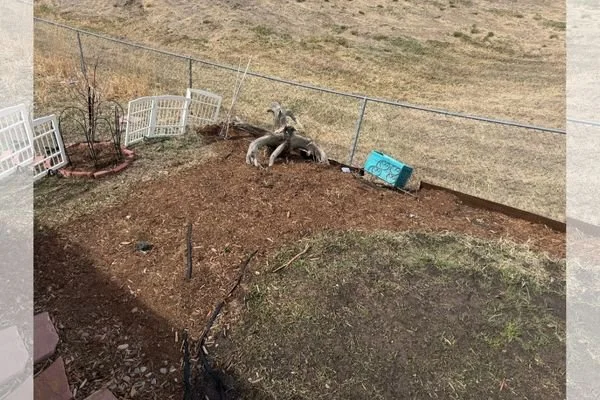
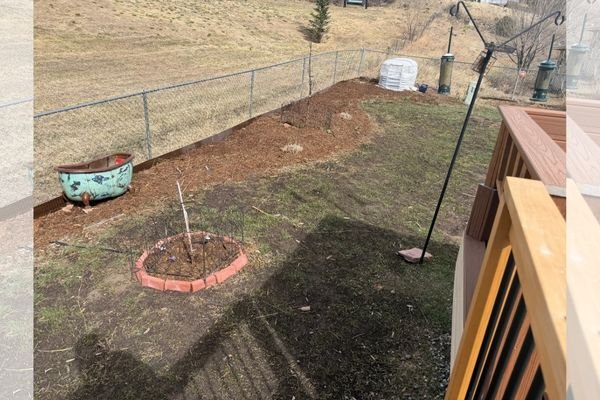
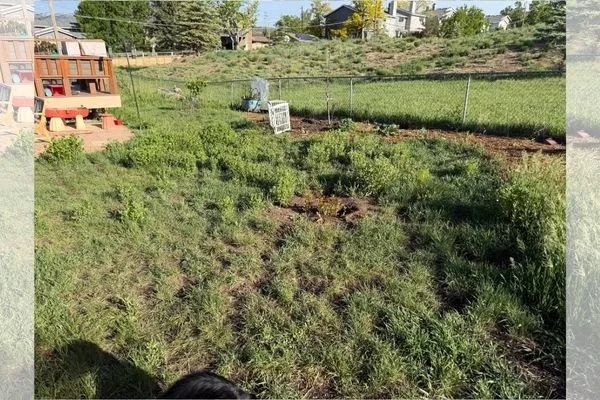
The Colorado Compounding Council estimates Colorado alone landfills over 2 million tons of organic material every year. That's four times what we turn into compost. It's physically heavy and the cost of not diverting it is very heavy on the environment. Some soils, you can just spread it on and do nothing and that's something I didn't expect when I dumped two cubic yards on my strength native grasses. It worked almost immediately within a week. The grass came back thicker, greener, bright, and happy. The trees perked up. The bare patches filled in. It didn't need to be seen. I didn't need to till. I didn't do anything fancy. I had to pull out some of the weeds.
Organic Waste Infrastructure: Better data creates better recycling.
When you look at the pictures that I'm going to post with this episode, there are sublets because it is a bit like a prairie project. I've got them random flowering things out there, too. I only fold things that are not native or spiky like thistle or maybe will take over dramatically, but for the most part, I let it run if it's not going to hurt anybody, but it wasn't magic. That was compost doing what it does and assisting in authority matured enough to absorb it. The native grasses had root structure. Some of the trees had been around for more than a year. I thought I killed a lot of trees. The soil biology was ready to accept it and it just needed the right inputs to wake it up.
In an analogy, we can think of San Francisco as something that just needs a spread of compost to the existing root structure. There's a lot of infrastructure and the successes that have been built in San Francisco. A State Grant from 1981 that had the buyback centers. The infrastructure was there before the mandate. The mandate just spread compost on existing root structure. That is the pattern to recognize where the infrastructure exists, where the haulers are integrated, where the processing capacity is real. You can mandate diversion and watch it take hold.
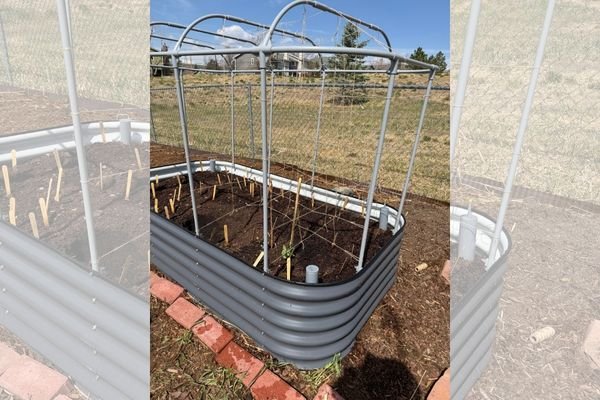
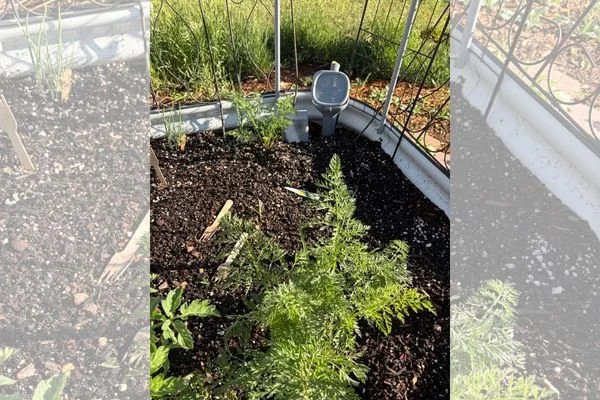
Massachusetts is the state level version of that state pattern. Composting infrastructure, plus regulatory clarity, plus enforcement equals 13.2% diversion and the lawn starts to come back. Other soils and other systems take nurturing. Now the raised bed, I did build the raised bed this summer. I did some research. This is not an advertisement but I did go with a Vego raised bed. I was going to buy a filing cabinet from a resale shop but I decided to go with Vego for two reasons. One, I did the research and it was made from recycled material. They also do a lot of work to off any carbon that they emit while making their materials and it feels very modular.
Organic Waste Infrastructure: Today's lawsuits could become tomorrow's fee changes.
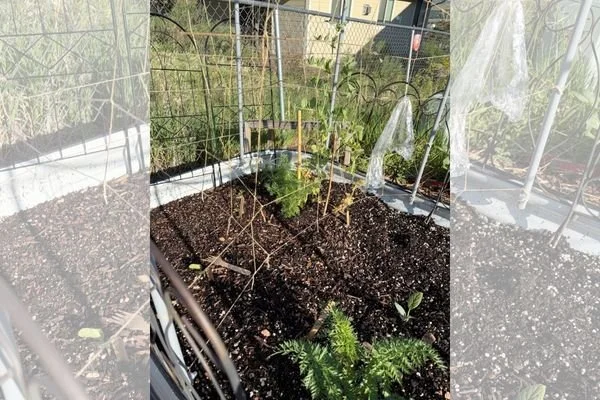
It can be reused and repaired very easily so it's built for the long term. They make this sell-wicking thing. You can put it at the bottom so that you can water from below and reduce the amount of water that you need to keep the garden healthy. You put this thing on the bottom and you build a bit of a reservoir and it has these modular wicking things that go in, then I filled it with a compost mix that had some rocks and stuff for drainage and everything that was made for raised beds.
One thing that I didn't know, because I am not a good gardener in Colorado. I was a decent gardener in Georgia. My mom is a great gardener in Texas, but I am not a good gardener because I didn't know about loyal acidity, and that was something to check. Also, I struggle with figuring out the right level of water because there is no rain. I had this thing where sometimes they over water and sometimes they don't water enough. With the self-watering cells in the bottom and the new soil, I started some seeds and I only had a few sprouts. Part of it is that this is like Colorado compost that has been mixed with these rocks and everything. The pH balance is different from what's needed for vegetables.
Vegetables have a lot more demand. They need to be nurtured and given the right mixture, the right nutrients, and all of the stuff. The grass is used to the Colorado pH levels and the compost was perfect for that. You could just spread it and forget about it, but with the vegetables, it just needed a lot more nurturing. To translate that, think about DC as this raised bed. It doesn't have the infrastructure to handle universal residential composting. The processing facility is a cross-state line. There's no integrated regional hauler. There's no decades old public and private partnership.
Real systemic change takes hard operational work. The only way forward is showing up season after season.
The DC is doing what gardeners do when the soil isn't ready. They're testing it’s pH, amending the soil and starting small. Smart bins are prioritizing low-income communities. They are making these infrastructure steps to nurture the compost environment. That work is harder so we’re less photogenic but necessary. You can't mandate composting in a city where no place takes the compost. You can't drop a lot of seeds into a bed that doesn't have the right pH balance. I have tried. I did get some, but not many of the things I planted sprouted.
The work is the same but the timeline is different. If you're in a city like San Francisco, the work is enforcement optimization, contamination reduction, and compostable packaging integration. Even though the infrastructure exists, you're tending an established garden. If you're in a city like Austin, the work is keeping pressure on business, building consumer literacy, expanding curbside coverage, growing the food rescue side of the hierarchy. The mandate is in place, but the system is still maturing. You're working a garden that's three years in.
If you're in a city like DC or most of the country, the work is infrastructure first, drop off points, smart bins, pilot programs, taller contracts, and permitting reform. This is the big one. Cities have to change some of their permits in order to make composting an option and compost refinancing. You're prepping the soil. You're getting it started and if you skip this step, it will make it impossible to nurture your garden and to grow your compost infrastructure.
Organic Waste Infrastructure: Don't wait for certainty to improve your strategy.
What NRDC and IPF showed in the Illinois study is what that stake is when you do it right. Comprehensive, well-designed food waste diversion policy in one Midwestern state over seven years, modeled at 14,000 jobs and $3.8 billion in industry activity. That's not aspirational sustainability rhetoric. That is an economic case for prepping the soil. What can you do? In your day-to-day, you can find your local drop-off or subscribe to a local compost provider.
Even Georgia has local composting. There might be something in your area. Reduced before you compost. The EPA food recovery hierarchy puts source reduction at the top for some reason. Composting is great, but try to reduce how much food waste you generate in the first place. It’s like having freezer deep freezes to freeze leftovers, the meal planning smaller portions and things like that. If you have outdoor space, try a backyard system. Although, I fundamentally support having compost infrastructure over backyard composting and watching what you put in the bin. Make sure you take those stickers off of your fruits and vegetables.
Take the twisty ties off. Those little things can go a long way because compost contamination has a much bigger effect on the end product because you can see it. You can also push your city. Use the UF Composting Council or compost action center to find how to push your legislators. Ask your city council about infrastructure and you can use the compost council's action center toolkits to share with your city council about what they can do related to composting. Engage with state level recycling and composting associations. Each state has their own compost council.
Organic Waste Infrastructure: We're still building the circular economy.
Look at food waste resources. NRDC has food waste resources. A lot of school public school systems have sustainability goals that they're trying to reach and compost is a great way to do that. Embrace the change. Why do I keep calling compost? I'm a big believer and I love compost because of all of the great benefits that it provides. What advice do I have for someone dealing with this change? After a spring spent hauling compost and spreading it. My answer is this. Change is heavy, real change. The kind that rebuilds the soil under a system. It's physically, financially, and emotionally heavy.
Preparing the Foundation for Systemic Circularity
There is no version of operational EPR, organic infrastructure, circular economy implementation that is light, fast and easy. Anyone selling you that version is selling you snake oil. Change is heavy and it's hard and it's tiresome. My native grass is coming back not because I sprayed something on it. Not because I took the right fertilizer and spread it. It's coming back because the soil under it got healthier. That took hard work. Although, it wasn't very expensive work. Now, the raised bed isn't there yet, but I am fixing it. I'm working on it. I've put in some amendments to change the pH. I'm taking the time to learn what it takes to go garden in Colorado and building organic infrastructure is the same work.
Some systems will just take the compost and others need years of nurturing before they can absorb a mandate. I embrace change because the things worth building or heavy because imperfect progress is still progress. The only way I know how to build a system that laughs is to keep showing up with a wheelbarrow season after season. Even when the dog is mad at you, and they get tired. The vegetables are coming and nobody's rewarding you for the work. Compost is heavy, changes heavy, but both are worth carrying. Thank you for your time and for being here.
Important Links
Compost bill seeks to restrict food waste deposits in certain Texas counties
Of the first five US states with food waste bans, Massachusetts alone has reduced landfill waste
Unearthing The Power Of Organics: Composting Insights With Clinton Sander
Compost bill seeks to restrict food waste deposits in certain Texas counties
Of the first five US states with food waste bans, Massachusetts alone has reduced landfill waste