

Bridging The Systems Gap In Sustainable Materials Management With Kathryn Walker
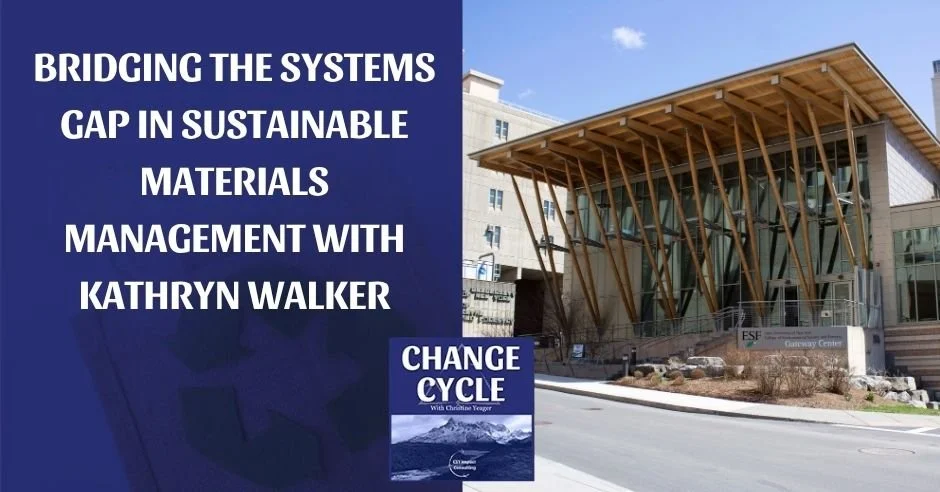
True progress in waste reduction begins when we look beyond the bin and fully commit to sustainable materials management to bridge the systems gap between product design and regional capacity. In this episode, Christine Yeager sits down with Kathryn Walker, the Executive Director of the New York State Center for Sustainable Materials Management based at the university level, to discuss how collaborative leadership can drive a true circular economy. Together, they navigate the complexities of Extended Producer Responsibility (EPR), the evolving landscape of recycling and materials management, and how to lead uncomfortable system-level changes with vulnerability, resilience, and curiosity.
---
Watch the episode here
Listen to the podcast here
Bridging The Systems Gap In Sustainable Materials Management With Kathryn Walker
Meet Kathryn Walker: Reimagining Materials Management
In this episode, I'm going to be interviewing Kathryn Walker. She is the Executive Director of the New York State Center for Sustainable Materials Management at SUNY or State University of New York. She is accountable for the applied research, technical assistance, and statewide programs behind New York's materials management system. Including the New York state recycling system needs assessment, Recycle Right New York, and Certify Circularity New York.
She brings more than twenty years of experience across pollution prevention, environmental education, and stakeholder engagement, including her time as Outreach and Education Program Manager at the New York State Pollution Prevention Institute at RIT. That background is important because Kathryn’s work is at the intersection of EPR and state execution. The gap between what a producer's packaging is designed to be and what a state's collection sorting and in market capacity can absorb.
This needs assessment. It doesn't care what a company's intentions are, but it's telling us what the system costs, what tonnage it can genuinely move, and where material has nowhere to go. She's here to walk us through the change and circularity as an aspiration but also something that’s measured, funded, and ultimately operating at a systems level.
---
Thank you for being here, Kathryn. I'm super excited for this conversation. We talk a lot about different forms of the circular economy, but since my background is in packaging, we often focus a lot on packaging. I'm super excited and personally interested in the textile space and happy to talk to you about that and expand the horizons of the show.
Thank you. I'm grateful. I'm excited to have this conversation for sure.
Devotion Through Attention: Living And Working With Intention
With all of our guests, we start with, how do you live with intention?
I loved this question and it was wonderful to sit with it and think through it. I was watching some of your past episodes too to watch what other people were saying. It's so in line for so many of us that are busy working professionals, we have busy personal lives as well. As I was thinking through this, like, “How do I do this?”
A lot of it, and particularly in the last couple of years, has been reminding myself of the reason why I do all of this work in circularity and why I chose this profession in the first place. It’s this care for the world around me and the environment. From my very early years of loving to be outside and hike and mountain climb and get my hands dirty in the garden, getting outside. How I live with intention, first of all, is reconnecting and making sure that I am connected to the physical environment around me.
Some days, that looks like a 2-minute or 5-minute walk around my block. Other days, that's a hike with friends or getting into the woods or gardening for hours on end. That's the first thing. I immediately thought of Mary Oliver, who is one of my favorite authors and poets. Two things when she says, “Attention is the beginning of devotion.” If we're devoted to a thing, it needs our attention and not just the webinars and all of the things that we do to move and create change. Actual attention to the thing that we're doing and being fully present in that, which is so hard for all of us particularly this generation I want to say.
We knew of another time before technology and being blasted. We remember what it was like to not be distracted by the amount of social media or all the things around us. I do find it difficult to be focused on this thing. This idea from Mary Oliver of where we focus our attention. We focus our attention on the things that we're most devoted to. That grounds me. It helps me live with intention. Her other quote, which is, “Tell me what is that you plan to do with your one wild and precious life?” That always helps ground me back and live with the intention of, “Am I doing this thing well? Am I making the change that I want to when I'm not on this planet anymore? Have I moved the needle at all?”
Whether it be through policy or the programs that we're doing. More importantly, in the people that I connect with and the people that we're working with and for, and our families and the way that we're leaving those relationships hopefully better than we left them or we started with. Those are the initial thoughts. I also think that when it comes to the professional life with all of those, there are so many initiatives and programs that we're working on, which we'll get to later.
The piece that is the thing that I'm working on the most important thing? It feels great to get tasks done. These quick tasks, we get sucked up in email in a million different directions. Am I grounded and am I doing the work that is moving this effort forward and how can I make best use of the limited time that I have. That's generally how I live with intention. That is easier said than done on some days when there are a million priorities and a lot of differing paths. For the most part, just grounding in the things that we can do. Often, it's the low hanging fruit.
The Mission Of The Center For Sustainable Materials Management (CSMM)
The next question for those folks that don't know about the Center for Sustainable Materials Management. Can you tell us a little bit more about what that is? What are you trying to do?
You can call it CSMM. It's a long name for sure but the Center for Sustainable Materials Management was founded in 2019 at the SUNY ESF, which is the Environmental Science and Forestry University. That is state funded in Syracuse, New York. The center’s number one goal is to innovate the way that New York manages material. Everything that is involved in materials from procurement, how we manage them at the end of life, how we design them in every piece of the puzzle and when we talk about circularity, all of that falls under the purview of the center.
The center is funded through the Environmental Protection Fund, which is money that comes out of the governor's budget in New York State. We are administered with the Department of Environmental Conservation or through the DEC. That partnership helps. Our main goal, again, is to innovate and reimagine the way that we think about materials and through this, helping the DEC meet their goals of their solid waste plan, which was updated in 2023.
Our tagline at the center, I love saying, because we spent a lot of time thinking through this, is, “Collectively challenging waste and elevating solutions together.” That gets to the core of what we're trying to do. Which again, is recognizing that we want to together change the way that we think about waste, but in order to get there, that human part and working collaboratively and meeting people where they're at is core to what we're doing.
Sustainable Materials Management: Together, we want to change the way we think about waste. In order to get there, that human part of working collaboratively and meeting people where they're at is core.
The center, being at a university, has a ton of access to incredible professionals and researchers that are on campus. Also, we have a network throughout New York State. I can speak to that a little bit. In addition to the researchers, staff and professors, we also hire and employ undergraduate and graduate students. Students are a core part of what we're doing. The staff push us to think innovatively. If you work with students, they're always coming up with creative ideas.
We're rooted in this learning community while also taking on huge challenges that the state is confronting, as we know, complex materials as you referenced, like textiles and clearly packaging as up front and center like any other state in the US. I'm sure we'll get to that. The center focuses on product stewardship, EPR and paper and packaging. Providing research that is needed to fill the gaps in data to advise the state and provide information so that they can make decisions around emerging, whether it be EPR laws or other laws related to materials.
We're working along a lot of materials, which I can dive into but we also focus on green procurement. New York State has an incredible organization or group called the Greene New York, which is a meeting place of a lot of the government institutions that are doing a lot of the purchasing for New York. We're proud of the fact that the specifications for procurement in New York State are fantastic. The center is charged with updating those specifications, which we've been doing in partnership with the Responsible Purchasing Network.
Also, thinking about the systems that we have to make sure that these huge government agencies that have incredible buying power are able to utilize that advice and those great recommendations that we put forward. We're about to launch into more of that in terms of engagement with those specifications. Product stewardship work and green procurement work, also diving in more and looking forward into the future of how we help expand recycling markets.
Where can we can we get in and support businesses that are emerging to expand or look at the supply of this material but where is the demand of this and to look at states that are doing this well, like Michigan or Colorado with their Next Cycle programs, bringing models like that to New York State and innovating that way.
We’re looking at markets as well. The core of what is another huge aspect is that outreach and engagement piece. A lot of it is translating the information that we're getting to the public. Our first huge task was in 2019. I came on in 2021, and it had started up when we got organized. The state was like, “We did all of these listening sessions. We know the challenges related to recycling. Here you go. Let's put together an outreach and education program.” We run Recycle Right New York for the state.
I can speak more to that and the incredible opportunities that come with that and also the challenges. As we know it’s increasing outreach and education for whether it be a specific material or the entire system. Those are the areas that the center is working on, that's a lot. On top of that, there's also the section of direct research, as I referenced. We have PIs or principal investigators that are doing specific research. This is around hard to recycle fiber material, because I said environmental science and forestry.
SUNY ESF has a longstanding history of working within and doing so much responsibility with forestry, but also in chemical engineering, specifically paper. It was a great fit when we were awarded this work. We're looking at both how we manage hard to recycle fibrous materials. Things that are like wax corrugated paper. Things that are not easily recyclable on the paper side. One researcher is looking at how to compost those things potentially.
The challenges of PFAS and emerging other contaminants, looking at those things. We also have research that's looking at conversion and looking at how we can create fully biodegradable bio-based materials out of the waste of cardboard recycling. As we know we can recycle paper around 7 to 8 times. That waste is a resource. Our team of engineers is looking at how to convert that potentially into other useful materials. There’s a lot going on. I talked a lot for a long time there.
It's clearly super exciting to be in this place. When I explain the center to a lot of people, the thing that comes is, it's such a privilege and honor to be in the middle of that space. We're practitioners and provide programs to meet people right where they are and provide technical assistance. Researchers get to innovate and bring new ideas. Also, researchers provide an analysis showing where gaps in data are and advising on potential policy. That's my jam. I love to get into the middle of that and think about where we can change and move the needle on the legislative side. We get to be in the middle of all that. We're doing a little bit of everything.
It's always encouraging to hear about these programs that exist and all of the focus and energy on something that is so important. Sometimes, if you're not in space, you worry that nobody's thinking about these things but you all are thinking hard on them.
I give New York a lot of credit for that. They had this model with other institutions in New York State. Another is the New York State Pollution Prevention Institute at RIT. The state was smart and said, “We want to move the needle on these. We need to invest in the research and create a partnership there where you're getting that information.” You're a third-party researcher. You're providing information separately.I love seeing other states that are doing that. There are some states like Minnesota, that have a pollution agency like that, that is doing that research and connecting directly with the state. It's a great model.
Managing Change In Bureaucratic And University Systems
Thank you for that. You talked a lot about ways that the team is driving change externally. We talk a lot on this show about change management as something that all sustainability professionals are doing constantly. I know you're also managing a lot of change inside the organization. Can you share a little bit about that and what it has taught you?
It's constant change and the saying that if you're not changing then something's not right because with growth comes change. Our organization is, as I said, I came on in 2021 and this was a brand-new center. There was nothing to learn from. There was no one to train us. There's no one to train me. I look at this and I'm like, “Holy moly. We're seven years into this organization. It feels like we're just starting in so many ways,” because there were no systems.
With growth comes change.
We're working within huge bureaucratic systems. We have a university that is a state agency. We run through a foundation. We have the New York State agency. There was so much to learn to understand just the system that is and how to navigate within that system but still be innovative. Still produce and run like a well-oiled small but mighty non-profit within a university system. That was the model and the vision that I brought and constant, just like me meeting wall after wall. Whether it be things that are important and critical, like procurement rules and contractual law.
All of the legal things that you have to deal with and manage well when you are utilizing taxpayer dollars to do this work. It is critical to maintain systems and follow any legal rules that you need to. Once we got there, we got our systems in play and I wouldn't say it's a well-oiled machine, but it was moving through. That was within our first five-year contract. One of the things that we had been working toward was to have a single line item out of the governor's budget. I referenced it as the Environmental Protection Fund. That is awesome. We were awarded that, so we have the allocation.
With that comes incredible growth. Meaning that, it allows us to hire one or two more staff, which is fantastic. We have an increase in our budget, but it also comes with new processes. Rethinking some of the things that we're going to be doing. The change was fast and I wasn't planning. I was thinking it was going to be a year out, honestly. We started working towards that for 2027 and it came faster than I expected. That change was a good change, but it brought a lot of activity.
One, the great news is that we hired a director of Reuse and Circularity, knowing that is where we always want to be rooted, is at the top of the hierarchy. Knowing that, we need to deliver when it comes to the work and research that we're doing for EPR and green procurement and all the things that I referenced when I talk about what we do.
Building the capacity to grow and make sure that vision and that innovative spirit continues. We found an incredible person to fill that role. I’m super excited about that. Again, managing larger teams. New systems need to be in play. We just need to reorganize. That is the recent change and there's seventeen more examples within that, but it's been going far.
That's great. What keeps you rooted when you're navigating those types of internal and bureaucratic changes?
It goes back to the question around intention, which is one of the first things that I try to do lately. I am not a morning person. I just am not. I try to be. I had this nice, 3 or 4 week stint here and there where I'm the 5:00 AM or getting up and working out and whatever. I like that no one's bothering you at that time. You get your creative time, but it does not work for my system. It just doesn't. Not that I have a choice when I'm still driving the older child to school or the younger child to school.
It is as basic as waking up every day and being excited to find a way to be excited about that day. Even if there's a million things I don't want to do that day because that's what also comes with leadership, as you know. Sometimes you have to do the things that you don't want to do, the meetings that you don't want to have. Some days are better than others. Waking up and finding the one thing that's going to excite you on that day, the thing that you can look forward to or the thing that you're excited about.
You can always find something. If you can't find that thing, then it's the walk around the neighborhood. It's putting my feet in the grass outside the backyard or taking a walk after work. Finding the thing that you're excited about naming the thing that's going to be challenging. The thing that is stressing you out or the thing that you're not psyched about. Setting an intention and setting why this is important. One of the things I didn't mention before in your question around the intention is, the other thing that's important is also being able to say no to a thing or to not do a thing.
Sometimes, when you are looking at the whole day and you're like, “I overscheduled myself and I'm not going to be able to do this thing well.” Being able to change course and say, “This needs to be scheduled later on,” and again, back to the question of, is this most important or is this the thing that will get me on the path to where I need to be? It's okay to do that daily as well.
To be rooted means having that moment in the morning, prioritizing what is going to bring me joy, the hard thing, and making the plan and doing it. For me, I get into overthinking a lot. Sometimes, the easiest thing to do is to move. Get into action and get a couple quick things done and then do the hard task first. That's how I stay rooted. Also, I've got two cats. Animals help us out. The cats help, too.
I didn't have long, but I went and stood in the sun for just a few minutes.
It's amazing what vitamin D does. It's so underrated, particularly for us in New York State. Where we don't see the sun is like Western New York. We got to get it in while we have it. We've had some rain this summer, but it's been nice to have so many sunny days. Take advantage. Get outside. Ground yourself in the things that you can do.
It's amazing what vitamin D does. Take advantage, get outside, ground yourself in the things that you can do.
I'm in Colorado, so we hardly ever have clouds. I'm like, “A cloud. That's exciting.” Natural shade. I haven't spent a lot of time in Colorado. I need the change in season and I need access to water. I don't live in Syracuse. I live in Rochester, New York, right outside. It’s about an hour and a half from there. I should have answered the other thing that I do. If I'm super overwhelmed and I can't see. The walk isn't working or the things. I will get in my car and drive because I'm like less than 6 to 7 minutes from Lake Ontario. I'll take a quick walk on Lake Ontario. That always does it for me, the water.
Breaking Down Structural Barriers In Green Procurement
The idea of circularity can seem simple to people who aren't in the industry but the concept. It's a circle. Use things again. That seems simple enough. You talk to anybody and they're like, “Why don't we just do this?” It's like, “Do that.” That's not the answer. I can tell you that. You work in a space as you already shared with some bureaucracy and a lot of political opinions. Can you share a little bit about how you make progress in the circular economy when there's maybe budgets in the way or procurement specs in the way? How do you power through and what sometimes breaks down?
I power through all the things I named personally but also rooted in that. The first step is recognizing that like every professional and every person within these systems that we're talking about, whether it's the person managing the municipal budget. If it's the person procuring the item that we're talking about and designing this back for. Whether it's the regulator at the state agency, the private company that's hauling your material away.
They are all dealing with the same things we are. Being rooted in the fact that no one has it easy but also that it's helpful. I've said it a couple of times, but meeting people where they're at. Understanding other people's roles as best as we can when we are engaging with them, recognizing to your point that. Someone is going on a lot of times. We are meeting with people that have an expertise in one part of the system.
Our curiosity and maintaining a curiosity about the way that they're managing that system, that little part of the system is how success happens. I will talk about green procurement in New York State. We have these great specifications and we want everybody to use them. SUNY ESF is a state university. We're like, “We're going to do this.” I will say the most useful thing we have done is where we try to do the thing ourselves. If we can't do it within the university, and a university is going to have a different challenge than a manufacturing facility or another private company or another school. There's a lot of transferable lessons learned.
In the very early stages of the center, the guidelines that you do for a municipal government or a university or businesses, you got to start with having a policy. You got to put the goal out there. The thing that you're trying to do because if everybody's not on board, if you can't agree to the thing that you're trying to do then how are you going to meet that goal? Again, we're SUNY ESF. We're one of the oldest environmental studies. I think it is the second oldest in the country.
We've been doing this for a long time. Again, we got it across the board. We have a green procurement policy in place, but it took some time like it does at any agency or institution. Meeting people where they're at, explaining why this is important, and how this will affect them. If you're the procurement officer or a professor purchasing material for your class, or an admin or the president of the university, how is this going to affect you? How does this affect your budgets? What does this mean for the system? How do we change things to meet this goal?
I started with a policy. I won't bore you with a long process, but we analyzed. We got some support to find out where we were at in terms of our green purchasing. I won't say the exact number, but it was very low. In terms of meeting the specifications for New York State, the green New York specifications, which are now EO22, we were pretty low. Definitely under 50%. Setting an intention and a goal to increase that.
One of the things that we heard in that process was that we had these specifications but they were hard to read and how people want to know and be able to click and find the thing that they want and have like three options. We put together a guidebook with our team and utilize students. First, it’s analyzing where we're the most of our purchases, what were those purchases, and what were you spending on those. Creating a guide for folks based on the most purchased items. Here are the options.
If you can't do that, you're not going to meet the green procurement specifications. We are a small enough university that it took some time to do that. In order to do that at a large scale, say for DOT or DEC or one of the larger agencies whose procurement is mammoth, they're already utilizing internal databases and systems that also need to be updated. Again, that small scale pilot and learning what that looked like and what that took helped us to be able to understand when we go and work with OGS or DOT or all these large agencies. We understand how challenging it is going to be to meet the guidelines of EO22 on a large scale.
It’s understanding how hard it's going to be but then understanding, listening and learning how their system works from the experts getting them in the room, meeting them where they're at and trying to provide as I said that technical assistance is like, “Maybe we can fill in the solution. Here is how we can do this.” A lot of those agencies do have their own sustainability directors. We have the honor and the privilege to work with them and provide support there. That's where we're at. That’s one very long example but there's a million that I could talk about where we are met with these conflicts regularly. I know we'll get more into it, but they're often met from this idea.
Again, we have true limited budgets, whether you're a small town or in New York City. Whatever it is. You have a limited amount within your budget and you have to manage those challenges and meet people and try to find alternative solutions. That’s where we try to come up with other ideas or ideas. Sometimes, it's finding funding for the groups that you're working with. Sometimes it's finding a lower cost alternative. There's a million different solutions that we've come up with when providing technical assistance.
Proving The ROI Of Surplus Systems And Reuse Tools
You mentioned like meeting people where they're at. Do you find that there are certain facts or figures or things that resonate the most with people as you're trying to convince them to change?
Certainly. Being able to prove a return on investment. We have a program that we started at SUNY SF. Our new director of reuse and circularity, Sue Fassler, has been obsessed with surplus property for years. It benefited us because she spearheaded SUNY SF. There's a lot of technology to manage surplus systems. We did an analysis and ended up hiring the company Ripley, which is an online materials marketplace. What's beautiful about that is that for a government agency, per New York state law, it's a fiscal law that we cannot, as a state agency, donate property. We cannot donate it.
If it's the end of life and you can't find someone else to utilize that, it goes to a landfill. It goes to incineration. It cannot have another life, which is in complete conflict with everything that we are trying to do. As a state agency, we had to follow those laws. With all of the material we were using, basically an antiquated email system to say, “I've got a desk or I've got a thing.” Now we have this online marketplace. You have to invest in the database. You have to purchase this as a product. We were able to pay for that within the first six months.
The ROI is right there saying, like, “If you put money into this program, you will have people be able to access the thing that they need first as a reused item instead of purchasing new.” What's cool about that program is that they calculate the GHG for you and the cost savings like if you had purchased it. It does it for you. That's a very clear example. It's not always that easy to be able to go to another university and be like, “It would save you X, Y and Z.”
Where we are able to meet people and say, “This is how this will save you,” but also there's other ways to do this. Which is like, “This system will also save you time or this will save your workers.” It will be easier for them. There's a lot of other arguments besides the cost argument. The cost argument always comes first, but plenty of other ways that we can convince folks for solutions that are more circular.
How do you determine where people are? Is it interviews? Is it research? Is it a little bit of both?
That's a good point. The first thing also is recognizing when people aren't there. It's being able to understand that we can only, as I said, meet people where they're at. If there is an agency or an individual that's unwilling to work with us, we move on. Sometimes it's an agency. It happens. You have a gatekeeper. Sometimes it takes a while but it is relationship building. It is the basic interactions between humans of saying things like, “I am here because I want to learn from you. I respect what you're doing.”
Sometimes, the reality is that someone doesn't see the value in what you're offering or doesn't have the time or sees it as one more thing. You have to meet that. You have to say, “If you can't make the case for how our center is going to make your life easier, I haven't done my job, but also maybe it is not a good fit for. I’m letting that go.” There are personalities, there are people, but there's also systems that can't open yet to you. That's okay because again, the reality is that we only have so much time. We have plenty of people that are opening the doors.
This is the great news about the work that we do. There's so many people paying attention to this that want to be in this space. We're flooded with people being like, “I'm doing this. Let me share this.” We work with those folks. Again, we will meet and connect with people that may be more resistant or it may be more of a challenge to move that needle. The great news is that there's so many people in New York State. They are doing such creative, cool things to connect with now. We don't have to search out. We don't have to wait for them. They're coming to us.
How To Talk About The Circular Economy Without The Jargon
We talked about how a circular economy language can feel simple, but it's not. At the same time, I've met people who say, “I work in the circular economy,” and they're like, “What does that mean?” What are other ways to talk about it? Why should we shy away from circular economy as a language?
One of the easiest things I’m trying to explain to anyone is what it is that we do. I'm the person at any party that I end up going through the garbage. I can't help myself. I'm just like there. I'm like, “Don't ask.”
I just texted my friends about the fact that our city is changing waste haulers.
My friend lives in Boston and she works for a large corporation. She lives in a community that had an issue and did not have their waste picked up for a couple of weeks. The second she said that, I was like, “Oh”, and I started telling her all. It just was too much. She was like, “I want my garbage picked up.” I was like, “Sorry about that.”
We're those people, and that's fine. One way to frame it that people get is like, “We're talking about the things where everyone is paying for something to be thrown away or taken away.” How much are you spending? What is the cost to you?” Whether it's your residential house or you're a large entity. What is the cost of the thing that you're throwing away? What are you getting for that? I explain it like that piece. The cost of this is on you already. You're already paying for this thing.
What if for that cost, you could get X, Y, and Z? Whatever the conversation is around but what if that cost stayed the same, but you gave them your food waste then you got a bag of finished compost back. What would that look like to you? What if you feel sad about the fact that your textiles are getting thrown away or they're being sent to another country and you hear of this problem? One side note by less like throwing away clothes but fast fashion.
You're doing that but what if you said you were provided a container and that's where you put them or if there was a container at your grocery store or this place, where you could drop that material easily and know that it was being made into a new shirt. Most people don't want to litter the earth with their garbage. Most people are aware that our landfills are full and that it's a problem. Our soil leachate is affecting our soils and climate change is a thing.
Most people don't want to litter the earth with their garbage, but we are not providing people with accessible, easy, affordable solutions.
The average American now believes that is a problem. We are not providing people with accessible, easy, affordable solutions. Again, I frame it around like we all are paying into this system. We're all spending money every month to manage this thing. What if we pay that money? It was going into a different system. That's the work that I'm doing. It’s trying to figure out how to move that material differently. That's one way. I switched it up. Sometimes I say other stuff.
Data-Driven Policy: New York's EPR Packaging Needs Assessment
I like the framing of it. What if this were true? What would that mean to you?Talk more about the research you were talking about earlier and the implementation of thinking about this cost to your waste and then implementing that into policy. I have a follow-up question on that too.
A big effort is that New York has not passed paper and packaging for EPR yet. 2027 is going to be the year. I'll tell you 2027 is going to be the year. We'll see. What's cool about where we're at, one, it's always fun to be the first one out the gate and one of the first dates. Also, there's a huge benefit because think about how much we have learned from all of these other states and now that they're starting to be implemented and watching that process and how much we've been able to learn so much.
There's a real benefit there. What New York did, as you probably know is, with the other states that needs assessment and analysis was done as part of the legislated EPR policy and we started doing the work. The center was tasked with starting the needs assessment. We did a gap analysis in 2025 and then moved into a phase two. Which was looking at the commercial and residential side. We have 72 different planning units.
I did interview calls in partnership with our consultant RRS, and did calls that were hour and a half, two hours with each one of the folks that were putting in the data to the state. It analyzes what services are offered, and what specific material is acceptable in that community or county, what they take, what outreach and education they have. How are they communicating that to residents? Analyze all of those gaps. We did some freaking great learning about what this is.
When you tell the story, we're spending $788 million on recycling. We spend between $10 to $14 each household in New York State on this. We found that it's super accessible. The good news is that almost everybody in New York State has access but why then is the rate still low? The entire recycling rate is still hovering around 15% to 16%. With the materials that we have, there's only on the paper and packaging side around 30% being recycled or reused. That's a huge problem as we know. We're in the last phases, which is the fun and hard part.
We're in the place of now analyzing, if we were to have this policy, if we had these policies in place and enforce them, what would this like? One, here's the infrastructure that we have. Where would we need to invest and how much is that going to cost? We're going to be putting all of that out at the end of October, early November. Fingers crossed. You can hold me to that though. That's going to happen. We'll have all of that on it.
I can’t wait to do an episode on it.
I'm happy to come back and dive deep into what we found.
I love to nerd out on reports.
I would love to. The way you frame the question, the challenge is taking all of that. and you have all this information. We are not an advocacy organization, so we're not directly going to be saying, “Here is the way the policy should be.” Again, it gives so much information of why EPR is important and why we're making the case. This is why the system one is needed, but also this is for municipalities and folks that may be not on board yet understand that the way that this redistributes funding and putting funding into the things that we know need help, outreach and education.
The recycling partnership I think put that, “You need $10 spent,” was their number for outreach and education to meet the needs of the system. We're at $1 or $2 per household. Again, we know that investment in educating the resident and how to do this, being creative about that and making it easy and accessible. That's the work that Recycle Right New York has already started. If you go on our website, you can go and search any part of New York now and find your guidelines. You can search by material. There is the system right there.
It needs to be invested in so that we can localize that and support communities and meet them where they're at. It needs more investment. It makes the case basically to municipalities that may not have been on board or as with, on the private sector and people that are a little bit slower to come on board for the importance of this model. It helps with driving the change that we need and seeing the investments, hopefully. Again, we're looking to those other states for infrastructure and making things more efficient as well. I forgot the initial question, but definitely the challenge.
That was all super helpful. I'm curious, did you look at all types of waste or packaging? Did you also look at clothing and textiles?
We did add on a textile question while we were doing this because we have a textile project but no. The scope of this was strictly to materials related to the paper and packaging. What's great, though, is that we were able to make contacts and ask side questions. We pulled some other information and we'll go back to those same folks to dive deeper into the textile waste and other things. I referenced early on and I didn't specify this, but I talked about our university partners.
What was cool in 2017, 2018, when all of our initial funding came through, the state also funded SUNY Stony Brook, which is a university on Long Island. They funded Alfred University and UB. Two other state agencies and then Alfred. With the intent that we would all share and leverage one another's research but UB is working on innovations in plastic. They're focused on plastics. Alfred is working on glass. We pull a lot of information on those specific areas.
SUNY Stony Brook was created and they have a waste innovation center that is doing deep dives of waste characterization. They have worked going to the MRF, going to these units and literally, talk about dumpster diving. Getting great data that informed a lot of our needs assessment and helped. When we talk about deep dive into other materials, we have this partner in SUNY Stony Brook that we can work with to get that data. It's a great partnership.
Can Extended Producer Responsibility (EPR) Drive True Innovation?
All this is building to the real question, which was not in the prep.
That's fine. I already told you, it's fine.
You talked at the very beginning about innovation and how a lot of what you all do is innovate in this material management space. With all the things that you've learned, and with the discussions in New York about packaging EPR, textile EPR. The question is, do you think EPR can drive innovation?
Quick answer, yes.
Thank you. Good.
I'm still there.
It’s like an uphill battle, right?
As we know, it has to be paired with investments in other avenues. I heard a quote and it made me sad. I'm going to say the negative thing that popped in my head, and this was related to a panel I was on around green chemistry, so looking at alternative solutions within chemistry. If you want a great expert in that area, John Warner is an incredible leader in that space. I advise you, if you ever get him on, it would blow your mind when you think about somebody that is moving innovation.
He mentioned a statistic around in this space. The idea of a new idea and innovating a solution in the research space. Moving a solution or a product from innovative idea to commercialization to product. His reference was within the green chemistry space, but it's transferable. We're seeing a reduction in terms of the actual ability of people to commercialize and get a solution into the market. It’s challenging and we see this in New York State.
Again, this is the work that is hard. EPR will get funding and it will drive. I believe it will drive industry through eco modulation and through innovative design work that is happening in the private sector. We see it. You see it. You're in it way more than I am. It is happening. I believe that to be true. I also recognize that then taking that solution and scaling it up and all of the challenges that happen on the bureaucratic side. Every state wants those solutions, those companies and manufacturers and all of that to happen within their states.
There are real challenges there. We have labor challenges and environmental challenges. There are all of these financial challenges. There are major challenges that these companies are going to face, will face, do face and have faced. It is our job to continue to find ways to solve those issues while also still holding on to the idea that this model for EPR does work. Again, I referenced this before. With each state coming out, we need to perfect, we need to streamline and working state to state does not work for the private sector.
It would be lovely to unify and think about how we maintain some consistency for these policies across each state and through the US. We could go into a million other things but yes, I do think that it will drive innovation. I also think that our culture and the US, we are entrepreneurs. We're innovative. Our nature is that we can do and create this thing.
There's a number of factors of why people get disheartened and we're frustrated, the federal culture and what is happening nationally plays into that. Finding a solution will happen and I hope it happens within our lifetime to see. When it comes to packaging, I truly and firmly believe that the solutions are there and that we can move the needle. I will remain rooted in that. I see it.
For sure there are solutions available. There's a lot of innovative things out there. The impetus of this question is that a lot of EPR talks about it like a reimbursement. As you said, innovation needs investment. If you're already spending the money, then it's hard to do something new and different. I think about the textile space. There's so much private sector involvement in processing materials that is so different from the packaging space.
At the same time, there are some companies spreading the needle between service providers and producers. They're operating on both sides. A lot of production facilities have found a lot of value in collecting material and making sure that it's recycled. They've coordinated their own collection and recycling because there's value to those materials, which is what you want but you also don't want to penalize them on the flip side. That's the like back and forth that I keep having with myself and on the show.
There is a role and seeing the innovation on the private side in the private sector. It's always that push pull. There are always going to be things that the private sector is going to do better. I came from the local government. My dad was a small-town mayor and that's a whole other episode, but I love local government. I believe so much in what we can do as small communities to drive change, see and do things differently.
Again, it's the same model that we use at the center. Where like piloting a thing and a small thing. Pilot this small thing and then learn from it. I still believe that there is also a role that the government should and can play. The investment needs to be on the private side, but the investment also has to be through our governments. They need support, whether it is on the research side or supporting the infrastructure. Finding ways to support companies that are trying to do the right thing that are following, as long as they're following environmental regulations.
I see that push-pull and I love that push-pull. That's another thing that the value of the center that we continue to be and try to provide. We often do stakeholder meetings. We've been brought in to guide harder conversations and try to bring folks in the room for emerging policy to have those conversations. We all know a law is way better than one when those folks have met and chatted about the challenges prior to it being passed.
A law is way better when those people have met and talked about the challenges prior to it being passed; you're going to have a better bill and be able to legislate and enforce it better.
You're going to have a better bill. You're going to be able to legislate and enforce it better. I also say in governing, if both parties aren't pissed then you haven't done well. Both sides of an issue, you're going to have to both come to the middle and lose. Those are the most effective policies when each aspect or each stakeholder has to move the needle. Again, it gets into that question around how do you navigate change. One of the challenges of meeting people where they're at. There's a lot of people out there that are like, “The system is working fine. I want to hold onto it at whatever cost. I'm just going to keep doing what I want to do the way I'm doing it.”
Thank you. That was great. That was a great conversation. What are some practical tips for someone who is stepping into or leading uncomfortable change?
I've leaned in so hard to Brené Brown. I know most people know her or know her work.
She's also a Texan and from Houston, which is where I'm from.
Her work around vulnerability is huge. If you want to be a leader, you have to understand right away that you're going to have to be vulnerable. The reality is, with all that growth and all that change, you're going to need to say, “I don't know this thing. I don't know how this works. I'm stuck. I need help. I made a mistake. I messed up.” I wrote that email with a bunch of staff, a consultant, my team and a legislator or no legislator, but on the government side. I had to say, "I messed up.” It's not a good feeling. It's terrible.
Number one practical tip is recognizing that everybody makes mistakes. It helps to be able to name it and to move on from it. If people watch you do that, they are going to be able to do that and not have the shame that comes around with making a mistake. Again, it helps that we're in a university system where learning is core to a lot of what we're doing. That definitely helps. It also helps in one of the things that Brené Brown talks about. It’s understanding what you're willing to be uncomfortable about and where you can lean in.
Change for the sake of change is exhausting. It's not necessarily needed all the time. If something's working, right, we don't have to reinvent the wheel. We don't have to change that to change. One of my favorite things, and the staff gets sick of me saying this. In all the work we do, you know. I want to say we're innovative. We're doing all this stuff, but the reality is, for a lot of this work, we're about to launch a project on gas cylinders. It’s the sexiest thing ever. If we're going to put a refill program together, I'm not going to just reinvent the wheel. I'm going to call California. They did it. I'm not going to try to start from scratch. I'm going to learn from somebody else and not reinvent the wheel.
Many people work in silos and I don't get it. Why would you not? It happens all the time. It's been happening for many years. I used to run a community grants program. People would ask for funding and they would write these great proposals and send this thing. I was like, “Did you like google blah, blah, blah? They've been doing a program like that 30 minutes from where you live for four years. Do your homework.”
Anyway, I'm on a tangent now but my point is, change for change's sake. Let's not do that. Let's understand where we can change and where we can be comfortable with being uncomfortable. A thing that I love when we're exhausted and when we're burnt out and we've all gotten there, is another thing to remember. Brené frames this in terms of how you manage somebody that might have a different opinion than you. Maintaining curiosity, being curious, as I said before, of asking the procurement officer about their system. If you can maintain that level of interest in the mundane and in the thing that you think you already know because you're an expert.
We got to be leaders and we got to be in a place of leadership because we maintain our curiosity and not assume that you know a thing. I may know the system, but I don't know the person that I just met that's leading the system. It’s maintaining that curiosity. Again, when confronted, I've only been confronted a couple of times in this position. I'm lucky to work with the amazing team and leaders that we have in this space. I'm sure you feel that way. There's just so many wonderful people doing this work.
When you come up against a challenging situation or a personality like moving and maintaining that curiosity instead of defensiveness is core to moving forward. That's work. It's work when somebody is challenging your line of thinking. I get this way, where I'm like, “I've got the solution. I've got the plan. I've done all the work. The project plan is in place.” Again, it gets down to needing to be flexible and open. Also, maintaining that curiosity instead of being defensive. There's a lot of these that I wrote, but the last one is also not assuming consensus.
A lot of times, people do not necessarily speak up or think or are able to articulate the challenges that they have in rooms. A good leader doesn't just assume consensus in silence. Again, it goes back to curiosity about making sure that you're meeting people and that they are courageous enough or you create a safe space for them to be courageous in voicing a different opinion. That takes work to maintain a culture and you do that by responding to people with curiosity and interest when they're voicing their opinion.
A good leader doesn't just assume consensus in silence. Create a safe space for them to be courageous in voicing a different opinion.
With a number of students that we work with, I will often say and I will admit, I can be a curmudgeon sometimes with students. I don't say anything, and again, you have to remind yourself that this is someone that is coming up with this bright, amazing, innovative idea. The response isn't, “That won't work or we've tried that.” Again, hearing people and meeting them, particularly the students when they have innovative ideas, to meet them and maintain that level of excitement, learning and remembering how that felt even when you're twenty plus years into your career. It’s hard to do.
It's so helpful, I love talking to students for that very reason. I always say, it's a family-like thing to say, they're bright-eyed and bushy-tailed.
I have a former student. He would come up with these ideas and I would often be like, “Regulation, DEC regulation, blah, blah, blah.” Now, he works in Materials Management for DEC. It's so wild to see that progression of. He has maintained that innovative spirit. Again, we need those problem solvers and people that can work within those systems to innovate. It's been fun to watch. I love working with the students.
It was a great conversation. Thank you for this. I'm going to highlight a couple of things that I heard as we were chit-chatting. I loved how at the beginning you started with this idea of connection and grounding, which you brought through most of your answers. It’s this idea that being connected to what you're trying to drive, to nature and to yourself in what you need and how helpful that can be in pushing this work forward.
You also talked about, and you gave another example of structural, but that expands out to procurement policies to definitions of things and to bureaucracy. These structural barriers can be barriers. They can be important barriers but that doesn't mean you have to give up. They can be ways to rethink and move around within what you're trying to do. If they structurally need to change, then you can anchor on that as well.
We talked a lot about meeting people where they're, which I love. We talk about this a lot on the show, this idea that change for everybody is experienced differently. You gave some good practical tips on how to find out where people are. It's about paying attention, but it's about being curious and never letting go of that curiosity. Both to find out where people are, but also to start to strengthen even your perspective, to strengthen the way that you're presenting something or trying to change someone's mind if you come at it with a level of curiosity.
It maybe negates some of that defensiveness. It also just makes you think a little differently. You don't make these assumptions that might be holding you back in certain ways.I loved the quote, “Attention is what is devotion.” Is that what it was?
Yes, that’s Mary Oliver.
“Attention is the beginning of devotion.” I'm in love. I love that quote. That's going to be a new thing. I'm going to put up here on my wall.
I'm sure you can find that quote somewhere. Read the whole thing, though. It's amazing. I'll send it to you after.
It's true that people talk about being busy. “I'm too busy,” is my least favorite excuse. You're not too busy. You're just choosing to pay attention to different things.
Exactly. You're choosing other things and that's okay too. That's fine. If this is not a priority for you just say that like.
That's fine. Let me know. I try to always not say I'm too busy but that I'm maybe overwhelmed or distracted. I just need to refocus and focus on my devotion. Thanks for going down the conversation about innovation and EPR and reminding the audience that innovation is important. A lot of the crux of EPR is around some of the basics that need to be fixed first.
I want innovation to be a way to fix some of the basics. That's one of the things that I'm pushing. We don't just think about the system the way that it is and expand it. It needs to also be a little different, but it was a great conversation and a good dialogue. We haven't figured this out yet, but we're learning from each other. We're learning from all other APRs and things like that.
To your point, it's funding this model, but there are so many opportunities for innovation within that. That's where the learning is happening. As we know, the system is broken and we're using this legislative tool, but it's one tool. It's the start to more important pieces. Through the EPR conversations, so much is happening around innovation as a result. That's the way I could have framed that. I see it as a starting point.
It's not a silver bullet. It's a starting point. If we just do EPR, we will fix recycling. That's never the truth if you just do one thing. EPR is a very strong start. I love Brené Brown, vulnerability and the idea of thinking about that from a leadership perspective and how leadership is in its own way to change people's hearts and minds is to lead them in a certain direction.
Practical Leadership Tips: Vulnerability, Curiosity, and Embracing Uncomfortable Change
Doing that with vulnerability is very powerful. Thank you for this great conversation.
Thank you. I'm so grateful for the conversation. I'm always jazzed most of the time, but it's gotten me just as jazzed to get out there and keep doing this great work. Thank you for all that you do. Thanks for the opportunity for the conversation.
Thank you.
Important Links
About Kathryn Walker
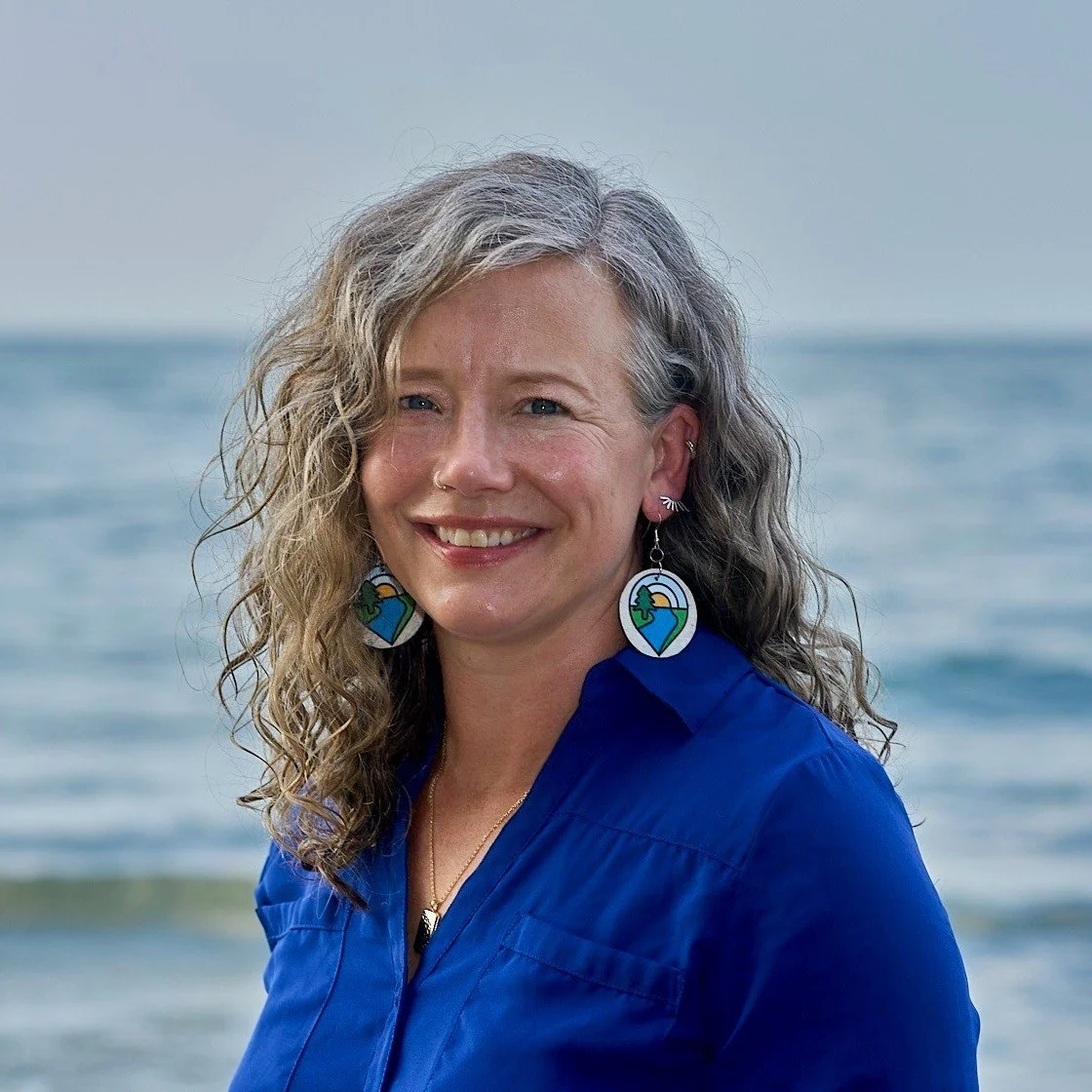
Kathryn Walker is Executive Director of the New York State Center for Sustainable Materials Management (CSMM) at SUNY College of Environmental Science and Forestry, where she leads statewide efforts to advance waste reduction, recycling, reuse, organics, product stewardship, and the circular economy. She has more than 20 years of experience in environmental education, pollution prevention, sustainability, and stakeholder engagement. At CSMM, Kathryn oversees a diverse portfolio of applied research, technical assistance, demonstration projects, and statewide programs designed to strengthen New York’s materials management systems. Her work includes the New York State Recycling System Needs Assessment, Recycle Right NY, and Certify Circularity NY. Prior to joining SUNY ESF, she served as Outreach and Education Program Manager for the New York State Pollution Prevention Institute at Rochester Institute of Technology. Throughout her career, Kathryn has built cross-sector partnerships among government, industry, academia, nonprofits, and communities to tackle complex environmental challenges. Her work focuses on translating research and policy into practical, scalable systems that move circularity from aspiration to implementation.