

Navigating Textile Circularity And Policy With Jessica Franken

Extended Producer Responsibility is sweeping the nation, but packaging rules don't easily translate to used clothes. Host Christine Yeager sits down with Jessica Franken to unpack how modern Textile Recycling Policy collides with a hundred-year-old reuse industry. Jessica leads government affairs for SMART, representing the secondary materials businesses that divert billions of pounds from landfills every year. Together, they break down why domestic markets can't absorb every scrap of donated fabric without thriving international trade channels. You'll discover how taking regulators directly onto sorting facility floors creates lasting policy breakthroughs that theory can't match. Learn what it takes to balance rigorous environmental goals with the practical realities of global supply chains.
---
Watch the episode here
Listen to the podcast here
Navigating Textile Circularity And Policy With Jessica Franken
Welcome, Jessica. Thank you for being here. I'm excited to have this conversation.
Thank you so much for having me. I'm really excited to be here.
As I have learned and moved into this sustainability world over my career, it's become more and more apparent that you cannot operate in this space without operating and thinking a lot about policy. Coming from a business degree in communications, graphics, and commercial printing, it was not something I thought would be a part of my career, but here we are. Now I dive deep into EPR. Anyway, I'm excited to have this conversation with somebody who knows so much about how to navigate this space. Though, besides all of that, we'll start with our original, our initial question, which is how do you live with intention?
Protecting Your Personal Boundaries To Lead Better
I was glad I had a heads-up for this question because it's an interesting one, and it really made me think. One of the things that I landed on was that I really try to be cognizant of my own personal boundaries in my work and also in my personal life. The reason that's become such a focus or intention for me is that I'm an empathic type and also a people pleaser.
Sometimes when you're wired that way, that can really put me at a detriment in some ways because I will sometimes agree to things or edit myself in a certain way in order to make sure that everybody else is being taken care of. I do not always think of myself, and what I've learned in building a better system of boundaries is that when I'm taking care of myself first, everybody else benefits from that because the alternative is that when you overgive to people that you work with or in your personal life, then resentment can build, and you're really not operating in your most effective way.
I’m not trying to get all psycho-babbly here. I do think that it's been really helpful for me because that carries over again in work, really making sure that I'm looking out for my own needs does help me be more productive and be clearer in how I'm dealing with clients and other people that I'm interacting with. Frankly, it lends itself to being authentic, truly authentic interactions and trusting that, which ultimately, again, I think, helps support the work overall. A long and involved answer, but again, it's a really thoughtful question, and it's something I'm still working on.
No, I love it. Boundaries are hard. I'm in this leadership book club, and we read this book, Set Boundaries. Have a better life. Something like that.
It’s just something that I have to learn. I do not want to make it sound like people were transgressing my boundaries. I was just a victim or anything like that. I just think it's interesting when you really check in with yourself. "What do I want to do here? What do I want to say? What's okay? What's not okay?" It ends up being foundational for everything that you do.
Absolutely. It’s not like people are necessarily coming for your boundaries, but it’s also about knowing where they are. It’s too hard. You cannot draw the line in the sand if you do not know where to draw it. That's great. Tell us also a little bit about S.M.A.R.T.
Tapping Into A Century Of Textile Recovery
S.M.A.R.T. is an acronym. It actually stands for the Secondary Materials and Recycled Textiles Association. This is a trade association that's been around since 1932, so nearly 100 years. Our member companies are companies that are involved in textile reuse, recycling, repurposing, and recovery overall. These are companies that operate thrifts. These are companies that are involved in the collection of these materials, either through things like convenient collection boxes that you sometimes see throughout local communities for donating your worn textiles and used clothing.
You can't lead systemic change if you're constantly burning out. Set clear boundaries to protect your energy and stay effective.
These are companies that are involved in importing and exporting these materials after consumer use. They are often involved in purchasing what charities like Goodwill and Salvation Army, what they cannot sell in their stores. These companies will buy those excess materials and figure out a home for them. All of this with the overall goal of preventing them from going to landfill. We also have members who are involved in sorting and grading these materials. Again, figuring out where these materials will be most well received and used once they are moved from that secondary stage that I mentioned.
We also have companies that are involved in the recycling of these materials, both mechanical and chemical recycling. Again, as I said, the association has been around for nearly 100 years. The industry has been around for millennia, I think, in some form or another. Just through our members' day-to-day operations, they're doing circularity, textile circularity, just as a matter of course because their main focus is preventing these materials from becoming waste. It's been really fun to be working with them. I've worked with S.M.A.R.T. since 2007, doing government relations with them.
It's been almost twenty years. The one thing I didn't mention is that a lot of these companies are small and medium-sized businesses. These are companies that are oftentimes family-run and have been in the hands of different business people for generations. They're really committed to the work that they're doing, which is really keeping these materials out of landfills. So much so that we had somebody on the S.M.A.R.T. teams many years back who came up with the tagline, "S.M.A.R.T. was green before green was S.M.A.R.T."
I like that.
It's great, right? It really just reflects the fact that these companies have been doing that work of textile circularity and, frankly, extended producer responsibility just as part of their regular operations. It's been fun to work with them. I feel like we're making a positive impact. As I said, small businesses are good people. They're really fun to work with.
New regulations shouldn't ignore existing recovery networks. We need policy that supports working infrastructure instead of reinventing it.
For me, it's one of those organizations that's like, “Look, people are doing it. This is helpful.”
As I said, it's quite fun to work with them because it's good work, and they also employ a lot of people in their operations. This is more personal, but I see a lot of care for their employees. Again, some of that is because it's generations that have been operating these businesses. It's like one big family in some ways. I know that sounds maybe silly or trite, but it's really, like I said, I've worked with a lot of different types of organizations, and this is one that's just a joy to work with.
EPR and packaging were focused on taking this line item away from municipalities and state governments and moving it to producers. As you just shared, for over a hundred years, there's been this secondary market infrastructure that's not funded by municipalities. Of course, municipalities are funding anything that ends up in a landfill, but the recycling of this material is an infrastructure that is happening independently of the way that packaging infrastructure has been managed and operated. It's a new way to think about this policy. Can you share a little bit about how you have that conversation with policymakers when they're talking about textile EPR, and then what sometimes are they missing?
Bridging The Gap Between Policy And Reality
There's just a lot of education needed in general. I do think, just to take a step back, textile EPR in the United States is quite novel at this point. The first EPR law that was actually a textile EPR law that was introduced in the United States was just a few years ago, and it was just passed in California in 2024. Again, that kind of system has never been set up here. There's been a lot of learning that needs to happen on all sides, including ours, but also that we need to educate policymakers on the existence of our industry and the impacts that we're already making.
Just to speak to those impacts, some fifteen percent of textile materials that might otherwise go to landfill are still being kept in circulation by industries like ours. That number is higher. It just needs to be updated. Fifteen percent, obviously, that means there's still 85% that could be recaptured. Fifteen percent is meaningful. You're talking about billions of pounds of material that's already being diverted and kept in some circulation, whether it's through reuse, recycling, or repurposing, where that value is recaptured.
In terms of what's missing, I think that there's a need for these policymakers to understand again that this industry does exist, that we're providing real solutions, that we work hand in hand with the charities that are collecting these materials as opposed to being adversarial, that the for-profit sector, which I represent, is really innovative. For-profits often have an ability or have the ability to extract value from these materials in a way that they would not necessarily expect. What's missing, if I do not do the job correctly, is an understanding of both the complexity of how the industry works and the contributions that we're making at all of these different stages of diverting those materials.
When do you change a policymaker's mind if they're leaving out this infrastructure that exists when they're trying to write these laws? How do you convince them? People talk about education, but is that enough?
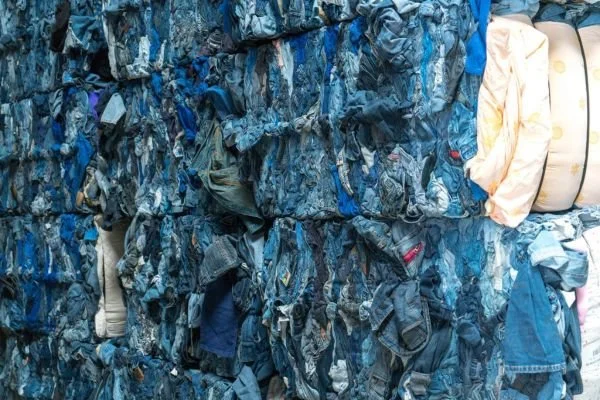
Textile Recycling Policy: Before anyone coined circularity, the textile recovery industry was already keeping billions of pounds of material in circulation. Here's what modern brands can learn from a hundred years of reuse history.
It's a really good question. Some of it, and it's funny, actually, I had not thought of this earlier, but some of that actually really ties back to my little bit of discussion about authenticity. I know that when I come into a conversation with policymakers, I never talk down to them. I'm always really focused on compromise and hearing out what their concerns are about, maybe how our industry works or the industry in general. Demonstrating that mutual respect is something that they feel when you interact with them and respond to.
Showing Regulators The Sorting Floor In Action
That's just the baseline of how I like to interact with policymakers or other stakeholders is trying to establish mutual understanding. It tends to be pretty well received. In terms of really helping them connect the dots, you're right, you can explain things, you can write things out, you can develop diagrams and graphics, and that can help with understanding.
A lot of times it really involves policymakers going to our member companies' facilities and seeing what it is that they do, seeing how the operations work. I'm thinking of one policymaker in particular in one of the states that's now considering EPR. I was able to join her when she went to one of our members' facilities, and they're involved in sorting and grading these materials and figuring out the best markets for them once they've been donated. It was like you could just see this light bulb going off when she could see how it all works.
Again, the complexity that can be involved in making sure that these materials find a home after what some might consider would be the end of their useful life. They're not letting anything go to waste. I think for her to actually see that in action made it easier to connect the dots when we were explaining it. She had the aha moment. Giving policymakers and other stakeholders the opportunity to see it in action is probably one of the most impactful ways to help them understand the overall system and where these different pieces fit together.
Definitely. I remember every MRF tour I've had.
Again, I've been in the policy world for a long time. I'm not on the industry side of any of these different clients that I've represented. For me, until I can actually see it and touch it and feel it, it can be hard to connect the dots. Once you do, it all makes sense. Policymakers are just like us, and opportunity, as well. Many of them benefit from that.
I love it. There's a strong instinct in policy, especially these days, to try to keep material domestic, especially secondhand material. That is like the responsible choice. In this hundred-year-old industry, which is now what I'm going to call it. A hundred-year-old industry, it cannot all stay domestic. What role do importing and exporting markets play in secondary textiles?
Securing Global Outlets For Used Apparel
Absolutely critical. Right now, I heard a figure cited, and I know there's substantiation for it. I just cannot recall. The materials that we all donate, if we do give to Goodwill or put our used clothing in a collection box located in the community, the top 30% of that material has the opportunity for market uptake here in the United States. That means that 70% of that material needs to find a home. You've got a number of receiving economies.
A lot of times, they're developing nations, and at least developing nations that really rely on imports of quality secondhand clothing in order for their citizens to be able to have access to quality apparel because new clothing, even the cheapest new clothing, is priced beyond what they would be able to afford in-country. That has been the case for decades now, as these materials that people in the US would not purchase represent a vital lifeline in these receiving economies.
US shoppers can't absorb all donated clothing. Export markets provide vital clothing and support millions of jobs worldwide.
Beyond that, there are also millions of jobs within these receiving economies that rely on the secondhand clothing industry. The reality of the domestic market simply not being able to absorb all of that material, particularly as EPR laws come online and more of those materials are being collected. That is something that is just real. There's always going to be a cap on what consumers here in the US are going to be willing to take in.
When you really think about the positive impact that secondhand clothing has again in these receiving economies. I understand the desire to keep materials domestic, but not only is it not realistic or achievable, but also the negative impact that would have on these receiving economies cannot be overstated. There are countless studies that talk about the real positive impacts that it has throughout the world, again, in these receiving economies.
This question was not in the prep, so you can say no. I've always said, and I'd love to hear your point of view. I feel like chemical recycling is in a world where all textile materials are diverted from landfills. I believe that chemical recycling will have to play a role. Do you agree?
Expanding Recycling Tech Beyond Mechanical Sorting
Yes, absolutely. Listen, I understand policymakers' concerns. I understand that it may be a bit more applicable when you're talking about things like packaging and plastics. When it comes to textiles, and in order to meet all of these goals that they're trying to achieve, it's like what you were just saying, or what we were just saying, about having these international markets that really benefit from these shipments and also keeping them open in order to preserve the potential for these goals to be met. It's the same argument for chemical recycling.
There are going to be textiles that simply are not capable of either being reused as clothing or repurposed as other things like industrial wiping cloths or even mechanically recycled. If you really want to achieve the goals of EPR, you're going to have to have an element of chemical recycling in order to capture those materials. S.M.A.R.T. has always been, again, because of the industry's age, I guess, as you've said, the association has been around almost a hundred years, and like I said, really, truly collecting textiles and reusing and repurposing, it's been around for hundreds of years. I've read for thousands of years.
I'm sure, right? They all used everything back then.
Yes, exactly. When you think about an industry association that has really represented a good deal of the reuse side of things, there is also just this recognition that you're going to have to have multiple technologies that can recycle those materials that simply are not capable of being reused. Chemical recycling is going to have to be part of that equation. Again, there's a lot of education of policymakers that's going to need to happen to make sure that reality is reflected in these measures. I am hopeful that we can get there.
How do you confront resistance from policymakers and win them over?
Again, I think it's really explaining to them how all of these pieces fit together. Again, helping them understand that we're not in opposition to other segments of the recovery value chain. As I mentioned, Goodwill and other charitable organizations, the Salvation Army, and the DAV are involved in collecting these materials. We're not fighting over the same material.
At the end of the day, we're supporting one another, again, by taking a lot of these charities' materials that they cannot sell in their stores and other locations and figuring out a home for them and, frankly, giving them revenue as a result of that because we're buying it from them. Helping everybody understand that we've been doing a lot of really good work for all of these years and working cooperatively, and this is not an either/or situation. In order to make things like EPR work at scale, you're really going to have to have all hands on deck.
I was thinking about what you said, and dealing with municipalities, like having municipalities involved in textile collection, recovery, and recycling, is one maybe one piece of the equation, but you're also going to need the charities involved. You're going to need the for-profit sector involved, because the amount of material is going to require all hands on deck. Helping the decision makers at the policy level understand that is something that we're trying to do. I do think it's a message that's getting through because I'm seeing it more and more in discussions that are surrounding these different policy measures. That's really gratifying.
Is there any data that you've seen resonate best with a policymaker?
Yes. One of the things that's been really interesting, as I mentioned, sometimes there are concerns, or I touched upon this, sometimes there are concerns about these materials that are being shipped out of the United States, as I said. Really sharing with them the understanding of how this is helping these communities in these receiving economies.
The number of jobs that are created as a result of this industry, and these imports and exports being able to flow freely, helps them understand that there are many credible studies that have been subjected to peer review and other more scientific and methodologically sound evaluations that find that materials that are being exported are very small percentages and are actually waste materials.
Don't get trapped by a rigid path to your goal. Listen to your team, adapt to surprise hurdles, and keep the mission moving forward.
Again, that's because of the system I described that's in place and grades these materials and figures out the best home for them. Waste rates are part of the equation. Understanding data, like how these materials are being reused, repurposed, or recycled, is really helpful for them. Sometimes what happens is, and I'm thinking of this one particular statistic that is out there that just is not based on any credible study, but it's sensational.
It's gotten picked up by the news media, and then other media outlets repeat the same fact, but there's no real substantiation to this underlying statistic. It gets cited in other studies that are being done as fact, but there's no underlying substantiation. It's just this circular citation process that is problematic. Really pushing back against some of that misinformation with these more credible studies has been really helpful in countering some of that misinformation.
Yes, definitely. There's a lot of information that becomes sensational. The number of times people have asked me, "Is it even worth recycling? I've heard that it does not work."
It's exactly that. One thread can just spin out of control. Again, it ends up being cited, and it's like, "Hold on, what was the original underlying study?" This just happened recently when I was looking at a position paper that was out, and I will not say the organization. I will not even allude to them, but they're a credible organization, and they were citing information and statistics, and then I would go read the underlying study, and it would be talking about an entirely different subject or not drawing the conclusions.
I'm like, “I do not know.” In policy, I just tend to be a real straight shooter and honest broker. I will not lead with information unless I feel it's credible. There are a lot of organizations out there in the zeitgeist that do not necessarily adhere to that strict set of ethics. After all these years, I've been doing this for like 30 years, and it still never fails to shock me.
Part of it is like we're in such a fast-paced world that trying to stay up on the times means that sometimes you cite things that you have not had the time to do the due diligence on, and then that can get you into trouble.
I agree. My father was a journalist and a broadcast journalist. For me, at least some of that has really pounded into my head that I need to verify every source and fact-check information and be a critical thinker. To your point, that's a laborious process. Again, going to be in the policy space, you really need to be able to do that as a professional and just as a consumer of information, but not everybody has been taught that.
You add to that the fact that there is so much information coming in at all times. People, as you said, just shut down and only siphon the information that they can hold on to, basically. It's very time-consuming to do all of that additional research to understand where the information is coming from. I'm very sympathetic to that. Also, it's not going to quell within me that desire to know what the truth is as much as any.
You've seen a lot of change in the industry. What change has forced you to confront something about yourself as a leader?
I tend to be somebody who has really strong instincts overall, a pretty strong gut. I have a pretty high EQ. With the current policy environment and all the things that are going on in the world right now, my instincts have not always proven to be right because there are variables that, maybe in the past, I might have been able to predict based on experience and what it is that I'm feeling that seems fairly logical. There's a lot going on right now.
Just from a policy standpoint, and in the world in general, that is extremely unpredictable. Sometimes what I think is my gut is not always right, and that has been humbling a little bit. Also, in some ways, maybe better, because it's like better in terms of being an effective advocate and being able to work with other stakeholders, because I'm considering more ranges of options when things come up.
When you do that, you can have, from a strategic perspective, when you're considering all the options and permutations of what could possibly happen. It is stimulating and helps you think about what other information you might need to gather in case XYZ happens. It has lent itself to me being even more prepared, not to say I've always been somebody who's overprepared in things. Again, thinking outside of the box, because a lot of stuff that's happening is not in any kind of box that I ever could have prepared for.
How do you sort of overcome that? Your instinct is wrong. Does it ever shake your confidence? You said humbling, but like sometimes I've said that, owning my own business, that when I do not listen to myself, that it's actually almost always been the wrong choice. That being said, there have also been a lot of cases where, especially where I think, like, outside forces are going. It shakes you. You're like, "Wait, am I really a subject matter expert? Where do I fall?" How do you handle that?
As an aside, I have a friend who, after a really exciting career in the tech sector, had a couple of kids, and she decided to be a stay-at-home mom. She's an entrepreneur at heart. Even as a stay-at-home mom, I tried to build this Amazon business, which we had actually not tried. She'd been successful in creating an Amazon business that was involved in shipping and selling pet beds, like cat beds, really fancy cat beds. She built this really successful business. It was bringing in quite a bit of money, and she was really happy.
President Trump came into office, and there were all of these trade wars, and then COVID-19 happened, and there was this breakdown in supply chains, and everything fell apart. For a while, I said, "Listen," or she felt like she was a failure. I was like, "How could that have nothing to do with you. Your instincts were totally right. It's just these outside forces that you could never have predicted had an impact, and that happens." To your point, you do not want to second-guess your gut. It's just good to consider these outside forces that might have an impact as you're planning and recognize that sometimes they're just things that are outside your control, and you adjust and adapt.
That's great. What are a couple of practical tips for someone who's leading or themselves going through and managing change?
Again, this ties into the question of boundaries and everything, or it dovetails with it, where I think it's really important to make sure that you do not avoid hard conversations. When organizations are going through change, that can really make people anxious, and they may dig in on a position or really cling to wanting things to be the way that they used to be. That speaks plainly and clearly about whatever the situation is and why this change needs to be heard.
People dig in and act with that anxiety when they do not have frank and honest conversations with people. I find that just being direct and straightforward can really allay a lot of anxiety. Again, just not being secretive, being direct, explaining what's going on, why it's happening, it's that ripping off the band-aid, but people really create that. It's uncertainty that can be problematic when you're trying to make some organizational change. That's definitely one thing.
Honestly, the original tagline of this was to confront the discomfort that comes with change because it is uncomfortable. To your point, if you avoid that discomfort, then it makes it harder to make the change.
Separating The Ultimate Goal From The Chosen Route
Definitely. I think that you can also listen to what people are saying, what part of a change makes people uncomfortable, because there may be risks or concerns that you had not considered that are revealed in those kinds of conversations. Really listening is a big part of it, being an active listener. This is something, actually, because I'm going through more trying to implement some changes within our organization right now.
You have to be sure to separate the overarching goal from the path that you've chosen to get there. Maybe don't get so wedded to a certain trajectory in order to achieve the goal, because there's just a lot of opportunity in the path. You have a goal and be open to utilizing different methods in order to get from point A to point B, and do not get too locked in on a specific journey because there are often a lot of different ways to get from point A to point B. I tend to be pretty earthy, down to earth, I would say, and maybe logical and analytical.
Sometimes I, too, can be somebody who digs in and says, "No, this is how we should go from one place to another." Recognizing that, again, it ties in with this conversation about all of these different variables there that you cannot account for, that there may be other variables that I have not thought of. Really listening to others' feedback and being open to adjusting, which I think I'm pretty good at, but I think that makes for a good leader. It's more of that collaborative process.
A lot of people talk about textile recycling as if they do not think of it as something that's existed for a long time, but what you brought to light is this idea that EPR and textiles are novel, but they're interacting with a 100-year-old, thousand-year-old system. The back-and-forth that's going to happen naturally with those two forces. You also started the conversation with boundaries. It's really important, especially in the sustainability world, that when you are leading change, is to have those boundaries of what you can handle and maintain versus what you cannot. The outside forces, I think this boundary idea plays through a lot of the topics that we talked about, which are beyond personal boundaries, but also here's our goal. Here's what we're trying to achieve.
Let's make sure that we're marching in that direction. We have this line in the sand. Thinking about the work in this way, I think it can be very helpful to anybody leading change, especially in the sustainability space, when you feel like sometimes it's too hard and the boulder is too heavy and nothing is moving. Again, for those that are in that space, a 100-year-old system in operation that's been specifically focused on reuse of textiles, which is exciting. You also shared the statistic that fifteen percent of clothing is kept in circulation, which is actually higher than Louisiana's recycling rate. It's material.
It's kept in circulation in so many different ways, too. Some of it's reuse, some of it's repurposing, and some of it is recycling. The diversity of that is really pretty cool too. I do not even know. I think that number is probably higher at this point, but we're relying on EPA statistics, and they only refresh them so often.
You talked a lot about education, really this idea of respectful dialogue that comes with education, and coupling that with this idea of seeing is believing, like showing what is actually happening and how powerful that can be in changing someone's mind. The data point that you brought up, which I love, is the economic impact of the industry, and bringing this economic impact of the secondhand industry into the conversation with policymakers is a way to help change their minds about something that they may not have cared about before or believed in before.
I completely agree. Again, it's also just something that is really feel-good for somebody who's advocating for this industry. I'm always happy to point to it. You're absolutely right in all the industries that I've worked in. They always want to understand economic impacts and what it all means. Understandably, they want to represent their constituents, and they want to know who's benefiting and if there is a benefit. I totally agree that it is always resonant for policymakers.
Thank you for this lovely conversation. I really appreciate it.
Thank you. This was fun. You're a wonderful interviewer. I really appreciate it.
Important Links
About Jessica Franken

Jessica Franken is a public policy and government affairs leader who has spent more than 25 years helping people navigate complicated issues, competing interests and changing policy landscapes. She currently leads government and external affairs for SMART, representing the used clothing and textile recycling industry on issues ranging from circular economy policy to international trade. Jessica is especially interested in the space where big ideas meet real-world consequences, and in making sure policy works in practice, not just on paper. She brings a mix of diplomacy, persistence and pragmatism to her work, along with a healthy respect for nuance. She has worked with policymakers, businesses and industry leaders throughout her career and is known for translating complex issues into clear, actionable strategies. In 2021, after nearly 30 years in the Washington, DC area, Jessica finally made the leap to build her dream life in the San Diego area, where she runs The Franken Group, the government affairs and strategic consulting firm she founded in 2009.