

How Colorado’s Packaging EPR Law Became Reality: Lessons In Circular Economy, Sustainability, And Policy Change With Kate Bailey
How do you create lasting change in sustainability when progress feels slow?
In this episode, Kate Bailey—one of the key advocates behind Colorado’s landmark packaging Extended Producer Responsibility (EPR) law—shares hard-earned lessons on advancing the circular economy, influencing public policy, and staying motivated through long-term environmental challenges. From shifting strategies after setbacks to building productive relationships with legislators, Kate reveals why meaningful change rarely comes from a single breakthrough. Instead, it’s the result of thousands of intentional actions that steadily move the needle forward.
Whether you're a sustainability professional, policy advocate, business leader, or simply passionate about reducing waste, this conversation offers practical insights on driving impact, navigating change, and rethinking what success looks like in the circular economy.
---
Listen to the podcast here
How Colorado’s Packaging EPR Law Became Reality: Lessons In Circular Economy, Sustainability, And Policy Change With Kate Bailey
Welcome back to the show. We are interviewing Kate Bailey. She is the chief policy officer for the Association of Plastics Recyclers, or APR. This is an organization that is working to improve how plastics actually get recycled. They have put out tons of documentation, like their APR design guides, to direct how packaging can be made more recyclable.
Kate runs the APR's advocacy at the state, federal, and global levels. Before the Association of Plastic Recyclers, she directed policy and research at EcoCycle, which is a nonprofit here in Colorado. That nonprofit did not just write about recycling, but it also operated programs, which means she has seen firsthand the gap between what a bill promises and what a material recovery facility can deliver.
She was also part of getting Colorado's EPR for packaging law passed in 2022. She shares a little bit about that in our discussion. That puts her on both sides of the EPR equation, but also shows that she has been in the circular economy industry for a long time and has really driven material change, pun intended. She is open, honest, and frank, and has a lot of advice on how to push through when it feels like we are not making progress. I am excited for the conversation. Thank you, Kate, for being here.
---
Thank you, Kate, for being here. I am super excited for this conversation. Personally, starstruck, because I know you are a part of the early days of Colorado EPR. Thank you for everything you have done there. As always, we would like to start with, how do you live with intention?
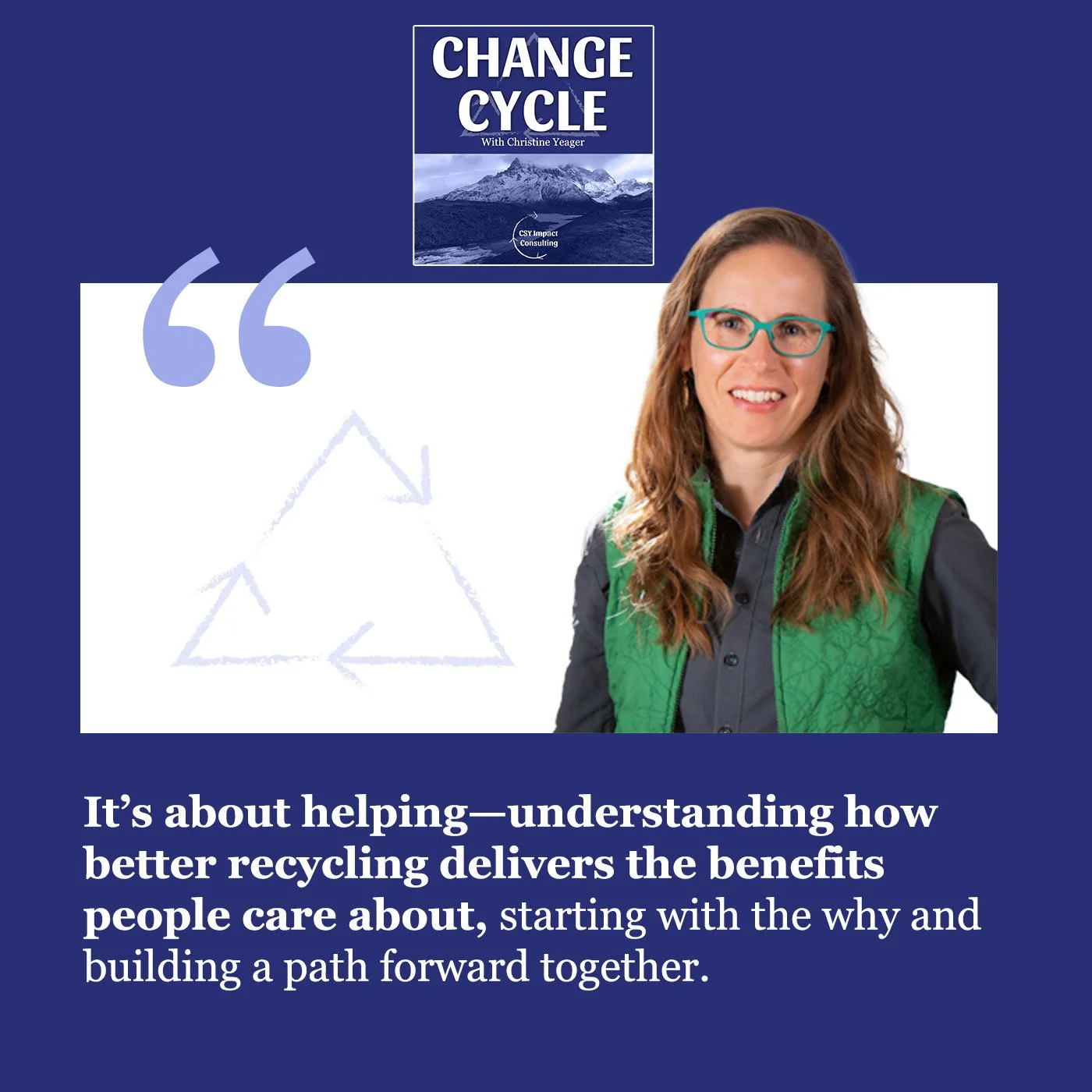
Developing An Intentional Toolbox To Manage Ambition And Focus
Thanks, Christine, so much for having me. It is great to talk to a fellow Coloradoan. We are wearing our winter clothes, unfortunately, but summer is hopefully here. Great question. This one really made me stop and think, not the usual podcast intro. I am going to be honest, it is a constant challenge. I am someone who has lots of ideas, lots of ambition. Let us go do all these things. That sounds fun. Let us learn about that. Definitely learning. I do not have the time, the energy, the money, or the focus to do all of the things anymore.
It really is something that I am very much working on, trying to figure out. I was thinking about it in terms of building out my toolbox. It is not just one thing that helps me, but do I really have the right mix of tools in my toolbox? I came up with four things that are really helping me continue to move toward the goal of living more intentionally. The first is my husband. I was smart in marrying someone who lives very intentionally, very in the moment, very grateful about things.
He is a great inspiration and source for that. Second, I am a big fan of walking. It is something my grandmother taught me. It is something I try to do every day, and that ability to just walk away from the computer, step outside, see something different, helps me come back and think about what it was that I was doing. The third is that I am really working on focusing on priorities rather than getting tasks done. Trying to differentiate that on my list.
Time spent on priorities is more important than whether I get all the little task things done. The last part is the pause. The pause is, are we going to end this podcast? Am I going to jump right into my email, or am I going to take a second and say, “What just happened? What am I doing next? That pause comes and goes with the excitement of things, but I am finding it is more and more useful to set. Where am I going next?” That is all about the intention.
I love the pause. That is something I skip a lot.
We all skip, right? You go through a week, and you realize, I have not paused all week. No wonder I cannot sleep.
I know I always say it is like the worst day is when you have a million back-to-back 30-minute meetings. You are just jumping from topic to topic. That is a really good reminder. With life, the circular economy's progress really has not been linear, and as it should not be, I guess, because it is the circular economy we are driving towards. It comes with a lot of exciting moments, a lot of bursts. She has been in the circular economy industry for a long time and has really driven material change, pun intended. It also comes with stalls, and then sometimes is deprioritized. How do you stay patient without losing momentum or burning out?
Maintaining Patience And Momentum During Non-Linear Progress
Patience is also something that does not come easily for me. Something I learned quite a bit. I will say that I was just on a panel a couple of weeks ago. I spoke at the Washington State Recycling Conference. There was a great question from a college student about how to stay committed to environmental work over the long term and the ups and downs. This is actually a question that I have had a number of times.
It is so important in our industry that we talk about this because we all work in this space, because we are committed, because we see positive impacts of a circular economy, and it does not happen in a linear fashion. Sometimes it feels like steps backwards instead of forwards, or I do not even know if we are making steps sometimes, and especially now, I think there is a lot of turmoil in the world, there is just a lot of uncertainty. It is a crazy time where there is so much momentum with seven states having packaging EPR and so many other great things, and yet so much geopolitical turmoil and economic uncertainty.
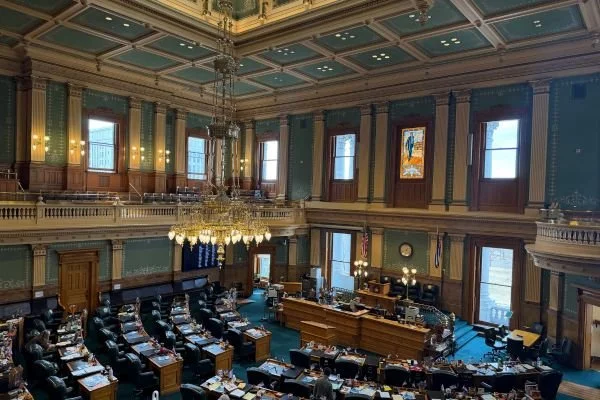
Colorado EPR Law: It's a remarkable moment: unprecedented momentum in sustainability, with seven states passing packaging EPR laws, amid growing geopolitical and economic uncertainty.
One of the things that I work on is that both can be true. We can both be making progress in some areas and not making as much progress in other areas. No size fits all definitions of progress. I am also a big fan of reflecting on, “What have we done? Where are we? What was the win?” One example of that is I was just at the Sustainable Packaging Coalition Conference. Lots of talk about packaging EPR, lots of challenges with things, lots of questions about the lawsuits, and you have a general sense of uncertainty. Moving forward, but what is it going to look like? When I looked around the exposition hall, there were some really cool things happening in packaging design.
One of the things I came back with was just that companies are moving forward and packaging design is not something that happens overnight, and those investments, that creativity, the innovation, those things are happening and have been happening for the past couple of years. Just to see, it is not always the thing we see on the surface, but sometimes a little bit below the surface. That is actually a massive change happening across thousands of product categories. Does not always catch the headline news, but things that really are making a difference.
There has been a lot of progress that has been made in the last few years. I mean, even 10, 5, 15, 20, whatever. There has been a significant change, and there is still a lot to be done. People come to me all the time and say things like, "This is what EPR is not doing," or "Why is EPR not doing this?" or "Why is it not blah, blah, blah." It is not meant to solve everything. It has its place. It does certain things. It cannot do everything. However, what a lot of steps taken can do is solve specific challenges that have a meaningful impact. There are a lot of recyclable materials showing up in landfills that do not have to. I love that reminder to reflect on the progress.
I was just going to say, also, I will be honest. I helped pass Colorado's packaging EPR law in 2022. People always ask, "That happened so fast. You got done the first year." I say, “You were working on that for us, all in twenty years, probably.” If you had told me five years ago that Colorado would have had a packaging EPR law, I would have bet you good money that it was not going to happen.
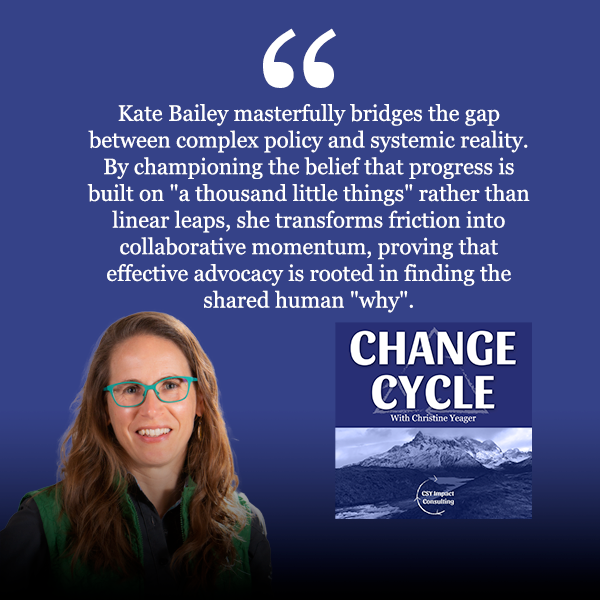
To me, it is also always that change comes from different places. Sometimes you work and work, and you think nothing happens, and then all of the right things align and something amazing happens. I have also learned to expect that change is not just one. It is a thousand little things that all hit a tipping point. That is the frustrating part of the journey. When you look back, that is the magic part of the journey as well.
I love that change is not like one thing. It is like a thousand little things. That is also super important when you are a sustainability professional, and it feels like tariffs and other macroeconomic challenges are getting in the way of funding progress. This is just one year or a couple of years in a very long journey where we have seen a lot of progress. Speaking of challenges, can you tell me about a loss or defeat that changed your strategic direction? What did it cost and what did it teach you about where to spend your energy?
Learning From Strategic Defeats To Shift Policy Advocacy
My previous role was at EcoCycle, which is a nonprofit recycler based in Boulder, Colorado, one of the first organizations to start curbside recycling in the country, and really one of the leading champions for better recycling across Colorado. I was working with them when we passed the packaging EPR law in Colorado. Take it back a couple of years. I cannot remember exactly, mid-2010s maybe. We were trying to get local cities to support recycling for all residents.
The goal was that the city would put forward a contract, and they would provide free recycling to all residents along with their trash service. That was sort of the best model to provide it most equitably. Unfortunately, the way Colorado is, it is a free market for recycling. Many listeners are probably like, "I already have this. Why would this matter?" Some states do not have this.
If you do not have a city-run recycling program in states like Colorado, you have to pay extra, and you have to look up a hauler on the internet, do your own research, and call them. There were many obstacles. We were trying to make recycling easiest for residents. Long story short, we have this huge campaign in one of the largest cities in the Denver metro area, and it culminates in the city council hearing. The city council is going to get together on Tuesday night. They are going to hear about recycling, and we had a lot of public pushback. Not so much on the recycling part.
Everyone likes to recycle, but the contractor and residents are expressing concerns about things. We ended up spending four hours that night and three hours the following week. Seven hours in this council meeting. Just as the meeting progressed, you could see this was just not going to work. You could see we were losing. Again, it was super frustrating because it was not that people did not want recycling. They just did not like how you were going about it. That was a very frustrating experience.
It wasn’t that people didn’t want recycling. They just didn’t like how it was being done.
I sat back, and I did the math. There are 270 communities across Colorado. Some of them have recycling, a lot of them do not. We are not going to go door by door and city by city to try to get this done. It was really a light bulb moment for local governments struggling with the resources and the time to focus on recycling, because they have to manage so many other priorities around fire departments, libraries, and everything. Local governments do so much that recycling is better managed at a state level and through a program like producer responsibility, where the companies that make the packaging help fund it.
Local governments certainly have a role if they want one, but many of them do not want one. They do not need recycling on their plate. They are happy to work on all of the other problems on their plate. It really was a turning point. My journey, I think, is also part of EcoCycle's journey, which states that policy was really a better way to help the slate of local governments. One of our proudest moments during the packaging EPR hearing was actually having representation from all the Colorado communities.
We had rural, we had urban, we had progressive, we had conservative, and they all said, "Residents want more recycling. We do not have the resources to give it to them. That is why we want to see EPR packaging come to Colorado." It had come full circle from that really challenging city council meeting to finding a solution statewide that helped meet cities where they were.
You identified what the pushback was. It was not about the topic. It was about how and redirecting based on what the pushback was. That is so powerful. I love living in a state with EPR, to be honest. When you run into resistance from legislators, from other folks, how do you make circularity more relevant to them? How do you win over legislators towards your cause, whether it is circularity or some other topic?
Bridging The Gap By Connecting With Legislative Priorities
I am a really big fan of sitting in somebody else's shoes. What I try to help people understand about legislators is that, first, they are normal people. They are just like us. They also have a million things on their plate. Always encourage someone to attend a city council meeting or go spend a day at the legislature. This is what it is like. You have a meeting on transportation, then you have a meeting on insurance, then you have a meeting on fire mitigation, then you have a meeting on childcare and early education. Somebody comes in, and they want to talk about recycling.
Your head is already spinning, and it is 11:00 in the morning. First, it is really important to understand that they are juggling a lot of priorities and they are not experts in anything. For me, it is really about connecting with what they care about. What do we have in common? One of the things I have really enjoyed about working in recycling for the past twenty years is that there is always some overlap with the why. Depending on who I am talking to, we might talk about how recycling creates jobs in the local community and why we are sending our recyclables to another state when we could be recycling them in the state and creating better jobs. We can talk about reducing climate emissions.
We can talk about reducing the impacts of landfills and the impacts on the communities located next to those landfills. We can talk about clean air and clean water. We can talk about a variety of things. Now we are even talking about global competitiveness. We are talking about whether the US does not make recyclable packaging, somebody else will, and we are not going to be able to sell our products into those countries. It has been fascinating to me, there is always some overlap in the Venn diagram of what the legislator or the CFO or somebody like that what are they trying to achieve.
If we can find that overlap, then we can figure out how recycling helps with their agenda is not the right word, but like what they're trying to achieve. If they are trying to support jobs, if they are trying to protect the environment, if they are trying to reduce the city council's spending on a new recycling center, then they can support EPR. To me, it is really less about making them care about my cause and recycling, and it is more about helping. How do we figure out that improving recycling actually delivers the benefits that they are focused on? Really starting from that, why, and then seeing if we have a path forward together.
That is great. You started with like, they're just like us. You have lynched into all those topics. It is just like a 30-minute meeting. It is like on hyperdrive and consolidated. When they are state officials or city officials, they often have other jobs that they also have to do. Talk about topic overload. Something that maybe I am unique, but maybe I am not. I did not recognize it until I was in the sustainability space and really until I moved here, more so to Colorado, versus living in Georgia.
Also, when I was in my twenties, a lot of times you felt like, "I am probably going to move." Why participate in government at all? It is like, it is not really, I do not own a house yet. You do not have the same sense of, or I did not, or was not raised that way to think about my involvement in local government. Maybe you could talk about demystifying that a little bit. As you said, go show up and set meetings with your legislature. It feels intimidating if you have never done such a thing.
It was to me the first many times, and there are still times I walk into the legislature and say, "Take a deep breath. They are just people. They are here to be in the best interests of the state, city, federal government, all the way up." A couple of things to start with. First, democracy is all about showing up. They literally listen to the people who give feedback, participate, does not always have to be that you go to a city council meeting. We have a farmers' market, and they are doing a survey on a new rec center. Give your feedback, talk about the things that are important to you.
There are lots of easy ways to just participate in that way. Most cities and counties have a newsletter you can subscribe to. What are all the recent updates? Even just starting to follow what is being talked about is an easy thing to do. I will say there is nothing like actually going to a city council meeting and hearing, like, “What are they talking about? What is it like?” Really, anybody can stand up there and make a two-minute comment.
It is super good practice. If no one stands up there and says, "I want better recycling, and I want less plastic waste," then the council is going to continue working on whatever else they are doing. It really is in many ways about who shows up and who makes comments. I remember one time when I was working, we were working with the city of Boulder, and a number of high school kids started to show up, and they said, "We're tired of these plastic bags, and we want to do something about it."
They showed up week after week after week. That ended up turning into a tax on single-use bags, which then set the stage for the state to do that later. It started with those high school kids who just started coming to the meetings to make their voices heard. It really is about showing up. There are plenty of people to help you do that, so never feel like you have to do it on your own. If you do not have your own government relations team, there are lots of great organizations that will hold what are called lobby days at the state legislature.
Recycle Colorado is a great example. There is a day when you can just go down to the state Capitol, and they will set up meetings, and they will give you talking points, and you will be in a small group, and you are just going to go to a couple of offices, and you are just going to say, "Can we talk about recycling and why it is important?" You can share more about your business and what you are trying to achieve. It is a very easy root exercise to get people to feel more comfortable.
I actually participated in that for the first time this year, and I volunteered to help make some of the meetings, and I was like, "They do not know who I am." They responded, and they are like, "Sure, we will be happy to set up a meeting." I was like, "Okay." It was much easier than I thought it was going to be. Yes, they were very attentive and listened to what we had to say. I was like, "Now I am like, maybe I should have my own personal lobby day once a year where I have my tick list of issues that matter to me.” I just show up at the Capitol and rattle them off to everybody.
You can because you are a citizen and they are there to represent you. It is a great example. I will certainly say for folks who are listening from a business perspective, invite them to see your facility. There is nothing like bringing a legislator through a recycling facility of packaging production, they just love to see the stuff that is happening on the ground and connect with the businesses. They are more than happy to come talk.
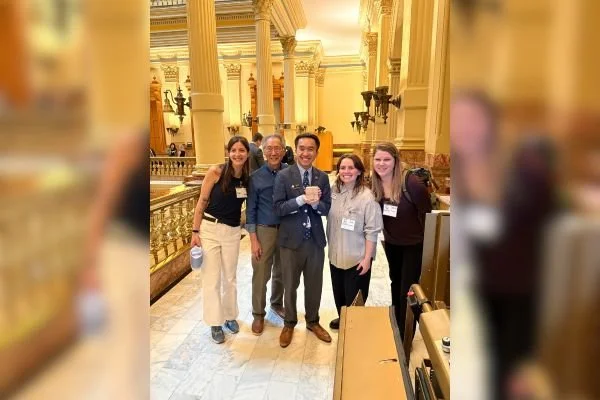
Colorado EPR Law: Nothing compares to bringing legislators into recycling and packaging facilities—they get to see the work on the ground and connect with businesses firsthand.
I love the idea of inviting them to come see a facility that I would have never thought of. What assumption about the future of circularity do you think we need to just let go of?
Redefining Circularity Beyond Packaging And Embracing Progress Over Perfection
We need to stop recycling the myth that it only has to be circular in order to work. There is so much we can do with recycled plastics, for example. My recent work is focused on plastic recycling, trying to solve this massive global problem. There is a lot of focus on, we have to take the packaging and recycle it back into packaging. That is great. There are times we can do that. It works really well today for water bottles and soda bottles. They are made back into new bottles more than they are made into any other products.
Every time we take recycled plastic and we replace the use of new plastic, that is a win. When I look around my house, and I see my outdoor table, I see my carpet, I see the sweater, I see all these things that are made of plastic, this computer, like so many pieces of plastic all over our world. All of those are opportunities to use recycled plastic instead of new plastic. To me, circularity sometimes encompasses those things as well.
Some people take a really strict definition that it has to just be packaging back to packaging or clothing back to clothing. I really like to think that we have so much progress we need to make, so much room we need to grow, that this is an and, both, all of the above. Yes, please. Thank you, everyone. Everywhere we can do it is really important right now.
I think a lot about this when it comes to textile EPR in California for now and perhaps other states later, but it is going to be very difficult to convert that back into exactly what it was before. There are still options to take clothing and recycle it into something else. It may not be, to your point, fully circular. I was actually having a discussion with someone the other day, and they were saying, "Nothing is really circular."
I was like, "Yes, composting is pretty close." They are like, "Yes, even that has a loss." It is true, right? Everything has some level of loss of value. We cannot get away from that. We should still strive to create what makes sense for that particular material in the economy. By focusing on the economy part, as long as it is turning back into value that somebody else is willing to buy and put back into something. I agree that there is circularity.
Part of that is to let us just think about where we are in the broad scheme of a circular economy. We are in the early days. People are like, "This is the first or second inning of the game, folks. We have a long way to go.” It is not like we are just putting the final touches. We are tweaking things. We just have so much progress to be made, and I think it is just really important that we focus on that progress rather than that perfection right now.
Forever. I cannot imagine a world where we are going to hit perfection.
I like to think we will work ourselves out of a job, but the older I get, the less I think that is going to happen in my career span. Our point earlier about it is not linear, right?
It is not linear. It is definitely more of a sine-cosine situation.
Actually, I was thinking, this is why it is so great that your podcast is called Change Cycle, cause I was like, it is a cycle of change. Up, down, sideways, lots, little.
Thank you for catching on.
Maybe it is just late to the game.
Embracing Constant Change And Prioritizing Innovation Over Predictability
No, I put a lot of thought into this because I do not know. When I worked at Coke, like every eighteen months, there was a reorg. It became this mantra that like change is constant. You think I am exaggerating, but it was like, I look back, and it is pretty much every eighteen months. You become used to this uncertainty of where to focus and what the work needs to be. It forces this level of prioritization. The point is that it is constantly changing. Everything's changing.
There is value to at least the company for them to see that, like if they can force innovation in that way through that, that is a method. I am not saying I enjoyed it all the time, but it is a method. Exactly, change is not a point in time. You even said it, right? It is not one change that is going to make a difference. It is thousands of little changes that come together to make the actual end product of change that you are looking for. That no longer becomes the goal.
You set a new goal, like if we learned, I think I read a book once or something like that, when you put your Legos together, if that was it, and like you just did it once, then you were happy, and you're like, "I am done. I have learned everything I need to learn." Never put more Lego pieces together than life would have been really boring. We are always striving for more. Hopefully, at the end of your career, you feel like you have made a lot of progress and that your job has at least shifted in a lot of ways from where you began.
Maybe you did not create a circular economy that puts everybody pushing for a circular economy out of a job, but I do think the job is different, and I think that the people who are doing the work are different. Twenty years ago, it was a lot of scientists or something driving a lot of the climate change work. Now you have business leaders, and you have whole companies centered around driving a particular objective, and they are making a profit. The world is changing in a good way that changes the drive, maybe.
Just how much we have seen in our short career span is amazing.
I am going to, I have got a lot of great nuggets, and I think that people can walk away from here with some tactical advice, too. I love that you started out with some examples where you shared how you were overcoming things that do not come easily to you. You're like, "These things are hard for me and yet here is how I approach them nonetheless." That is a really good reminder that a lot of things are worth doing when they are not easy. You reminded us that both things can be true.
It can be hard and feel like it is not moving. Some things are moving, and you can try to focus on those things as well and celebrate them. Raise up the success stories to help you move past the challenging phases, especially in the face of uncertainty, because these are the things that we have accomplished. That can help ground us when we are dealing with uncertainty. I said it already, but I will say it again.
Change is not one thing. Change is a thousand little things. That's a new mantra that I want to bring into my repertoire as a really strong reminder, especially when you are dealing with even just health stuff, right? As it is, sometimes it feels like nothing is changing, but it is the thousands of little things that you put together that can help you achieve that goal. I am really hoping that 2027 is the year I hike another 14er. We will see, but you know what I mean?
You talked a lot about and gave a really strong example of changing direction, not based on what you were trying to push for, but what it was, what the like identifying with the true obstacle. It was around the how and then rethinking the how and using that to then garner support for the what. It is like, "Look, we listened to you, we changed the how, and now please help us support the what." Which I think is a really powerful reminder and something that people can apply to all sorts of aspects of sustainability and circularity.
One of the reasons I wanted you to come on here was to talk about legislators and policy and the importance of that and sustainability, so I am so glad we dug into that a little bit and how legislators are just like us. They are not scary. You can talk to them and explain that democracy is for those who show up. That is something that I think we can just close on a strong reminder in these days, that showing up is what is most important. Thank you so much for this time.
Absolutely, Christine. What a treat. I hope you get that 14er next year. I can highly recommend quite a few of them. Just such a great analogy. That's not just one step. That is a whole lot of steps that lead up to a monumental summit. Thanks for being on this road to the circular economy together. Thanks for all you do.
Thank you.
Important Links
About Kate Bailey
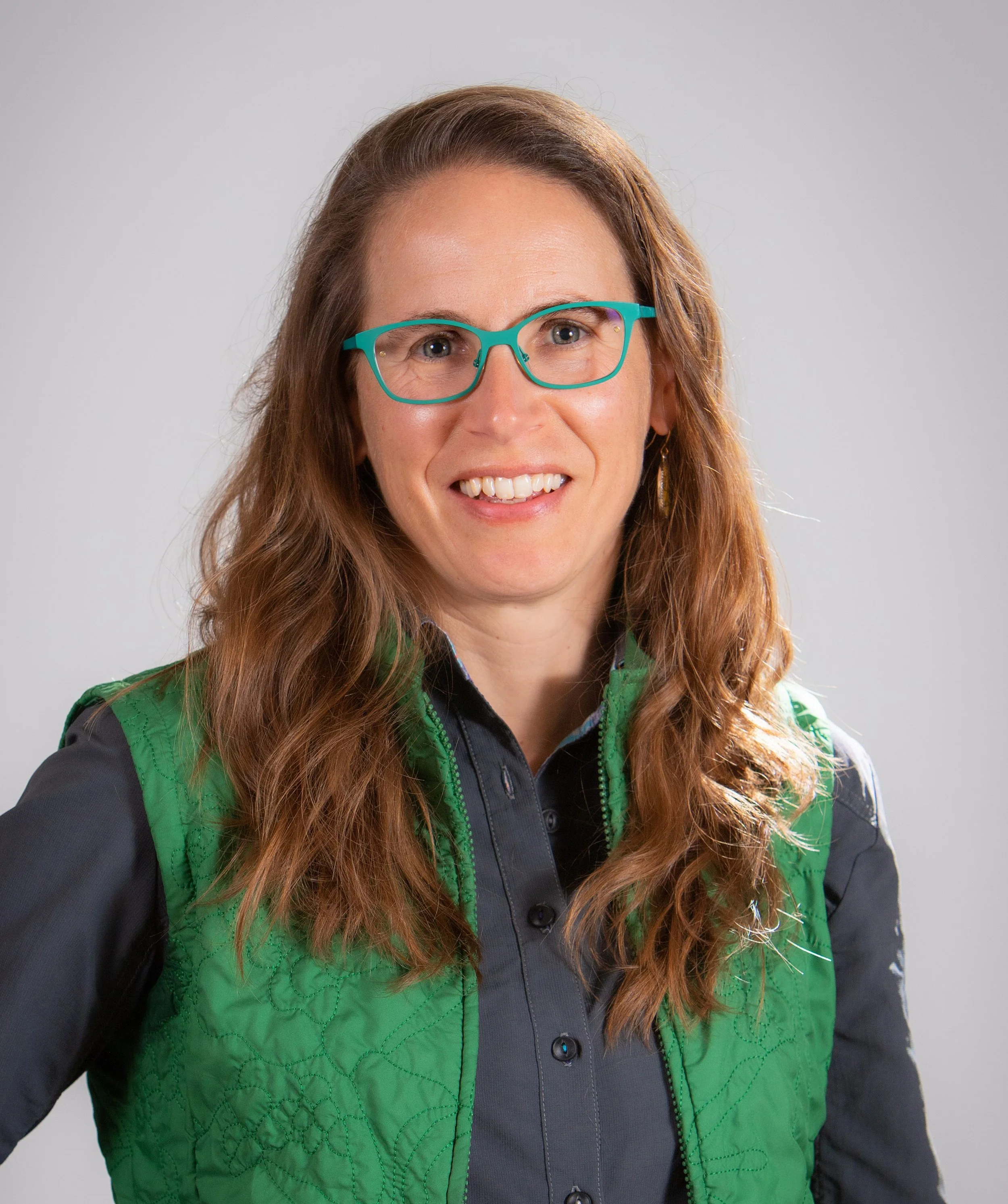
Kate Bailey is the Chief Policy Officer for the Association of Plastic Recyclers (APR), the only North American organization focused exclusively on improving the recycling of plastics. Kate leads APR’s advocacy at state, federal, and global levels. She has successfully worked with governments, consumer goods companies, NGOs, and other stakeholders to pass several leading policies to improve recycling, including Colorado’s EPR for Packaging program in 2022. Kate previously served as the Policy & Research Director for Eco-Cycle, a nonprofit pioneer in recycling and zero waste operations and programs. She is based in Colorado.