

Pottery And Responsible End Markets, Imperfect But Progressing
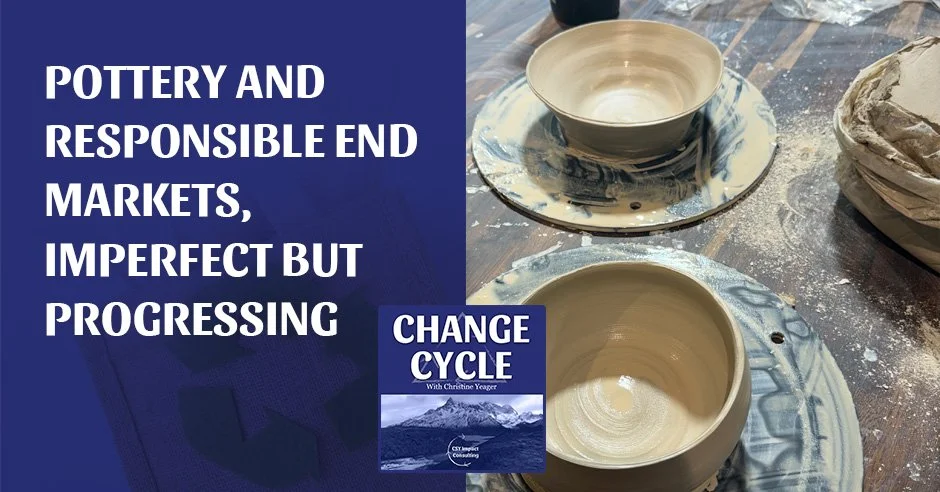
Pottery is one of our oldest art forms, yet for any beginner, it remains one of the most humbling experiences imaginable. As I’ve spent the last year oscillating between success and the occasional "flumped" clay creation, I’ve realized that mastering the pottery wheel holds a surprising lesson for the future of sustainability.
The path to a true circular economy—specifically through the lens of Extended Producer Responsibility (EPR)—is just as messy, tactile, and unpredictable as working with wet clay. While we are all looking for that "perfect" finished product, the industry is currently in the "kiln" phase: under pressure, developing new standards, and figuring out what actually holds up.
Today, we’re going beyond the surface of policy to explore the reality of Responsible End Markets (REM). We’ll break down:
The "Kiln" Effect: Why the current state of EPR is a pressure test for recycling chain-of-custody and yield documentation.
Navigating the Mess: Insights into the latest regulatory updates in Oregon, California, and beyond—and why compliance isn't a switch, but a dial.
Progress Over Perfection: Why releasing our attachment to an "ideal" outcome might be the only way to build a functional, transparent, and resilient recycling system.
Whether you’re an industry veteran or just trying to make sense of the latest packaging policies, let’s explore why the process—not just the result—is where the real change happens.
—-
Watch the episode here
Listen to the Podcast here
Pottery And Responsible End Markets, Imperfect But Progressing
The Pottery Metaphor For Releasing Attachment To Outcome
In this episode, I'm going to take a little different approach because I've been taking a couple of different ceramics classes in 2025. You might say, “Who cares? I don't want to hear about this.” A lot of times on this show, I interview other people talking about change and people give advice about how to maybe give themselves grace or accept the things are changing around you. You can't avoid it, but you can navigate it. I started a clay class or a ceramics class with my son then I took one like more of an adult class.
I've been doing it off and on for about a year. I'm not good because if you've ever taken a clay class, there's nothing that's humbled me more than a ceramics class. I'm not going to talk about ceramics. I'm talking about both hand building and throwing on the wheel. I've made things that break. I've made things that are off-center and uneven. It's wild because pottery is one of the oldest art forms. It's one of the oldest tools. It's a survival skill that humans have to make something. The pottery wheel was invented before a wheel used on a cart.
They would kick something on the ground that would spin the wheel and then they would make these pots. You see these pots in archaeological digs. People have been doing it for as long as we've had tools for the most part. Why can't I do that? Maybe because I'm not able to sit still without distraction, especially when I'm taking it with my son. You're slowly doing what they call a pull and your child is running across the pottery room. You're like, “Please don't break someone else's pottery that they've worked hard on.” Your pull becomes uneven because your hand moved.
There were some classes where I spent the whole three hours and did nothing. I made stuff but then it flumped over. I don't have any finished product. The lesson I keep learning and relearning and the lesson that I want to share in this episode and why I'm bringing this is something that my aunt said to me one time. Which is, to release attachment to outcome. Pottery and ceramics is a practice and releasing attachment to outcome. The process is as important, if not more important than the outcome that you're looking for.
If you have no outcome, at least I learned how to pull a little better or I learned how to center a little better. There's different steps along the way that maybe I improved upon even if I didn't have a pot to fire at the end of the day. That's true for the circular economy and for how extended producers' responsibility is evolving. The thing I like to say is the responsible end market is the destination. That's the outcome that we're looking for. It’s a responsible end market where people are buying. It's buyable enough that people want to buy this recycled material and extended producer responsibility is trying to change the economics to get us there.
Each step collection, sorting, transportation to and from each of these places, processing, all of these steps have to potentially change or at least the economics need to change in order for that market value to be an incentive enough for somebody to make and then buy and put it back into their packaging. In Pottery, you sit down at the wheel and you have a vision, a bowl, a base, or a planter. For a while, I was trying to make an orchid pot where I’ve tried and failed to make a bird bath.
At the end of the day, the clay tells you what it's going to be. If you make one piece that you love, then maybe you mess it up at the trimming phase or you do it well all the way through. The next time you try a little bit more clay and you're like, “I did it so well last time I could probably do something more,” and you are not able to. Even though it's just a little bit more clay to be working with.
Oregon DEQ Quarterly Producer Status List And Compliance Penalties
Before we continue, I want to do a few news items. A little news roundup. In April, the Oregon DEQ published its first quarterly producer status list. This identified roughly 250 to 300 companies who are not registering or reporting or paying fees for Oregon. This list is on CAA’s website, and it includes some recognizable names. Penalties can reach up to $25,000 per day for these companies that have been identified and are not reporting.
Two hundred fifty to 300 feels like a small number compared to how many companies I know who don't even know about EPR. Nonetheless, it means that DEQ and Oregon are starting to take public stances on and make it very known who is not compliant. I will note that the compliance process does require that CAA contact these companies and give them 90 days to respond before being publicly listed as non-compliant.
That means that these companies are making a choice not to comply. Once they do comply, they will have to report pay fees, report for previous years and then potentially pay late fees against those fees that they fail to pay. They'll have to pay all their bills all at once. Also, I want to call out that Maryland's registration is available and is due by May 31st. The registration portal for all six states is now available at CAA. Maine is still not available, but May 31st is when companies are required to report for Maryland.
Now, a quick little vocabulary check. I've mentioned this already but I’m going to say it again, responsible end market. This is a bit of a legal designation for a company or a material that's being sold that is made from recycled material. Each state has their own definition of responsible end market. Oregon has a self-attestation form that a company can complete to be flagged as a responsible end market because CAA has not had the time to establish and approve a process for responsible end market because it's still so new.
Defining The Responsible End Market And Self-Attestation
Each state has their own definition and generally, this definition requires that the material be made from recycled content and be made with proper environmental, safety and labor laws adhered to. You can't be making recycled material that causes a worse environmental impact. Also, no child labor and good livable wage all factor into what makes something a responsible end market. At the end of the day, it needs to be a market. It needs to have a market value.
EPR will not subsidize the market value of the material. They will be subsidizing potentially the steps that get you from collecting material and then selling it as a market. The cost of goods sold of that and the supply chain economics of that responsible end market. A yield or conversion factor is the output weight of a material process divided by input weight. If a facility takes in 100 tons of mixed rigid plastic and sells 60 tons of usable recycled output downstream. The yield is 60%. This is important because different responsible end market rules require a certain percentage of yields for the material that's being sold.
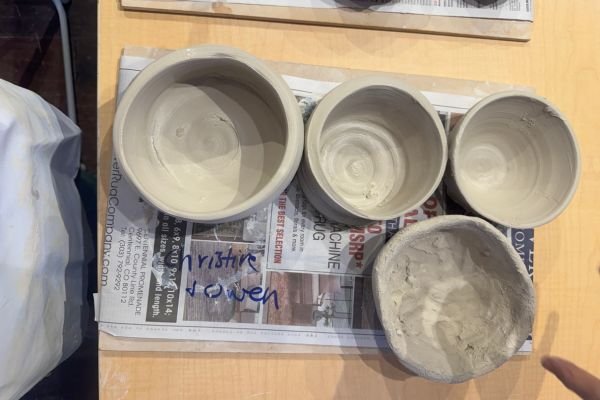
Responsible End Markets: EPR won’t subsidize the market value of materials; it will subsidize the steps that move them from collection to market-ready sale.
Meaning, you cannot have a super inefficient process and you cannot be sending most of the material that you process to landfills. You need to be sending over 60% back into actual material. Also, chain of custody. This is documentation that tracks recycled material from one supply chain actor to the next. This is the documentation because there's not an easy way to certify recycled content in a package because it's molecularly similar or the same in a lot of cases. This documentation is tracking and adds visibility to go from collection all the way back to new material to be reused.
If you cannot provide that documentation, then it's hard to then justify that you are in fact operating within the stream and your material is trustworthy from a recycled content standpoint. Why are we talking about this other than the fact that I want to share pictures of my beautiful pottery? I'm bringing this up because I've heard a lot of folks challenging EPR rightly so. I say all the time like, EPR is not the silver bullet. It is a means, a pathway, and a stepping stone to the circular economy, but it will not solve all the problems.
In fact, I heard people talking that we need more legislation on that or have minimum recycled content requirements so that more people will buy the recycled material at the end of the day. It’s forcing the government to create the demand for the material. I'm bringing this up because it is imperfect. We are very much in this messy part of EPR. In 2025, it was all brand-new. In 2026, it's still known. Some of it is a repeat. It's certainly not clear. We're not like over the hump and into the routine and easy part of this. It's changing constantly. There's new guidance coming out.
We’re still in the messy phase of EPR. In 2025 it was brand new; in 2026 it’s still unclear, still evolving, and far from settled.
There was guidance up until the end of April. The regulations for California weren’t approved until May 1st. It’s messy, but that's why this idea of pottery and ceramics is so compelling to me because it is also messy. You walk out of there with clay all down your pants. Potentially, if you're my child, it’s in your hair and sometimes in my hair. It’s all down your hands and it's hard to get it off. You wash them and it gets out of your clothes. You go back the next week and try again. That's a solid metaphor for what we're doing here with responsible end markets.
Oregon has this self-attestation form where you are responsible end market or if you were an in-market and you are a producer who's paying for the processing of your material. There's this opportunity to get an exemption, but you need to prove that your material is going to a responsible end market since there's no way to certify as a responsible end market. They've created this interim process of self-attestation.
Now you can see a glimpse into what EPR is looking to create through this designation. CAA has shared a draft responsible end market standard, which is now open for public comment. A quick disclosure. I was an early team member at Circular Action Alliance. I did not participate in anything related to this responsible end market standard. The standard that I want to talk about was authored by CAA together with SCS or Standards and Assurance Systems. I am talking about it from my point of view and not as a representative of CAA in any way, shape, or form and I was not involved.
CAA Draft Certification Standard For Responsible Markets
The standard is open for input from anyone. I will be sharing a link. What was published on May 5th? CAA draft published a draft version of the certification standard for responsible markets. It's not as many pages as I thought it was going to be. Which maybe says something about all the other guidance but it's a manageable length of pages to review. What does the standard do? It defines what responsibility means for the entity that buys, trades, manages, or processes covered EPR materials downstream of the MRFs.
Six states are explicitly in scope, California, Colorado, Maryland, Minnesota, Oregon and Washington. As we know, Maine has not yet selected their stewardship organization, so they are not yet on the list. The standard sets harmonized requirements across those states and then uses appendices for state specific rules. There's an appendix A for California, for example. It covers four entity types. The different requirements apply to each. In markets, its supply chain entities that process materials. Supply chain entities that take possession but do not process. Supply chain entities without possession like brokers who only take legal ownership and disposal entities like landfills and ways to energy facilities.
It goes through and talks through for each of those types of entities. What's required to certify? What are the boxes you need to check? What needs to be true? What do you need to report? Also, what is not in scope? MRFs are not in scope because MRFs, composting facilities and reuse and things like that all fall into this bucket of service providers. In that case, if you're a non-traditional service provider, there's different rules and opportunities. If you are a traditional service provider that's tied to a municipality, then there's very clear instructions on how to be reimbursed. Either the municipality is reimbursed directly and they are paying you or you are reimbursed. It depends on the pathway.
What's required to certify? In general, the standards require legal compliance on environmental management systems such as labor, health and safety practices that meet international labor standards. As I mentioned before, chain of custody tracking, yield documentation. How efficient is your operation? What is the contamination? Also, transparency about penalties and violations. The certifications last three years and there's potential for annual surveillance, audits and onsite research certification every three years.
What this means is we're starting to see the destination. This is where EPR is looking to go. They want the economics of the service provider system to support responsible markets, but it will be messy along the way, for example, in California. The CAA has put out an RFP for some pilots related to flexible film collection, sorting, transportation, and processing. They don't have a solution that fits and does all of those things perfectly. They're willing to explore each aspect of the step in the process to learn from, and then determine the expansion.
It’s just like my ceramics class. It's going to break along the way. We will get some things right and then it will seem like there's a groove. You've got a down and something in the system will humble us. I believe that. The first time I had a piece I loved, it was small and balanced. It was even walled. I was doing a new technique and then I was like, “This is going to work.” Somebody sitting next to me bumped my hand and this is in the adult class. I can't even blame the child. Things like that will happen. Recycling has been operating in this wet clay phase for a long time. Especially from a producer's perspective.
You put material into the system and you feel like you can't trust where it goes. From a city's perspective, you are collective but it's contaminated. From a MRFs perspective, you are doing your best to sort but something is coming up your system, slowing down your operations and you bail it. Nobody wants to buy the bail because it's too low grade. From a trade press perspective, where you might be celebrating diversion rates. Everyone is calling it recycling and doing their part and also frustrated by the challenges for each of theirs.
I'm just leaning into this metaphor. To keep the metaphor going, the kiln becomes the moment when you find out what the material can become. It's that pressure test moment of the downstream end market. It's potentially the secondary processor that pulled the value out of the material and sent it or inflate it and sold it then sent the rest to landfill. It's the converter who made new products from landfill that they couldn't. Until now, the US system did not have a shared way of verifying what happened in that downstream phase and what is a good standard.
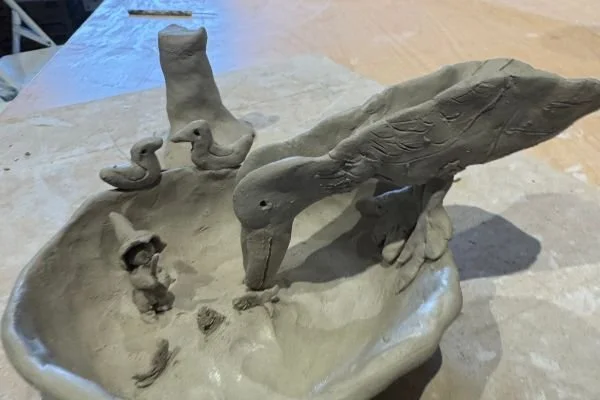
Responsible End Markets: The kiln is the moment you discover what the material can become—a true pressure test of downstream end markets.
This REM standard is that first series attempt of creating a consistency in that pressure test moment. Here's the lesson. Releasing attachment to outcome does not mean you're letting go of the outcome. You're not like throwing it away just because it's not perfect or even if it is perfect. It means letting go of the expectation of perfection and letting go of the expectation of the outcome could be at all. It could surprise you.
The assumed outcome of recycling is the material becomes a new product. Sometimes that will be true and sometimes that will not be true. We need the kiln or the standard to help us find out what makes it through the process. We want to celebrate the things that do make it through, but we also want to celebrate the messy process that we're going through along the way. A couple of ideas around navigating this change of releasing an attachment to outcome related to recycling.
Stop assuming recycled means recycled until there's a certification that verifies it. If you're a producer paying EPR fees, those fees are funding the collection and processing of your material. Where it goes from there is part of the value you are paying for. Until now, there was no way to keep track of that chain of custody and the value that is created all the way at the end of the day. There was no way to know that you can trust that value. The standards are going to create that verification.
Now, I'm not saying these answers are perfect. Feel free to provide your public comment. The concept of a responsible end market standard that is consistent across multiple states will help us believe that things that we say are recycled are actually recycled. It is an important stepping stone along the way. I will say that another thing that I've said many times before on this show and I will say it again is progress over perfection. EPR will not solve everything overnight. The funding ingested into the system will make change and that change will be messy and imperfect along the way.
Hopefully, the pro is doing the things that it needs to do to identify the things that are successful and continuing to fund and scale those things. We cannot expect that to happen on day one. They say it is a dial and not a switch. It is a pottery wheel. It’s not something you can just buy Michaels for $0.50. I use that example because one time I bought an Easter egg plate for deviled eggs at Michaels. I still own it and I do love it. I do like to hold on to things for a very long time so that I don't have to throw them away.
Importance Of Public Comment And Building A Trusted System
Nonetheless, the principal is, this is going to be imperfect and messy. The more we can embrace identifying the wins and learning from those wins, versus expecting perfection. The easier this transition will be for everyone. I want to lean into thinking about the yield as the kiln. If 60% of what's being sent to the responsible end market is being turned into a responsible end market. That means 40% is not, but if we fix contamination along the way. That will make it that much easier for our yield to continue to increase and that.
This is going to be imperfect and messy. The more we focus on recognizing wins and learning from them—rather than chasing perfection—the easier this transition becomes for everyone.
That is the example of like even if you are your thing breaks in the kiln and/or it's uneven right before you get to the kiln. All of those little failures along the way will make it so that more and more stuff that you put into the pressure test come out as success. You may not see them, but you will see the rate of success increase and, therefore, the yield increase. Some materials are going to hit consistently like aluminum cans. Aluminum has a very high value. People want it and, therefore, the process is already pretty efficient.
It's those other lower value materials that need bolstering up through EPRs. I'll close with the standard that is open for comment now. Meaning you can be a part of what you think this standard needs. The common period closes July 7th. If this is important to your business, then take a look at it and see where you think it needs your comment, good or bad. The reality is some entities currently being treated as end markets and EPR reporting may not pass this certification.
Some companies don't know about this yet but eventually, everything that goes through EPR systems will need to end up at a responsible end market. If you cannot pass that certification, then you are now reliant on material that is not coming from extended producer responsibility states and that can cripple your business. Producers are paying fees for these materials and they expect those fees to go towards a recycling rate to increase. They want the fees to be used for what they're intended to be used for but the system isn't trusted yet.
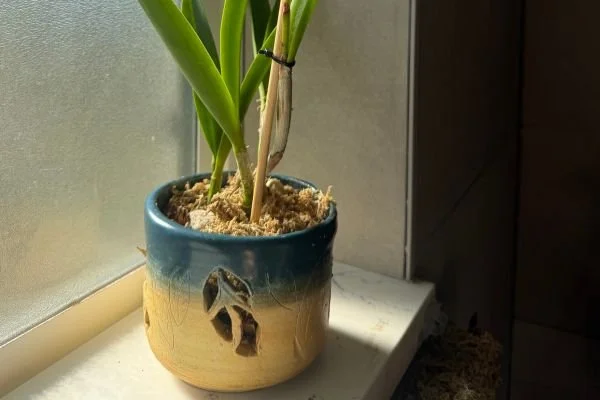
Responsible End Markets: The clay and kiln are honest—you can’t argue with them. The pot either holds or it cracks, the glaze either works or it doesn’t. In the end, it’s out of my hands.
Part of this process will be building a trusted system that requires verifiable data. Finally, why embrace this idea of releasing attachment to outcome? Beyond recycling and responsible end markets, this has been something of a mantra that's helped me in many ways. The act of doing something not for the value, it's going to create, specifically for me, like I don't have to be productive in order to be valuable all the time. That's what my therapist tells me, anyway.
I'm not going to pottery because I want to start selling pottery. That's not going to happen. I'm going because it helps me get out of my own head. It's tactile and I enjoy trying to learn this new skill and challenging my mind in that way. What I've learned is the clay and the kiln are honest. They can't be argued with. The pot either holds or it cracks. The glaze either holds or the color is not what I expected. It's out of my hands, even though technically it's in my hands but I have to let it go. If I'm too emotionally attached to it, then I'm going to be disappointed.
Recycling has been operating in a hopeful phase for decades. The reality is, sometimes we got to let this process happen and hope that each time we're improving enough that eventually the kiln will let the process hold and release attachment to these assumed outcomes, hold on to a standard, engage in the comment period, show up and be a part of the practice. That will be a way to feel like you're participating in the change and also letting it come to us.
Anyway, thanks for reading. I hope you found this episode useful. Thanks for indulging my metaphor. If you ever want to talk about pottery, let me know. I think Seth Rogen's into it now. It's hilarious how popular it's become. It's one of the many sorting houses Millennials can be sorted into. I'm trying them all. Anyway, thank you. I hope you can release attachment to the outcome.
Important Links