

Pioneering The Modern Reuse Economy: Inside The Petaluma Reusable Cup Project With Carolina Lobel

What does it take to create a reuse economy that actually works, moving beyond pilot projects to community-wide change? We're joined by sustainability leader Carolina Lobel, an industrial engineer who pioneered the modern reuse movement as the first full-time hire at Loop, the reusable packaging platform incubated by TerraCycle. Now working at Closed Loop Partners’ Center for the Circular Economy, Carolina shares the massive systemic challenges and learnings from her work with major brands, including the breakthrough Petaluma Reusable Cup Project, and offers deep insights on consumer behavior change, the power of pre-competitive collaboration, and the importance of embracing change—whether planned or reactive—to build a more sustainable future.
---
Watch the episode here
Listen to the podcast here
Pioneering The Modern Reuse Economy: Inside The Petaluma Reusable Cup Project WIth Carolina Lobel
From Engineer To Eco-Pioneer: Carolina Lobel's Intentional Path
Welcome back to the show. I am super excited to talk to Carolina in this episode. Carolina and I met when I was working at Coca-Cola. We met a little bit. I had heard a lot about Reusable Cups, which we will talk a lot more about. I am super excited to have this conversation because you have made a lot of progress since Coke and the original Reusable Cups project started. There is a lot to talk about. Also, in all our interactions, you are so authentic and easy to talk to, and welcoming. Everybody is going to really enjoy this conversation. Let us start with who are you? Let everybody know who you work for and how you live with intention.
Thanks for having me. This is exciting. We are in San Diego. It is Sustainable Brands, a big conference that we spent the last three days talking about how to solve the world crisis, without saying we are solving the world crisis, because no one wants to hear that. It feels so far away. We are talking about how to connect our work to the things we believe in. This is a perfect time to be talking. Since motherhood, that is how we define ourselves.
I am a mom of two beautiful girls, 4 and 6. I live in New Jersey with my family now. I am originally from Rio, Brazil. I am an engineer working with anything but engineering. I have not used anything I have learned in engineering school for the past fifteen years. I am an engineer working in sustainability. I work at a New York City firm that builds the circular economy. It has an investment arm and an operations arm.
I work at the Innovation Center helping companies like Coca-Cola and many other partner with their competitors to solve big systems challenges. Reuse is the system's challenge that I work with. I started working on reuse before this role. I have been working on reuse for almost ten years. Since the early days of what I call the modern reuse movement. I started my career at Procter & Gamble because I graduated from engineering school.
I graduated from industrial engineering. When I went looking for jobs, I was like, “What are the industries out there?” My first job was at a plant making products. It looks like a witch made shampoo and colorants. It was really like putting the ingredients together, making the product, then packaging it in the containers that we talk so much about now. We will talk about more. I started working on innovation and R&D.
I had supply chain roles. We will talk about change, I think PNG. It was a big belief that we could accelerate business results if people were constantly changing roles and bringing new perspectives. I had a lot of roles during my time at P&G. Finally, I was working for the Head & Shoulders brand on innovation. One of my big projects was one that we talked about here at the conference was Head & Shoulders made of ocean plastic. We would collect plastic at the beaches.
In my case, in underdeveloped islands in Latin America in the Caribbean. We would go to indigenous islands, pick up the trash that was at the beach, and then turn that into new products, new shampoo bottles. That was how, not very intentionally, I landed in the sustainability space without all the sustainability background and education that most of my colleagues have. I became fascinated by that.
I pivoted from P&G to the company that was making the beach plastic pallets, TerraCycle. Around that time, the founder and CEO of TerraCycle, Tom Szaky, whom I love and admire a lot. He was pitching the idea of a pioneering reusable packaging platform, Loop. I fell in love with it. At that time, he had been doing recycling for fifteen years. He wanted to do something beyond recycling to solve the waste challenge. He wanted to do reusable packaging.
I aligned so much with that mission that I applied for a job that did not exist at a company that did not exist. Likely, he decided to hire me as the first full-time hire for Loop. At that time, I was like, “Maybe we need someone working full-time on it, maybe not.” Thankfully, it worked out. Five years later, it was a company of over 100 people. I was very grateful to work with that founding team of Loop, building this platform and kickstarting this modern reuse movement.
I did not want to answer your question, living with intention. A big part of it is this work. From a very young age, I always had this thing of doing something else for the world. I had all sorts of volunteering activities I did growing up in Rio in Brazil. There are so many people around you who need help all the time. I was involved in many projects in my school, in my community. A little older, I started teaching meditation workshops and trying to help people come out of anxiety and stress.
We could accelerate business results if people were constantly changing roles and bringing new perspectives.
The Art of Living Foundation that the mission was to put a smile on the face of everyone. At some point when I had to make decisions about my professional life. I have this engineering degree. Otherwise, I do not know, I would go to Africa and go to a refugee camp. I had that burning need to do something for the world. When I looked at the skill set I had, it was like, “My best shot at doing something purposeful and meaningful is reducing waste and helping businesses reduce waste through business transformation.”
What I love about working with waste is that it is so tangible. It is very actionable and very real, unlike other things that probably can have a bigger environmental impact, but are so distant that they are harder to connect with. I found myself working with waste. In my day-to-day life, living with intention has a lot to do with living with commitments.
Committing to help people around you, committing to putting a smile on the face of people you interact with, committing to spending quality time with my kids, committing to taking care of myself, meditating, going to the gym, and committing to taking on bigger responsibilities. That is secret to happiness is thinking big about helping others instead of just thinking about yourself.
I did not know you could lead us in meditation right now. I try really hard to meditate, but then I think I get too wrapped up in it. I used to be very good at it, like regularly meditating. Now I have started painting as my meditation because you need something to ground you, and like keep you present and in the moment. Sitting still is hard for me, but painting gives me something to focus on. I think I get a lot of similar benefits.
It is just the tool to get to the meditative state of mind. For some people, it is through breath work. For some people, it is through sitting down and doing mantras. For some people, it is about being mindful. For some people, it is for me, for the longest time, was playing sports. I grew up playing sports and painting. Just taking care of our minds. That is the idea.
I do want to call out that one of the exciting things about talking about reuse is that it is actually baked into some of the legislation that is passed. California commits. Thank goodness. Commitments, or like a portion of the source production or the requirement to reduce the amount of plastic, are the portion that will have to come from reuse. Colorado has some funding for reuse baked into the program plan. Anyway, a lot of this work that you have been leading and the changes that you have been pushing for over the years have started to have some really exciting new developments.
Historically, reuse used to be this thing that activists were calling for. When it was just activists, it was fine for brands and retailers to put it on the back burner and to work on it. Give it a try, but there are so many other competing priorities. Now, with more and more consumers, but now with policy mandating it, it goes to the top of the priority list, and it increases the sense of urgency. It really drives change. Everyone in this supply chain, from brands to suppliers to innovators, I think everyone is excited to have this mandate and push that is bringing such a fresh wave of renewed momentum for the reuse movement.
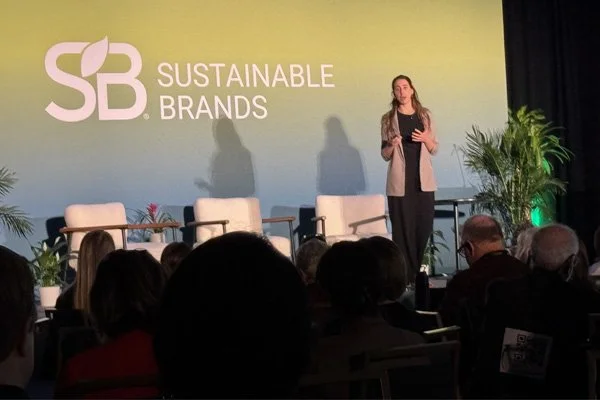
Reuse Economy: Everyone in this supply chain—from brands to suppliers to innovators—is excited to have this mandate, and that fresh wave of renewed momentum is really pushing the reuse movement forward.
Building The Future Of Packaging: An Inside Look At Loop
I want to take it back to Loop a little bit. I did not know you were the first to hire. That is so cool. You talked a little bit about it, but maybe for people who are not familiar with what Loop is, maybe just rehash that a little. If you can talk a little about what it was like and what you learned driving such a monumental shift in the industry.
Loop for anyone who, I guess, a lot of people who are not inside the tech-sensitive world are not familiar with this. In this small bubble that we work in, it is a very famous platform. I worked at Head & Shoulders in P&G, so I will use shampoo bottles as the example. Think about your shampoo that, now every month you go to the supermarket and get it in a plastic disposable, recyclable container.
The idea that sparked the loop was, what if that did not have to be disposable? It was incubated by a recycling company that was already collecting packaging for recycling. The idea was like, the same way we are collecting stuff to be recycled, we can collect things to be washed and then shipped back to the P&Gs, the Coca-Colas, the Unilever's and the L'Oréals of the world. It can go back to those filling lines that I worked at the beginning of my career and be refilled in a packaging that will be used multiple times.
Loop was the platform to make that happen. It started as a direct-to-consumer platform that like think of as an Amazon of durables. It pivoted to being something that was integrated into a retail store. A corner of each store would have durable goods that are then returned and used many times. These stores exist in real life. They are scaling across France. They are also in Japan. This exists. It just needs to be scaled. There are some systemic challenges and big systemic infrastructure investments to be made to scale this widely, and how it was.
The Beauty & The Barrier: Lessons Learned From Reusable Packaging Design
What were some of the lessons learned along the way? You talked a little bit about it in your presentation at this conference, but I loved it. If you could expand a little on the fact that the packaging was so beautiful that people wanted to keep it. That was the early phase. I assume that was part of Loop. I do not know. I did want that container that you showed in your presentation. I was like, “That is a cute package.”
I see that across reuse initiatives. Loop was the first reuse project of this scale. After Loop came many other types of reuse initiatives and projects. Across them, either in consumer packaged goods, in food service packaging, whatever you see, a reusable packaging platform, there are similar learnings. We talked about making it desirable enough, but we cannot go all out to make it so gorgeous and so irresistible and so beautiful that people will never return the containers.
That is one. Also, making technology enable it smartly, but not have too much tech that it is like before, you are downloading all these apps to deal with your trash, that like at some point we also went too far there. I also like the incentive models. At some point, we started offering all these discounts, and seeing that people say they want discounts, but rarely do they change their behaviors because of a discount.
It is more like how do you make it rewarding instead of how do you make it cheaper. Many other learnings. I have felt that throughout the process of developing it, you never realize that you are onto something big. Two years later, you look back, and you see the results. The day felt like a normal day-to-day. We knew we were doing something really exciting, and that kept us going. It was a very special moment in my career, but the day-to-day is like doing day-to-day work. It is like figuring out the warehouse to put stuff in, and then figuring out building a washing site and raising money.
How do you make reusing rewarding instead of cheaper?
The Deposit Dilemma: What A Lemonade Stand Teaches Us About Incentives
I have to tell you, my son had a lemonade stand this summer. I was like, “We cannot do this without a reusable cup option.” We bought some reusable cups because we did not have enough plastic cups. It was in a park. I do not want to break the cups. We already had these little wash bins. Actually, when you have a baby, they give you these tubs in Atlanta to wash your baby in. That is what they were. You had these left over from when my children were born. We had a washing station. We charged an extra dollar for the cup. They would get it back if they returned the cup.
A perfect deposit return scheme.
One person took the money back. Everybody just gave him the extra dollars.
They got a good deal.
We paid back our operating costs. I did not make my children pay me the operating costs. Technically, we were in the green or in the black, I guess.
There is something technical there that we studied a lot, the CSO effect of the deposit. When you go to a hotel, and they say leave $100 check to check out this towel when you go to the beach. A $100 towel for sure, return it. If your price is too high, people will return, but then you will turn down consumers, and they are not going to buy it.
If you put the deposit too low, then they get a deal out of it. We did a test like this in New Jersey, where they banned single-use bags. People buy a lot of reusable bags. My parents visit, and then they go to the grocery store. We forgot to bring the bags again. They buy new bags, buy new bags. Everyone in New Jersey and we have this data from research and study.
Everyone in New Jersey has too many bags hiding in their trunk, but bags like you can put one bag inside the other. Everyone has bags and bags and bags of bags. We said, “We will get a dollar bag for everyone who brings a bag back.” Most people do not want it. We got really low return rates. After you buy something, they perceive the deposit as a purchase.
There is something called in behavior sciences called the endowment effect. That is like you value the things you already purchased more than they are worth. People are less likely you buy this shirt for $10. The next day, if someone offers you $10 for the shirt you just bought, you will be like, “No. I pay $10.” Sense of ownership.
That happens with the posture. I paid $1 for it. I do not want to go back and get $1 back. That is how we started experimenting with other types of incentive models and rewards, because deposits are successful. They are effective in deposit return schemes where people, there are states you bring back the bottles and get getting into your refund of policy. They are effective, but not everywhere.
There is no reason why we should be competing for sustainability. We have to unite brand power and work together.
It is true. I went to Germany to a Christmas market, Christkindl or something, and the mug was so cute for the Glühwein that I kept it. It was only two euros. I was like, “This is a steal.” I took that mug all over Europe with me. I brought it home with me. I still have it. It has a crack in it. Now I use it for decoration. I still have that two-euro mug.
I love my ceramics.
Beyond The Pilot Project: The Breakthrough Success Of Petaluma
This is great. You have talked a lot about things that you have learned along the way, but I know there is this big project. There are a lot of people in sustainability who have pilot fatigue and everything. I feel the energy behind the industry energy behind the Petaluma Project. It is taking a lot of these learnings that you have been talking about, putting them into practice. Now it is expanding. Can you talk a little bit about what that is and what we have learned and all of that?
It is also part of doing the work that needs to be done. Getting a lot of people to work really hard for a long time. You get this buzz and this excitement, rather than focusing on getting the press or doing something to get the buzz, which never works in that direction. The Petaluma Reusable Cup Project is part of a broader partnership we have had for many years with leading food service and beverage brands like Starbucks and McDonald's, Coca-Cola, Pepsi-Cola, and many other brands.
We have been on this journey of reuse. We tested different deposit models and different incentive models. We tried to make containers more beautiful, smarter, and all the things we were talking about. It is really hard to get to the level of massive consumer behavior change to take it from being something that the greenies will embrace, to use the term that is in vogue right now, to move the movable middle towards us.
The thesis was that if we could get an entire community to do it together, city leaders, brand owners, civic groups, community groups, and we made reusables just part of the community norm, the same way that people throw away, the same way that people recycle, there is a fourth stream that has very consistently messaged, in our case was a purple bin, and that people knew that everywhere they went there would be a purple bin for purple cups. It was something very iconic. Our thesis was that that would shift consumer behavior and we would get more adoption for reuse.
We brought it to a small town in Northern California, where we thought we had higher chances to succeed. It was pretty successful. We saw consumer behavior change almost overnight when we turned that on across the entire community at the same time. Proving that this is now, we have buy-in to go to bigger communities and larger cities and apply these tactics of community-wide messaging. That is what we are doing now.
When you go through the ups and downs that come after change, the status quo can suddenly look amazing and make you regret the decision, so remind yourself why you wanted it so badly.
The 'Jargon' That Works: Harnessing Pre-Competitive Collaboration For Scale
It is awesome. It is so exciting. One of the things that made this possible was this collaboration. Collaboration is something that is hard for sustainability professionals in general. You have to collaborate, not hard, but it is a core aspect of what you have to do, and it can be hard sometimes. Doing it across internal stakeholders, doing it, in your case, across companies with different priorities, different incentive structures, and different financial needs can be really challenging. Can you share how you are able to bring this group together and get everyone to align on the same path forward?
It is pretty incredible. I need to give the credits to the people who came before me, setting up the foundation for this work, the leadership of Closed Loop Partners and The Center, and credits to the leadership of these brands that are at the forefront of building the circular economy with us. When Kate Daly, the managing director of the Center for the Circular Economy, such an incredible woman and human, and a leader, started talking about pre-competitive collaboration, it was a new buzzword that was not really used.
In the same way, when Kate and Ron, the CEO of Close Up, started talking about the circular economy, that was not really a term. There was this pioneering idea of collaboration, but it is nice to watch over the years that it has become such a jargon now because everyone gets it. Everyone is like, “Of course, you need pre-competitive collaboration for sustainability.” There is no reason why we should be competing, and there are certain things that we need to build together, like infrastructure for reuse and infrastructure for recycling and consumer behavior change.
You have to unite brand power and work together. It is nice to see over the years how this goes from a bit like, “Precompetitive collaboration, how?” To such a common thing that we see so many groups convening. The challenge is going from just convening and talking about the problem to developing tangible, actionable solutions that all these brands can do together, like having a playbook that enables them to plug in and do something very tangible together, like the Petaluma Reusable Project and what is coming next, and scaling it in cities across the US.
Planned Vs. Reactive: Why We Should Embrace The Change To Reuse
That is great because it is like finding that value proposition for everybody to come together. Also, to your point, these companies are prioritizing reuse because they see the trajectory. There is something that they need to change about their business because of the Earth. Also, consumers, regulatory needs, all of that together. I am going to ask my final question because I think we have talked about almost everything. Basically, why should people embrace the change towards a reused economy?
I am all for embracing change in general, just more broadly. This is the million-dollar question that drives my work is how to get people to reuse. I think that how we will get there is probably not by pitching them or selling them on embracing the reuse economy. It will be just a superior product experience. It will just be because it is part of my community, and because I keep my community clean, and everyone in my community is doing this.
This is such a normal part of my day-to-day. Embracing change more broadly, I have had a lot of changes in the past ten years in my life. I feel that when change comes, everything comes at once. You are changing. I see my friends, when they have kids, they are changing houses, and they are changing jobs. For me, it was changing jobs, changing country, changing relationships. There are only two types of changes. There is one change that you planned properly.
If you planned properly, it was probably because at some point you had a burning need for that change and a burning desire to go through that change. You hang on to it when you go through all the ups and downs that come after the change. The moment you decide to make a change, the status quo appears so amazing and wonderful that you start to regret it. The advice there is that you wanted it, so remind yourself of why you wanted it so badly. The other type of change is reactive because you had to change. You did not have an option. In that case, you did not have an option. Why bother?
Why bother fighting it? No, for sure. That is such great advice. In my experience, the planned stuff rarely goes as you plan. When I was having my first child, my brother and sister-in-law shared this advice with me that they had been given, which was like, “I want you to take your birth plan and light it on fire and let it go.” You cannot plan this. That is such good advice, like if you are planning it because it is something that you really want to do. I talk a lot about opting in to change, but you always have these self moments of self-doubt, you have these like things that go wrong, all of that.
Thank you. I want to recap a couple of things that you said. You mentioned that, like you are planting these seeds, and I am going to, pun intended, plant these seeds now, and you see the returns years later, and how you have seen that in your career. That is something that happens a lot in sustainability and a lot in strategy, even. It is like, if you are in it for the immediate gratification, you are in the wrong business because it is hard. It is true that, like when you clean up a beach, you see it right away. Those beach cleanups are very minuscule in the challenge.
Come back to the beach the next day. It will be everything back there.
It is never enough scale, right? Being patient is a good reminder. You also talked about the hard work and focusing on the hard work, and not on the press release. The news will come when you make real progress after years and years of hard work. I hear artists say all the time, like, “It took me twenty years to become an overnight success.” This is hard work. If you do not listen to the news and you do not get caught up in this moment, then you can see how much progress has really been made from 10 years ago or 20 years ago.
That is a great reminder. You also reminded us about the movable middle. That is a good reminder at this time that there is a movable middle and that we can find common ground, and there is a lot more in common than we think. We already talked about it just a minute ago, but the whole planned versus reactive change and thinking about it in those two categories is a good frame of mind for this audience. Thank you so much. This was so great.
Thank you for having me.
Thank you.
Important Links
About Carolina Lobel
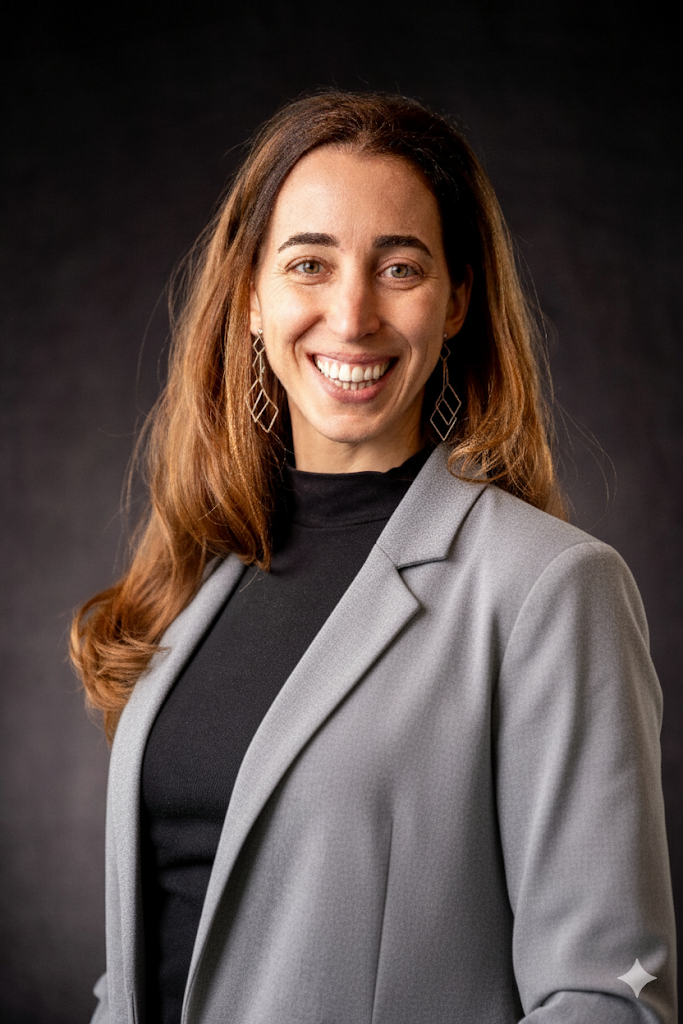
Carolina is Senior Director at Closed Loop's Center for the Circular Economy, where she leads reuse initiatives and oversees a team focused on designing and scaling reusable packaging systems in collaboration with brands and local governments. In previous roles, she was part of the founding team of Loop at TerraCycle, and managed record-breaking product launches and sustainability efforts at Procter & Gamble in Latin America.