

Sustainable Industry Actions Without Policy Forcing Them - Interview With Credo Beauty

What happens when companies take sustainability seriously—without waiting for regulations to force their hand? In this conversation, host Christine Yeager and Christina Ross from Credo Beauty explore the carbon accounting challenges facing the beauty industry, sharing the company's experience now in its third year of emissions reporting—an effort many brands still avoid. They discuss the realities of working with imperfect data, the emotional and operational cost of sustainability pivots for smaller companies, and why focusing on the biggest impact areas matters more than perfect accuracy.
From Scope 3 emissions and ingredient-level traceability to innovations like packaging made from recycled beauty empties, the discussion highlights how mission-driven brands can move the industry forward through collaboration, transparency, and practical action—even without policy pressure.
---
Watch the episode here
Listen to the podcast here
Sustainable Industry Actions Without Policy Forcing Them - Interview With Credo Beauty
I'm joined by Christina Ross. As the Head of Science and Impact at Credo Beauty, she is the person responsible for translating sustainability commitments into actual program architecture. From carbon accounting and emissions reporting to defining a new qualification standard and implementing a new resin to use back in their packaging for that is made from recycled material, Credo has done a lot of tangible change in the beauty industry, and Christina Ross has led a lot of that.
The uncomfortable truth that she sits inside every day is that even the most mission-aligned brands in beauty hit the same wall, tradeoffs. Virgin plastic is cheaper, refill systems require consumer behavior change that doesn't scale easily, recycling infrastructure in the US is too inconsistent or structurally not able to take small packages that a lot of the beauty products come in.
She didn't just document that problem. She has helped build around it. Credo Beauty was a co-founder of Pact Collective and she is on the board and helped co-create New Matter resin to close gaps the market wasn't closing on its own. In this episode, she's going to tell us about navigating that journey and prioritization and how powerful prioritization can be. Excited for you to read our conversation.
Thank you, Christina, for being here. I'm super excited for this conversation. As usual, we really like to kick off the show to learn a little bit more about you. How do you live with intention?
Living With Intention And Focus
Thanks for having me, Christina. It's always great to see you. The intention question's such an important one. I think it's something I practice daily or should be practicing daily, but I am a working mom of young kids. I think my most practical intention tip is to be incredibly clear about what matters and be okay to let go of the rest. There's so many distractions in our world nowadays, personal, professional, social media from circles that I'm not even a part of and to really hone in on what's a distraction versus what truly matters has been a principle I’ve been following the last couple of years.
Be incredibly clear about what matters, and be willing to let go of the rest.
It can feel so hard to cut through the noise and know and then really falling to anchor on those values can be helpful when trying to cut through that noise. There's a lot of noise these days.
It's a constant learning, for sure.
You work at a mission-driven brand and you're also raising young kids, as you just mentioned. That's a lot of competing and I would imagine competing priorities still tied to your personal values. How do you decide what actually gets your attention and what sometimes has to get let go?
I think it depends a lot on the mood and the pace of the day and how the kids went out to school and all of the different pieces and parts. I'm sure I'd have a different answer every day. I think part of the intention that we were speaking of is really slowing down enough to be able to focus on 1 to 2 things at a time. I recently read a book that was talking about humans not being created to multitask. That's not the way that our brains were developed and meant to work in this new environment that we've been thrown into with the digital work and our cell phones and email and all of the different ways someone can get a hold of you. It's built in a way that isn't supporting our brain structure.
That really resonated with me and I think it's important to think about. Whatever I’ve decided is the task de jour or what is important to be focusing on, the grounding method for me is to focus on the one thing at a time. I find myself getting more fulfillment that way and also being able to do a better job to be able to think in full. Thinking is so important, too. In the age of ChatGPT it's so easy to take shortcuts and get things done fast and it's important to remember we're not machines. This is not meant to be this way and while there's so many benefits when you're working in strategy and in sustainability, our brain power is of immense value too.
That thing about multitasking, I feel like we were duped because I feel like when multitasking became a thing, it didn't exist as a word really until like Apple and the multiple Windows out there and all this stuff. It was in our lifetimes that people started talking about multitasking as a skill.
It was valued.
Yeah. It's so important like your kid is crying and won't go to sleep and there's almost nothing you can do because if you take your attention away, it's just going to make them more sad and it just makes everything longer. It's such a good reminder that if you can just focus on that one thing, sometimes I even have to say to myself like, “Focus, Christine.”
You shorten the tail like long-term. You shorten the tail of things. At the end of the day, oddly, it's more efficient and more productive even though it doesn't always seem that way at the time, and then realizing what's not important. Every email that comes in my inbox does not need to be responded to. I used to be a really perfectionist about responding to people and getting back and it's just not always the most important thing.
Someone's Monday morning task is not mine or someone who wants to meet for coffee because we met six months ago, it does not need to be my priority. I hate saying that even the idea. Even the fact that I'm voicing that, it sounds terrible, but in this phase of life, it's just where I am to make sure that I'm meeting the needs of myself and my family and those that I work for.
Sometimes you have to say no to things and it can feel really hard, especially the networking thing. Many people have been willing to spend time with me that you want to pay it forward. I did have somebody once I reached out to them and they said, “This year, I am intentionally raising other people up. I get a lot of inquiries like this and so I want to pass this on to other people who have the time and the bandwidth and also have stories to tell.” I thought was like a really beautiful way to say no like, “No, not right now for me, but here's how I'm passing it on and still paying it forward to someone else.”
Perfect example of creating your intention and slowing down but doing it in a way that protects your own peace and doesn't make you feel like n a**hole.
What Is Credo Beauty?
What is Credo Beauty?
Credo Beauty, we're an omni-channel retailer in the US. We've got sixteen stores and a big online presence and a beautiful app. We were founded by Annie Jackson and another co-founder, Shashi Batra, on 2015 in San Francisco with the whole idea that beauty, while fast-growing and trend-driven, can be rooted in mission-based work and can become more beautiful and help our consumers feel better about what they're purchasing.
Again, with beauty trends being so quick, oftentimes, people are replenishing or buying a new product monthly. All of these packages are in small format and not curbside recyclable and a lot of the ingredients used have limited hazard information or their exposures have been assessed years ago and aren't being assessed with modern use in mind. How can we look at the big picture and make beauty better? That's essentially Credo's mission.
We started with our dirty list, which is a restricted substances list, restricting over 3000 ingredients in beauty and prohibiting others asking for heavy metal testing, these incredibly important aspects of better beauty. We've really moved a lot into packaging, co-founding a nonprofit Pact Collective, which is a landfill diversion for beauty empties, which is now in every major beauty retailer in the US. We're so proud of that.
Creating resin to make packaging from that Pact Collective beauty empties, to doing carbon work and climate work, which is really exciting. I think a lot of the times, people think personal care products, they think, “I'm not a big beauty person, that doesn't matter.” At the end of the day, we're all using shampoos and soaps and deodorants, toothpastes. Whether or not you're red lip person or glitter eyeshadow person is beside the point. There's a better way to do things. That's why we're here and it's been a super fun ride.
Carbon Accounting And The Imperfection Of Data
Credo's been doing a lot of work in the carbon accounting space, which requires a lot of focus and attention and time because it's not easy. I think you guys have been doing carbon accounting for the last three years and most brands are still avoiding it, especially in this climate, pun intended, I guess. What does it feel like to actually have some of this data that you can start to think about and take action against and make decisions against?
I'm full of immense pride for this organization for supporting the work and for realizing the value. Credo, at its core, is incredibly mission-based. I don't have to have the hard conversations that so many of my peers and network folks do have to have with their leadership teams and with their boards. It's embedded into our nature. I'm filled with immense pride.
That being said, it's really tough to get the data. It's really tough. I work with a bunch of wonderful beauty people that don't necessarily understand how our work can relate to climate. Getting the data can be really difficult. Overall, I think it's a responsibility of any organization in today's ecological crisis to start reporting to the best of their abilities.
It’s the responsibility of every organization, in today’s ecological crisis, to report to the best of their ability.
I know that there's so many methodologies and they can be quite strict, but use reporting as a way to start leading transformation. This might be a hot take here, but I don't think that you need to have the exact correct data to start making change. I think that companies and I hope that companies start to feel a responsibility if you are in business and not everyone has a right to be in business, but if you are in business and you're doing it well, these are topics that you should be tackling. You should be surrounding yourselves with people who are doing that.
To get to the heart of your question, a lot of our brands can't afford this work. They can't afford to be doing accounting or they're too small. Even if they were doing their scope 1, 2 or 3 emissions, would that really be moving the needle? As a retailer, from my perspective, we're a multiplier effect. We carry a bunch of brands and the vast majority, 99.8% of our emissions are in scope three essentially. How can we take our mission and our felt responsibility and disseminate it down to the brands so that they can leverage some of the work that we're doing and start learning?
I think what's inspiring to me is to be able to use our work as optimism and a teaching moment to get other people to even understand what it is in the first place. A lot of the big organizations, multinationals are doing this work but some of the smaller companies aren't. I think from a retailer perspective, we sit in a really unique position where we can influence and inspire.
Prioritizing What Matters Over Perfection In Carbon Accounting
I love what you said about it doesn't have to be perfect. Can you talk me through that a little bit like where are you able to either take a step back and make that decision that it doesn't have to be perfect and yet it's still enough information to move forward and then where do you prioritize accuracy?
It gets back to the intention question like what matters and what can we let go of? I'm trying to think of a practical example in our carbon accounting. We rely as best as we can on activity data, on real data from our company. Sometimes, that data is so hard to get and is so de minimis in terms of what it's going to provide in an output or what we'll glean from it that we end up relying on financial data, which then is imperfect. It ends up being equation-based.
It's not my favorite, but I'm not losing sleep at night when I know that we've relied on the financial data for, for instance, company flights. We have a fairly small headquarters staff, we're remote-based, people aren't traveling all that much. Let's rely on the financial data. To me, I much rather focus on doing an LCA and getting that data properly established for some of our packaging instead of spinning our wheels to still have the same findings, which our scope three emissions is where everything sits.
One thing that we like to do on the show that I probably should have asked you before we got into this question is really want to make sustainability topics approachable. Can you give the quick high level what is carbon accounting and scope three emission?
I love that you're asking me these questions. My background is in toxicology, so chemical risk assessment, how chemicals affect human health in the environment. It really pairs incredibly closely and well with sustainability because so many of the scientific principles are followed in the methodologies that have been created for sustainability. I’ve really learned this through my career and through my work in sustainability.
I'm not an academic expert by any means on carbon accounting, but essentially, what it means is you're tracking your greenhouse gas emissions to determine overall what your organization's carbon has been every year. You do this for a couple of years to get a baseline and then every year, you're trying to improve your data around your greenhouse gas emissions, while at the same time hopefully creating a decarbonization plan.
When you get your emissions every year, how can you lower them? With the idea of having some threshold in mind or goal in mind for your CO2 emissions. As you said at Credo, we've done our baseline year and two additional years and now are really honed in on our decarbonization plan and what we can do with these numbers.
I love that you brought up this idea of what really matters to pay attention to from scale within this carbon discussion. I think this is also true in lots of other sustainability initiatives. It’s like you've got to find the levers that matter for you to pull. If you spend so much time on accuracy, you can be weighed down by that and maybe you lose the forest through the trees, to continue on with analogies.
I think that's also true in water replenishment and this can be also true in circularity. What are the things within your business that matter the most? I think a sales company that is like all consultants traveling all over the place, like flights do matter for that environment. Bringing in the context can be really important and it is also a really good way to focus a senior leader on what really matters.
Yeah, exactly, and to be able to have a nice story for those senior leaders as well. Couldn't agree more.
Even though you've been around since 2015, you're still a smaller brand, which has benefits in that you can pivot fast. We talk a lot about change here on the show, so that can sound like an advantage, the ability to pivot fast. I’ll tell you when I was at Coca-Cola, we had this CIO, Chief Information Officer, come in say that we were going to start to act like a startup, and I was like, “Thank you, finally,” because we joke about it being like a cruise ship and you can't turn the cruise ship.
Being able to pivot fast does seem like an advantage, but it can also be difficult to let some of these things go that maybe you've worked on for a long time or there's an emotional toll that can come with this pivot. Can you talk a little bit about that tension between agility and saying no to something that was just recently the hot topic?
I think I'm someone who's never super glued to ideas or actions or projects. I think you really have to remove yourself or your ego from projects even if you're building them from scratch. We're a small person team so I sit very close to a lot of these projects. At the end of the day, as a retailer, we know our consumer incredibly well, so that drives a lot of what we're doing is what's resonating with the consumer whether that's ingredient to material safety or climate work.
I could have a whole separate conversation with you around how to speak to climate work to the consumer, that's something that we're researching and thinking a lot about right now. I think at the end of the day, it's really removing yourself from these projects and what's going to be best for the organization and for your stakeholders, which to us is our consumers. It's most exciting when we're able to develop projects that are pushing the industry forward where they're pre-competitive collaborations, for instance, filling hazard data gaps or as I said, co-founding Pact Collective. These projects are bigger than ourselves.
We've not had to pivot deeply away from any of these projects because, again, they are bigger than ourselves. We've certainly had to change trajectory, go in a slightly different direction and there are projects that have been trails of tears to get to completion. There have been changes along the way. At the end of the day, if you know what your end goal is, whether that's to sell more product to the consumer, to complete climate initiatives and goals, to solve our immense packaging waste problem in beauty, that's what matters. You learn so much along the journey. There's been no project that I haven't learned something from, even if it's been a trail of tears to get there and still not get lot. I think teams learn a lot too. It's how you grow. I could easily turn this into my personal therapy session at any time, so you just let me know.
We are trying to confront the discomfort that comes with change so here we go. You mentioned Pact Collective and being mostly in the circularity space, of course I'm super interested in this. Pact Collective as a brand helped co-found, as you mentioned, but you as a brand also have some private label and you're starting to use what you have termed New Matter resin.
That's, in my opinion, this beautiful story of going from starting something, changing behavior, and then moving into that action step. Not just advocating for the change, not just talking about the change, but now you're actually using that material. It also is building infrastructure. It's changing the way we can talk about these harder to recycle materials and this this use of them. Can you talk a little bit about how Credo thinks about that, how they prioritize that? What are some of the decision points to make that a priority?
The New Matter Resin/PACT Collective Solution
Holistically, I think packaging, and I'm sure you would agree, is the best example of how work in beauty can collide with the circular economy and the easiest route to get there. Packaging in beauty was never designed, honestly, for recyclability in mind, let alone circularity. It's such a nice opportunity because beauty's really personal. They're really grounded in what they're using and passionate about it. Particularly if they're in an area where we have a store they're coming in multiple times a month to see what's new and return their empties to Pact at the same time.
Now there's over 3,000 Pact bins like in Nordstrom, Ulta, Sephora. These tiny formats, mixed materials, pumps, none of this is curbside recyclable because of how small it is, the materials that they use, you could go on and on. It's often a lot more expensive to use recycled plastic. Refills can have inherent problems depending on what LCA data you're relying on and how many times a consumer is going to refill. There's a lot of consumer education around.
Again, it goes back to responsibility. We felt a deep responsibility. We're churning out these products, we're selling these products, how can we help solve the problem? It shouldn't be the consumer that feels the full onus on themselves. I cringe when I see consumers talk about zero waste and, “This is my tiny jar of plastic I used last year.” It just feels like it keeps me up at night. Like it's not the consumer's responsibility, it really is like the company and the infrastructure and that's how big change is going to happen.
It shouldn’t be the consumer who bears the full onus. Real change comes from the company and the infrastructure behind it.
Although consumer behavior matters very deeply, it really needs to sit above the consumer to make big change. With Pact Collective, we created New Matter resin out of it. We took a subset of the recycled beauty empties, combined that with some ocean-bound plastic and 2% virgin plastic for durability and created these PCR plastic resin beads that we melted down and we chose to make pumps from, so cosmetic pumps in Credo brand facial moisturizers and facial cleansers. Pumps are inherently mixed material, there's a metals spring inside, they can have multiple types of plastic. They have a high failure rate.
We decided to make a mono-material pump, which then could be received again and reused by Pact. It's not curbside recyclable because there's no way that the facility wouldn't know that it is mono-material and it's still a small format. Anyway, we've taken this resin and we've made it marketplace available for Pact members, so brands to be able to buy and melt down and work with their packaging suppliers and create their packaging needs as well.
When I talk about trail of tears, this is certainly one of them. It was really complex. It's a global supply chain, we're talking about many different countries being involved from the collected beauty empties to the ocean-bound plastic to the testing to make sure that the pump is going to work and not have failure rate to just working with the right suppliers who are willing to play the game with you, like this was totally new.
We had certainly some suppliers that were like, “What? We don't even understand the concept, let alone are we going to use our machinery to play around with this stuff.” It was really important for us to start building solutions to the problems that plague the beauty industry. To show that it's possible, again, with that retailer multiplier effect. If we can show that it's possible and create it and put it on the market for brands not just Credo brands, but brands in general to use, it really lifts all boats.
It's like an example of building a responsible end market without the cost pressure of EPR. Or extended producer responsibility. It's like as a waste nerd, to me, it's such a beautiful example of pre-competitive industry collaboration coming together and actually having an end product that is a new responsible end market.
It's always more optimistic and exciting when you can do it outside of regulations, but that's just not always the way it works.
Yes, I know. It's back to the whole tradeoff thing. I think this is going to lead into my next question, which is Credo Beauty feels a responsibility to build a solution, but most companies, unless they have it baked into their DNA, they don't prioritize that responsibility in the same way. You have the benefit of this mission alignment from the top down, but a lot of your industry peers don't. Do you have any advice when you're in a room with brands or leaders that don't have that same level of sense of responsibility the way that Credo Beauty does? What are some tactics? What are some facts and figures and things that you can use to help convince people of that responsibility?
Credo Qualified Program And Monetizing Sustainability
You said it exactly right. This is baked into our mission. I don't have to have the hard board conversations that so many folks do. Even in supportive environments, you really have to connect your work to business outcomes. This is not a free-for-all where I'm able to do anything and everything and try things out and pivot and spend money and not have something work out or have it work out to the benefit of others and not Credo.
This needs to be grounded in what's going to benefit Credo, what's going to benefit our brands and our consumers. Thinking through this the last couple of years, again back to the idea of retailer as a multiplier effect, we saw so many brands reach out to us and ask, “I want to reformulate our mascara. Which contract manufacturer should I use?” Or, “I'm looking at creating X type of packaging. Do you have any recommendations in your network that I should reach out to to create this type of packaging?”
Brands would reach out to us asking about supply chain partners. We would recommend who we knew, who we'd used, who we've heard was good. I really wanted to formalize this into a program to identify supply chain partners that are meeting our safety and sustainable standards who are doing the climate work to help brands get answers more quickly and a vetted fashion, and to provide value for these supply chain partners who are doing really incredible safety and sustainability work.
The supply chain in beauty, I like to say, is truly the Wild West. There's so many different players. It's really hard to vet one from the other just from a website or many of them don't even have websites. At the end of the day, we now have, through Credo Qualified, the program that I launched at the end of 2025, a way to recommend these supply chain partners to brands but to solve a real operational problem for us.
That problem was our scope three emissions, as I talked about, 99% of our emissions sit there. If I can ask pointed climate-related questions to our supply chain partners that then our brands are using, I'm able to scale our climate work at a much faster clip and leverage that data in a way that can help our brands tell some of their climate marketing stories as well. It's a shoulder-to-shoulder ecosystem under the Credo Qualified umbrella.
This has been an incredible program to build and it's been so fun to see our first couple of qualified partners come through and now being able to recommend brands to use them and again, make my job in climate a bit easier. That was a real through line to connect business outcomes and by the way I might mention, revenue driving because we're charging our supply chain partners who go through this program an annual renewal fee as well as the initial application fee. With that, it's also a way to monetize sustainability work, which is really hard to do. Far, it's made everyone happy.
That’s such a great example of your formalizing this standard and then now, you are able to add value to your brands that you sell. That’s tough. Building such a new certification is tough to do. It’s hard to compete with other certifications out there, it’s hard to convince someone of the value of it. How were you able to narrow down what fell into being qualified, the definition of qualified?
The Importance Of Listening To Stakeholders
We have three different pathways. You can be first supply chain and this may grow over time but again with intention I needed to set it narrow and I needed to make sure that it was possible before we go out to everyone and anyone. Our supply chain partners who we will qualify right now are contract manufacturers, raw material suppliers, so ingredient suppliers and packaging suppliers. I’ve had so many other people who have different pieces of the supply chain who’d to be Credo qualified and I unfortunately have to tell them not at this time, we’ve not built it out.
I want to see this through for a couple of years and that’s who our brands are really asking for recommendations the most from us. It’s really important to listen to your stakeholders at the end of the day, which seems so cliché. If I have looked back in my inbox and my teammate’s inbox about what questions our brands have asked us in the past five years, this would be it. Who should we use? How do I make sure that we are meeting your standard while it all boils down to the supply chain partners who you’re working with?
We had to keep it quite narrow and it’s been fun to build out. In terms of the qualification parameters that we’ve built, we’ve worked with several industry experts to create the questions to be asking these supply chain partners. I can’t be an expert in everything. I’m definitely not an expert in raw material sourcing and shipping. I’ve asked obviously Credo created all of our ESG and climate related questions but the meaty questions around true supply chain work we’ve outsourced to those who are experts.
I think it’s worked really well and it’s nice. Again, this sits outside of regulation, so we can build it as it needs to be built, not to say we’re building the plane as we fly it here, but if we need to iterate and improve upon ourselves year over year that’s a good thing, that means we’re learning and our teams are learning and our brands are asking more questions and we’re learning from our supply chain partners who have been qualified. I look forward to that instead of am afraid of that.
I think sometimes build simple and get it done and then you can iterate over time. I think sometimes that analysis paralysis can really affect people and it needs to be perfect before it goes out and I don’t feel that way. I think sometimes there’s beauty with it being the Wild West and so underregulated it’s just making a move is a big step forward.
Yeah, and just like you said, it’s outside of regulation and yet it’s effective. It’s really another great example. In some of our prep, we talked about ingredient level traceability and how you’ve seen this happen in fashion and you’d like to see it come through into the beauty industry. What do you think are the roadblocks for that happening? Can you explain a little bit about what that means, how it has come through to fashion and then what do you think the roadblocks are for it to bring ingredient level traceability into the beauty industry?
Ingredient Level Traceability In Beauty
Over the years, we’ve seen fashion do some really cool things and trust me nothing’s no industry is perfect, it’s not unique to beauty but they’ve moved in the right direction. There are brands where you’re able to see on their website what material they’re sourcing, what factory they’re using to create the product, where that factory is located, sometimes even down to what the wages are of the workers who are making that t-shirt that you’re purchasing.
I think that that is so cool. I know I’m not the average consumer but I do think that consumers feel that and understand that and those types of standards build trust. In beauty we’re not seeing ingredient level traceability move at the same level. Brands understand the origin of their materials or of their raw ingredients that they’re using in beauty, that’s often available to them but that’s still opaque to the consumer.
We can think about how to move transparency around ingredient sourcing in beauty, I think it would really be cool. To be able to see where the ingredient is sourced from, how it was sourced, is it bioengineered, is it harvested, is it leveraging biotechnology, how a product was manufactured? Was it in a lab, was it in a contract manufacturing facility, how is it filled, hot-filled, to the extent that a consumer cares. We don’t need to laundry list. It will overwhelm them.
I think it would really unlock some cool opportunities to talk about safety, to talk about sustainability, where your products come from. In this global world where things are able to be delivered to your doorstep in 24 hours or less, which is terrifying, it’s nice to feel connected to your products. I think it builds trust and hopefully repeat purchases from consumers too.
Farm to table but for your makeup.
Yeah, totally. If you think about it tangibly something we’re looking not to give too much away but something we’re building on the Impact team here at Credo is a nutritional label but for beauty products. Mapping out each ingredient and its purpose and why it’s in there and where it came from. If you look at the back of your beauty products, sometimes it’s a huge list of ingredients. What’s its purpose and why is it there?
This has been a great discussion. We like to end on just some practical tips because this show is really meant to help people navigate change and lead change. What are a few practical tips for someone who’s stepping into or leading an uncomfortable change?
Practical Tips For Leading Uncomfortable Change
Back to intention and slowing down, and I practice this every day I’m by no means perfect. If everything is a priority on your plate then essentially nothing is. You can’t get everything done and nothing has value anymore. You really have to say no. My boss actually was on a podcast and they asked her what her best piece of advice she’d ever received was. What she said was so true to her and hilarious, but she said, “Say no to everything.” That was the best advice she’d ever received.
From a CEO, that sounds crazy. If you can operate in that mentality, it does help to prioritize. To have a skeptic’s mind ahead of time. I would not give the same advice to someone starting out in their career because I think in the beginning, my advice would be exactly the opposite. Say yes to everything, volunteer for projects that aren’t necessarily going to move the needle or your career forward, learn, meet people.
I think when you are leading strategy or building systems in your company, speaking with leadership, you can’t prioritize everything. I think you also need to be self-aware and self-aware enough to recognize that there’s nuance in every decision. No decision is perfect, there’s going to be trade-offs and have to be okay with that. What are the trade-offs you’re willing to give up and this is not unique to business advice by any means but just in general there’s no perfect decision. You’re always going to have the what-ifs and the wonder. You need to be okay with that and be able to move forward.
I read The Way of Excellence: A Guide to True Greatness and Deep Satisfaction in a Chaotic World – Practical Strategies Using Modern Science and Timeless Philosophyand one of the other pieces of advice was don’t major in the minors, which I’d never heard and I thought that’s such a cute saying. Keep things simple, essentially. Don’t spin your wheels on the tiny things that are not propelling you forward over time. I loved that and it’s something to keep in mind.
Keep things simple. Don’t spin your wheels on small things that don’t move you forward over time.
I love that too, don’t major in the minors. This was a great discussion. Those were a lot of really good tactical things to think through and honestly, I feel we really wove a couple of themes through this discussion. Being clear about what matters personally, professionally, for your project, being very clear about what is going to have the impact and doing that with conviction and being backed up by the information will help you prioritize.
You gave us examples of that all through our discussion and I think it’s such a good reminder because as sustainability professionals, it can be overwhelming. There’s a lot we need to do as a society in this space. There’s also a lot of intimidation around what you’re trying to talk about and people feel they don’t understand and they shut down.
Being very clear about what matters to the person that you’re talking to, to the initiative that you’re trying to drive and how that ties into business outcomes is a very powerful reminder of how to really move the needle in your company. You also talked about in a couple of ways how everything doesn’t have to be perfect, which is such a good reminder and something I’ve been trying to give myself grace about all year.
Basically, you can take action without knowing all the answers. You talked about the trail of tears and how it can feel daunting, it’s hard, there’s a lot of hard work that goes into these things and they don’t have to be perfect, but you can still have a significant success even if it’s not perfect. That shouldn’t slow you down. You also gave a couple of examples of pre-competitive collaboration.
I think people have been saying that in the industry for a long time. We cannot move the needle on sustainability initiatives and issues if we don’t work together as an industry. You even mentioned that it’s better for business if we can do it without regulation. You gave us two great examples of those companies don’t have to want to be qualified by Credo standards.
However, they see the business value in doing that and they see the consumer value and they see the package value of why it matters to collaborate and work in this more transparent and climate-friendly way. I know it’s more than just climate in that qualification, but all of that packaged together has a value and it means that they may have to be more transparent in ways that some people say, “That’s too proprietary information for me to share,” but they’re seeing this value in that.
I also want to add that we also have provisional qualification and this is going back to the not being perfect and I don’t expect supply chain partners to be perfect either. There are partners who don’t have all of their scope 1, 2, and 3 yet but they’re excited about it and they’re like, “What is that? Tell me more how can we do it?”
We have provisional qualification where we qualify them for twelve months with a plan of what is actual actually possible for them to improve upon and then that, again, is like a lift for the industry and really exciting so we’re not dinging people because they haven’t done it yet. We are dinging people who pooh-pooh it or aren’t moving fast enough or don’t try or are a**holes. We also have a no a**hole policy, I might add.
Now that I just work for myself, I also have a no a**hole policy. When you work for a big corporation, you don’t get to do that.
It’s important to be celebrating the people who are interested and interesting and have good intention behind it, I think.
Love the no a**hole policy. I don’t know if I can make that the title of the show.
Might get more readers. All of a sudden, you’d be topping the charts.
Just two more things I want to call out that you brought up. That Credo feels this sense of responsibility. I do think that even though a lot of companies may not publicly state this feeling of responsibility, if there’s one thing I’ve noticed is that people do feel a responsibility in general to make a change in this space.
I think what Credo does a has given us some examples of how you move beyond responsibility and into solution. That’s really where the power is and that’s when you start to move the needle. The last thing is you touched on it already in that last answer but iterating. Just the reminder that it’s okay to iterate and change and evolve and if you’re doing that without a**holes and with priority and on what matters most, then it’s you’re really going to make change. Thank you for this discussion.
It’s okay to mess up and backtrack and you’re always learning as long as you’ve got good intention behind it at the end of the day. Great questions. As I said, I feel like this is a therapy session. I hope there’ll be group sessions in the future.
Who knows? Anything can happen.
Important Links
About Christina Ross
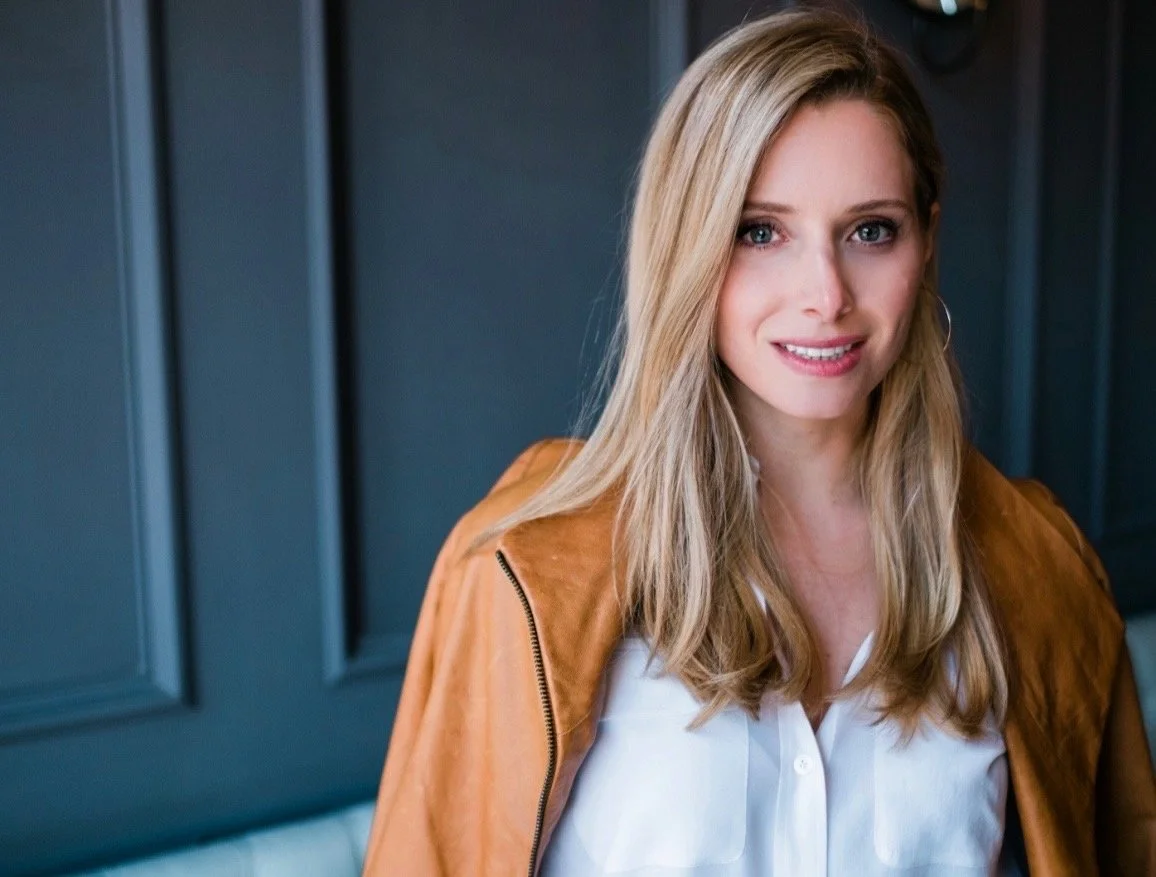
Christina Ross is the head of science and impact at Credo Beauty. There, she leads initiatives in sustainability, safety, and advocacy. Previously at the firm, Ross was senior scientist and then director of science and policy. Prior to this, she was a scientist at Integral Consulting. Leading industry carbon-reduction strategies, emissions reporting, and pioneering sustainability efforts, Ross has testified before regulatory bodies on Capitol Hill and been featured in The Guardian, The New York Times, and Vogue Business. She is a board member of Pact Collective.