

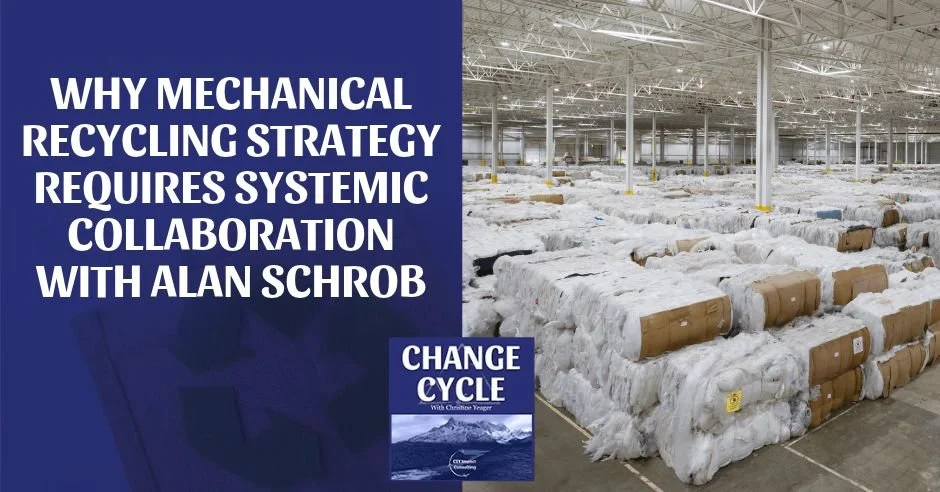
Consumer packaged goods brands face immense pressure from Extended Producer Responsibility mandates, yet a massive gap remains between corporate recycled content targets and actual recycling infrastructure. Host Christine Yeager sits down with Alan Schrob, Vice President of Circular Solutions, North America at Borouge International, to unpack a winning mechanical recycling strategy. Overseeing a 440,000-square-foot facility capable of producing over 100 million pounds of recycled polyethylene annually, Alan explains why the circular economy suffers from a coordination problem rather than a technology problem. Together, they explore how sustainability leaders can stop playing the blame game and start building the business case, supply chain alignment, and responsible end markets required to scale circular systems. Alan also shares his perspective on leading with empathy, reminding teams facing burnout that empowering others to do hard things is the true mark of lasting leadership. Another episode from the national plastics conference, this conversation offers practical, boots-on-the-ground insights for turning regulatory friction into real business momentum.
—-
Watch the Episode here
Listen to the Podcast here
Why Mechanical Recycling Strategy Requires Systemic Collaboration With Alan Schrob
Turning Polyethylene Film Into Usable Resin
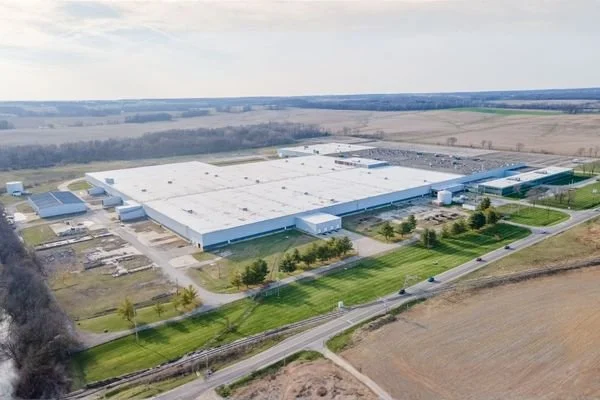
In this episode, I am interviewing Alan Schrob with Borouge International. Alan is the director of mechanical recycling, and he is the person responsible for turning used polyethylene film into resin that brands can buy. He has spent 30 years in the plastics industry, and twenty of them have been focused on circularity. He now oversees SYNDIGO1, a 440,000 square foot film recycling plant in Connersville, Indiana. He built it to produce more than 100 million pounds of recycled polyethylene a year.
Closing The Recycling Infrastructure Gap
That's putting him squarely in the tension of EPR. Everyone has a recycled content target. Alan is the one who has to make sure the material exists that can be used in your products, in your packaging. He'll tell you and he'll share in our discussion the gap between what we expect from recycling and what the infrastructure can deliver and how that is widening. The circular economy has maybe more of a coordination problem and not necessarily a technology problem. We talk about how to pivot from debating whose fault it is to building the supply, the demand, and the business case that gets more recycled content into packaging. I hope you enjoy.
Thank you, Alan, for being here.
My pleasure.
I'm excited to have this conversation.
Me too.
As with all my interviews, everyone seems to think this is an intense question, but here we go. How do you live with intention?
It's a good question. I learned a long time ago, don't ask me where I got this from. One of the things that always sticks with me is we tend to judge people by their actions and not their intentional. When you ask me the question, that's the first thing that popped into my mind because historically, I would see somebody respond in a certain way and thankfully that was interesting. As I've matured and gotten older, I've thought, “What is behind that response or that opinion or that focus?” I tried to uncover that.
Scaling mechanical recycling means turning used polyethylene film into commercial resin that brands can actually buy and use.
For me, living with intention is, if I think about when I retire. Someday, that's going to happen. I always want to think about how people will remember me in my contributions? It's easy to say, “He or she made a lot of money for this company or they developed some cool technology for this company or made some cool products.” That's great. For me, with intention, it’s about what mark did I leave on people and what are they going to say about how I led them or they learned from me? That's the mark that I want to leave.
I know that the teams that I've worked on and worked with, we've all done great things for the companies that worked for. I would prefer to leave a mark. I learned a lot from this guy about how to treat people or how to guide, coach and teach to me. That's the most important thing. For me, living with intention is all about that.
I had small children and I'm always saying things like, “Do you think that's what they meant when they said that?” Their kids are probably chaotic and not thinking. It forces me to also start to think about that same thing about people around me too. To your point, a lot of times they don't mean to be doing a certain thing and you're judged to be on their action.
You don't know what's going on in the background. I always try to take a deep breath. Sometimes it's hard but that has taught me a lot in terms of uncovering and getting to a better answer that might be different than the one that we're getting because we're not thinking about what another person's attention was.
In contrast to that, what mark are you leaving on your company besides being a great leader?
I've been with NOVA Chemicals and now Borouge International for many years. I've gotten to do a lot over those periods and many different parts of the company. If I'm talking about what I want to be remembered for it's about what I'm doing now and what my team is doing for our company and for the industry and society which is recycling.
To me, as a very small component of a very large company, that's important for us to be able to make our mark on being able to provide our customers with recycled resins that allow our customers and their customers to meet their targets. As I think about all of the some parts of the things that I've done, this is the most exciting, the most rewarding, the most stress-inducing probably job I've ever had.
Fair enough. Recycling is hard.
Recycling is hard and giving a talk at this conference. I have a slide that says “Recycling is hard.” The thing that I remind my team all the time is, we do hard things. The combination of recycling is hard and we do a hard thing. It helps me and hopefully, the team I work with to be able to lean into doing hard things.
Speaking of hard things, I work a lot with producers who are obligated with extended producer responsibility or with recycled content mandates or sometimes those things are together. You're on the other side of that trying to make the material exist so that they can meet these requirements. When you see it was like a content mandate, what are the hurdles you see in front of you?
The circular economy doesn't have a technology problem. It has a coordination problem across the entire value chain.
As a recycler in a market in which there is no requirement yet to incorporate recycled content into any finished product, mandates for me as a recycler are a good thing. That ultimately will allow us to ensure that material gets collected, gets recycled and then lands in the right applications that different kinds of recycled content can be used in. The worry I would have is, we've got in the US, 50 different states, plus a federal government.
If each one of those bodies is creating a different mandated system, then what are we doing to the industry in terms of being able to have a consistent approach that doesn't cause a lot of confusion and ability to not be able to do what we need to do for incorporating the cycle content and profitable economic way. It's two stories. One, mandates are good because they don't do it. It will require us to be able to keep plastic and the environment. You can continue to be in circulation. The danger is that we have lots of confusion or multiple different schemes that create a lack of ability for us to be able to do it well.
Not many companies have a state-by-state supply chain.
That's right. Does that mean you have to have a pouch for nuts in Oregon that's different from New Jersey? The complexity of that supply chain is overwhelming to even think about.
Shifting gears a little. A lot of headlines talk about new technology, new innovation and recycling. It makes sense. What I call the sexy stuff is the new stuff. The label is bottles or whatever that are like only in a high-end hotel and have no scale. When you hear that, do you think that's what the recycling industry needs, is innovation? Is there perhaps something else that we could be focusing on?
We need to focus on sales and operating recycling content into finished products. I would tell you that the facility that Borouge International built in as an operating Indiana, the business I'm responsible for, is state of the art when it comes to polyethylene and film recycling. The technology that we used, the plant is only now fully operational for 2026. The technology we've Incorporated for sorting, for washing and extrusion is of the leading technology.
Mechanical Recycling Strategy: Everyone has a recycled content target, yet the gap between recycling expectations and real-world infrastructure continues to widen.
The products can go all the way from general purpose applications all the way up to the broadest use of food packaging. Anything that virgin polyethylene can be used in, recycle materials coming out of our facility can be used in the same applications. When you ask me, “Do we need more innovation?” I'm thinking maybe not so much. There's plenty of technology on the market that allows recycled materials to be able to be used in a broad base of finished products.
Does that negate the need for us to keep developing and keep innovating to either get to higher performing products or to a lower cost position? Not. That all needs to happen. The thing that we need most is adoption. Adoption will read that innovation and allow for investment to continue to have the ability to make recycled materials as close to Virgin as you can at a cost that makes sense.
If it scales, then there will now be the margins to reinvest and increase and decrease the cost. We're sitting at a conference with many people that may be your competitors but also maybe just different levels of the supply chain. Where do you see collaboration play a role in continuing to drive scale or more recycling?
I don't know how to do it any other way. What the industry is trying to do and when I mean the industry, I mean from material suppliers who provide virgin residents to recyclers like myself and others in the industry to our customers who are converting these products and to applications all the way through the value chain to brands and retailers. The only way this is going to work is for that entire value chain to work together.
We're early in the development of that because as long as the key driver is going to be economic where recycled materials are going to be over a cycle, it's going to be more expensive than virgin. Without the requirement to incorporate recycled content, we're still going to see the adoption slower than what anybody would like. The only way to overcome that is for the whole value chain to work together, and to spread that economy, I call it burden, over the entire value chain.
Feeling burnt out by corporate sustainability demands? Ask yourself what mark you want to leave on others and your company.
As a recycler, it's different from virgin materials. The cost of production is very different. It's generally always going to be more expensive. You can't ask to recycle or to bear the full burden of that cost. It requires that the entire team be able to do that effectively and efficiently to minimize the cost of the consumer but still have to bear that burden. The only way to do that is to work together.
Talking about economics. I often say you can't have circularity without the economy part of it. A lot of times, I have discussions around circularity or sustainability die in a bunch of eating. You get to that conversation and somebody sees it as costs, as a foreign on their sign, as anything they have to do. How do you overcome that?
Companies like mine, Borouge International, where we exist to provide returns to our shareholders and ours. Every decision is going to be guided by the amount of money that will be returned to the organization based on an investment or a focus on a market. When we look to invest in recycling, there has to be an economic return associated with doing good. In other words, you can do well as you do good.
If you combine that with the idea that we're providing here is another tool and our customers tool chest in terms of the products that we can provide them to allow them to meet their goals. That ultimately should have a positive effect on the returns from a recycling business. Interestingly, Fitch commented on our credit rating. One of the things that they commented on is that it is a positive driver for the company.
The company’s investment profile is that we've made an investment in recycling and an investment in circularity. You can look at the economic contribution of an investment, say, in recycling along multiple lines. The direct returns that it provides to the company in terms of cash. If a company can also invest at a lower cost of capital because of an investment and recycling, that has a collateral much almost larger collateral. Those are the conversations that we tend to have about further investments.
I love that I'm going to start using that example all over the place because you're exactly right. Having that impact on the thing that the CFO is looking at the most. A positive impact on that, that alone becomes this huge proof point that you can use to continue to get the financing. If you need the financing to believe in what you're trying to do, then you’re good to go.
One of the most empowering things you can do as a leader is believe that others can do hard things and remind them they're capable.
Amen.
On top of getting the finance team to believe in what you're trying to do, what are some practical tips to someone who's trying to weed and uncomfortable change?
As we established earlier, recycling is hard. As part of a team that stood up a brand-new facility with the latest technology, there are some fun days and along with those fun days are difficult days. For me, the absolute key is to always be finding ways to support my team to remove roadblocks that prevent them from being able to be successful.
The second thing is to remind them that they do hard things and that they're good at doing that. The third thing is just listen because. Sometimes, we just need to grouse. You need to complain and you need to let somebody hear you. Let it loose. The combination of those different things also is a part of leading with intention too. That, to me, in the face of adversity defines how people can be successful and successful for their teams.
I love that. That's so great. This reminder of, “You can do hard things,” is such a good mantra to have in the business world. I say this to my kids all the time. To have that or that Cornerstone for you, I can see how effective that can be.
Sometimes, I have to just listen, smile and say it's going to be okay because we do hard things.
Thank you so much for this conversation.
My pleasure.
I appreciate it.
---
Defining Your Leadership Legacy Through Burnout
I hope you enjoyed that conversation with Alan. We talked about leadership on top of everything else related to recycling and the circular economy. One thing that struck me and that I keep thinking about is what mark do you want to leave on others and your company? Think about that when you're trying to find out where you want to spend your time, how you want to be motivated to deliver when you're burnt out. All of these things.
Thinking Differently To Achieve Industry Scale
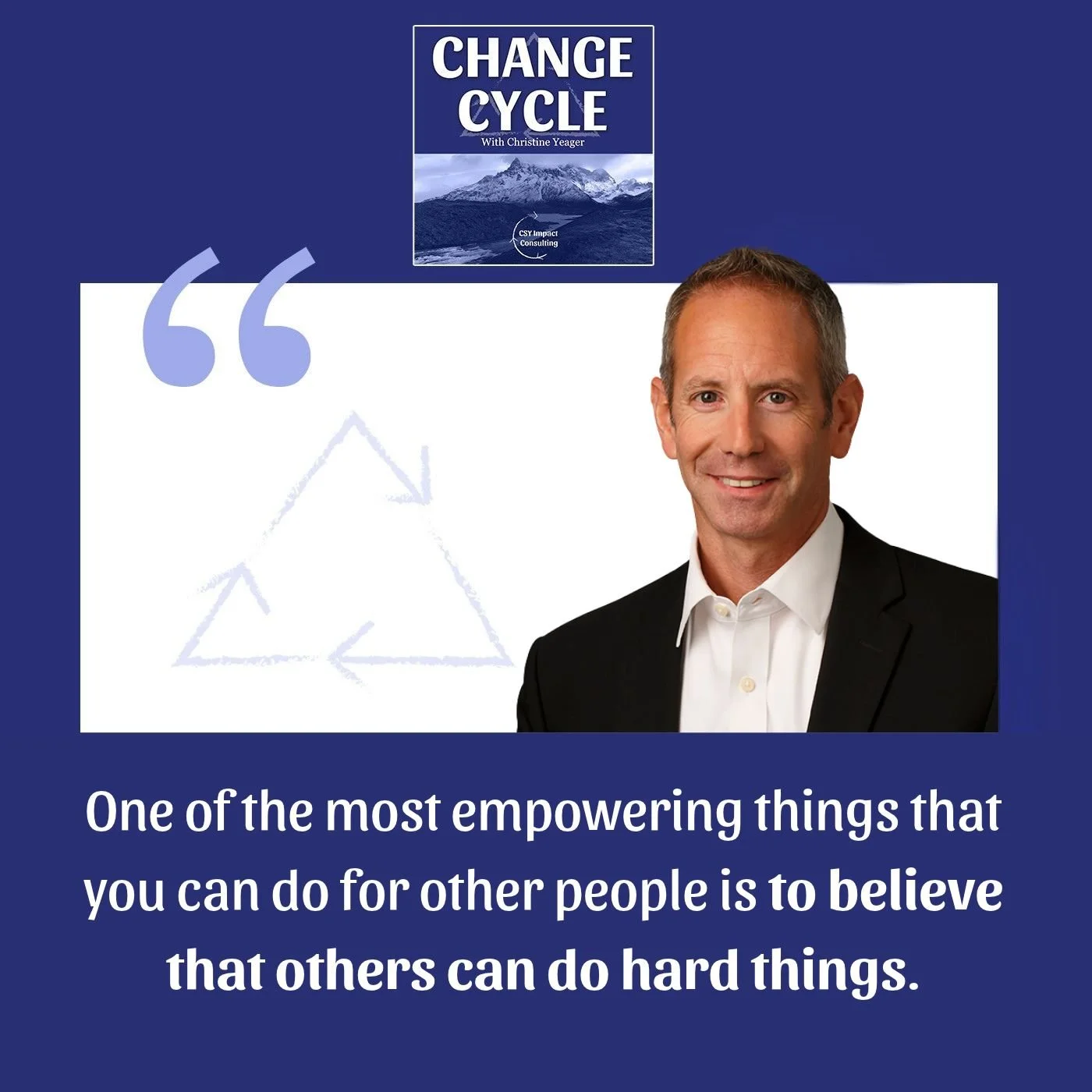
Trying to let that be a guidepost. We also talked about and this is something I've said many times, that the recycling industry doesn't necessarily need innovation but we need to think differently in order to scale. That collaboration is critical in that. Alan ended with this idea that one of the most empowering things that you can do for other people is to believe that others can do hard things. To remind them that they are capable of doing this. That we're doing something hard. We can do it together. We've done hard things before and we can continue to make progress. I hope you enjoyed the conversation.
Important Links
About Alan Schrob
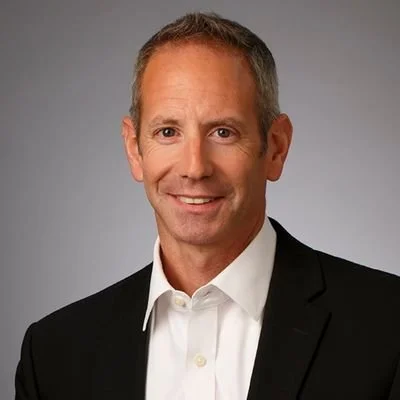
Alan Schrob is Vice President, Circular Solutions, North America at Borouge International, helping lead the development and scale-up of the company's mechanical recycling business while supporting the integration of the legacy NOVA Chemicals, Borealis, and Borouge portfolios into a unified circular solutions strategy.
Since joining NOVA Chemicals in 1999, Alan has held numerous leadership roles across purchasing, investor relations, manufacturing excellence, business development, and market management, bringing a unique blend of commercial, operational, and strategic expertise. A passionate advocate for the plastics industry and the circular economy, Alan serves on several industry committees and boards, including PLASTICS, Closed Loop Partners, and formerly AMERIPEN.
He is a frequent speaker at industry conferences and events and widely recognized for advancing practical solutions in circularity and mechanical recycling and for championing the collaboration needed across the value chain to achieve long-term sustainability and business success. Alan holds a Bachelor of Science in Economics from Old Dominion University.