

Wine Marketing: Sustainability, Consumer Engagement & Modern Wine Trends With Rhonda Motil

What does it take to make wine both sustainable and appealing to today’s consumers? Christine sits down with Rhonda Motil, VP of Marketing at J. Lohr Vineyards & Wines, to explore sustainable wine marketing, modern consumer engagement, and experience innovation in the wine industry. Rhonda shares strategies for promoting certified sustainable wines, adapting to changing demographics, and boosting sales through virtual wine tastings and creative campaigns like “Search for the Seal.” She discusses the advantages of working at a family-owned winery, leveraging tradition while embracing innovation, and connecting with younger audiences through approachable, fun wine experiences. From wine industry trends to sustainability certification, this conversation provides actionable insights for wine brands looking to educate consumers, drive engagement, and thrive in a competitive, evolving market.
Resources:
2022 J. Lohr Estates Seven Oaks Cabernet Sauvignon available on tap/in keg
The J. Lohr Sustainability from Vineyard to Bottle and Beyond infographic is our visual representation of both why and how sustainability is a core value at J. Lohr, weaving in the importance of the three pillars of sustainability and the California wine industry’s impact thus far.
Watch the episode here
Listen to the Podcast here
Wine Marketing: Sustainability, Consumer Engagement & Modern Wine Trends With Rhonda Motil
Discussing Experience Innovation
I'm excited to introduce our next guest who is the Vice president of Marketing at J. Lohr Vineyards and Wines. Her name is Rhonda Motil. She is responsible for sharing how a major family-owned winery shows up in the market. This is across brand strategy, communications, design and digital channels. Before that, she spent a decade running the Monterey County Vintners and Growers Association working at the intersection of growers, regulators and trade groups where alignment is hard and trade-offs are unavoidable.
That background puts her face to face with the uncomfortable truth of sustainability. Certifications and standards don't succeed on principle alone. They succeed or fail based on whether anyone understands them, trusts them and then uses them to make a decision. Rhonda has lived the reality of marketing the California sustainable growers certification where credibility, clarity and adoption matter more than good intentions. Missteps are visible fast.
She shared some of this when I saw her speak at the Sustainable Brands conference in 2025. I appreciated her authenticity on the topic and her openness to share, not just the successes but the things that she's learned. She's here to help us navigate the change cycle from assuming, doing the right thing speaks for itself to building the operational and marketing discipline required to make sustainability claims stick in the real world.
Rhonda, thank you for being here. I'm super excited for this conversation.
Thank you for having me, Christine.
I enjoyed your presentation at Sustainable Brands. I felt like you did a great job of being approachable about this topic but also showing successes and what you're learning. It stuck with me. Thank you for coming onto the show to talk more about that and other things. We like to start each episode or each interview off with how do you live with intention?
Intentionality & The Pursuit Of Learning
What a great question, and there's so many different directions you could go on that one. For intentionality, it depends upon what aspect of my life was focused on. I'm a professional obviously and one of the reasons why I'm on the show. I'm also a mom and a wife, etc. I approached intentionality based upon what role or persona I am at the time. For my personal life, intentionally is certainly being present in the moment. That was harder maybe a decade ago. I have four kids all born within five years of each other.
Life was just crazy being a professional working woman as well as raising children. It was hard sometimes to be focused and present. You're trying to make sure that everybody's going to be dressed and have a lunch pack for them for school. You're moseying on and you're hoping that your shoes were the right matches. I recognized myself in that. I wasn't necessarily always present and thinking about that moment. I’m still a busy lady but things have slowed down a little bit more. It's not as crazy, particularly on the personal front.
I try to be present. My children are a little bit older teenagers and young adults in their early twenties. As my children have grown, I find that they have so much to say and many great experiences. Being present, listening to them and getting their perspective has been a good source of intentionality for me. From a work standpoint, it’s maybe a little bit different. I am in constant pursuit of learning. I love to learn new things.
As you get a little bit further in your career, you either go down the path that you think you know it all or you're like, “There's so much to learn that I want to take advantage of.” I've gone down the latter portion. It’s taking in all that's going on in our world with advancements that are here because of technologies and other opportunities and leaning into those. I'm embracing that a heck of a lot more than I did earlier in my career.
Being present with your kids resonates with me. Four in five years I can’t imagine. I only have two. They're annoyed because I'm not paying attention to them but at the same time, I'm usually coming up with a camp for them to go to or researching music lessons. It’s like, “You don't understand. I'm doing something for you. Maybe I could do it later and I could spend some one-on-one time with you.”
As they age, you set the base on the foundation years but they develop into their own people with their own opinions. Making sure that I'm present to see how that's beautifully evolved over the years and again, their opinions might be different than mine now that they're young adults. They might have a different perspective.
I’m making sure that I'm listening and it ties into my second point about professionals and also learning from them. Learning from them what their perspectives as to what they're seeing in college and what their peers think. Intentionality is a beautiful thing. I love that you started off the interview with that question.
Intentionality is a beautiful thing.
Side note. One of the reasons I have a show is so that I can force myself into homework. I get it. I get the level of learning. Thanks again for being here. Now, shifting gears to focus more on the professional. When you look at the wine industry now as you shared with me in some of our prep discussions. There's some declining sales and shifting demographics. Can you share a little bit about what that is looking like? What changes in that context? Do you feel like it's unavoidable but yet also the hardest to navigate?
Shifting Demographics & Industry Resilience
The wine industry is still a very large booming industry. In 2025, domestic US wine sales were valued at over $74 billion. It's quite large when you look at it globally. People are still enjoying wine. That noted, wine consumption is certainly on the decline. That's due to a variety of reasons. The Boomer generation, which were significant consumers of wine. They are aging. Maybe those two glasses of wine are now becoming one glass of wine or someone that might have enjoyed wine on weekends instead of doing Friday and Saturday. They're now only enjoying one day a week.
Those aging demographics are certainly a factor. Other things that are going on in the industry is the number of options that are available. RTDs or Ready to Drink cocktails, things in cans, the cocktail craze, and the excitement with mixologists and Mixology and how bad it’s playing into the younger demographic with various options that they have that I didn't have personally at a young age. That's all playing into consumption.
There are also some business factors that are going on in terms of trades, tariffs and availability of product on shelves and internationally. That's taking a toll on consumption as well as wine sales from California wineries. That be told, though. Consumption is certainly down. Shipments are down. How do we as an industry address that? In some cases, you recognize that some of it has been normalized during the COVID years. There was a spike in wine consumption, as you can imagine.
People made sure that no matter what happened they would have their wine fridge’s stocks. We had this huge spike then things declined and things normalized. You had these factors that I'm talking about with aging demographics, young consumers with more options, as well as abstaining from alcohol. That has taken a little bit of a toll on the industry. As an industry, though, we are resilient. We know that there's always going to be passion for wine.
It's such a deep-rooted form of connection for folks as they entertain, engage, and gather together. What do we do about that? What do we do about declining wine consumption? You'll notice that there are different methods and ways that consumers are experiencing wine via packaging. We are offered kegs now, which is cool. You go into on a premise account and right next to the top handles with beer, you also have options of wine.
You would have thought about that twenty years ago and someone would have told you, you were crazy. There would never be why not on tap. Wine is to be uncorked and poured at a table. The methodology that we're presenting consumers with our offering is changing. Our number one skews, which is a Cabernet which is typically viewed as a high-end uncorked pour as I was talking about, is now available in keg. Meeting the consumer where they're at, whether it's in the form of how you serve it or how you present it to the consumer to make it appealing is something that we're going through in the industry now.
Meeting the consumer where they’re at—whether in how you serve it or how you present it to make it appealing—is something the industry is navigating right now.
Innovating Experiences
When you talk about shifting to a keg, do you also talk about the sustainability difference in that change?
The keg format reduces a lot of things like, glass shipping, ease of use. We do talk about that with consumers. There's a company that we utilize called Free Flow that does that out of Napa. Many wineries are coming on board with that and it's an exciting transition. It meets this young younger consumer where they're at.
There's also things that you can do in terms of how you present your product to the consumer. One of the primary ways that consumers often find out about wines is by visiting wineries. That noted, not everybody's going to be able to hop on a plane and travel out to wine country. That's simply an aspiration for them.
What we try to do and we'll get to it a little bit later in the conversation, is bring our product to where the consumer is at. It’s in-home tastings via video, virtual tastings, allowing the consumer to have a little bit of a modified experience of not necessarily walking through the vineyard but feeling like they're being educated, understand the product and connected to a brand is important for our industry as well.
It's like rethinking the norm. People think of innovation as technology and what you're talking about is innovating experiences.
It's a change in mindset. I don't know if it's necessarily, particularly for the younger consumer, the 30s. They've always grown up with technology. They've always grown up with computers and learning online. It's not as much sometimes as a change for them. It's an alternative option for them. It's harder on the wineries.
The wineries are so used to having that guest experience come in. The guest comes into the wine center. You visit with them. You take them through the vineyard or you can conduct a physical tasting where you pour the wines. Hopefully, they then come away as enthralled with a brand, connected to the brand because they've seen it first-hand. They'll go back and purchase the product.
This is a drastic change to do virtual tasting and ship the wine to the consumer. They then follow along with a sommelier or a wine director that talks them through. That is a fundamental change as to how we get consumers into the funnel, educate them and get them passionate about our industry. Hopefully, on a deeper level, a particular brand.
You've alluded to it but we want to hear about a moment when change or there was a change that disrupted your assumptions. Either at J. Lohr or at another time in your career or both. Basically, something that forced a fast pivot. What did that moment reveal about how prepared you work?
I'll give two examples. One from my current employer and then a previous experience that I had prior coming to work at J. Lohr. I've been writing journals for many years. I’ve seen some great times, great product launches, etc. Everything was on this trajectory up and then all of a sudden as I shared, COVID hit whereby most of our product is sold nationally out where consumers are at. We do have a thriving direct to consumer or D2C business. That's where your loyalists are developed at the winery when they come to visit.
During COVID, that experience was no more. Everything was shut down and we were particularly cautious as a family-owned business to protect not only our employees at the time, but guests that were coming in and tasting wines. However, we didn't know how long this was going to last and we wanted to ensure that we maintain that deep connection. Not only with new consumers, but the thousands of wine club members that we already had.
I'm sure your audience will know, but a wine club is exactly what it sounds. It's a consumer who's like you're a super ambassador. They are your super fans. You don't want to lose those folks because they tend to bring in their friends. A lot of times, wine club members are in a proximity of wherever your wine center is at. For us, we have two centers in California in thriving regions. One of them is in the Paso Robles wine region and the second one is in San Jose. More of an urban setting in the heart of Silicon Valley without the ability, though, to have the wine center open and to engage with consumers. Which again, are key ways to grow your business. We had a pivot.
We pivoted very swiftly to ensure that they felt engaged. Again, they could still order online via Instacart or any other service, but that's a little bit of a disconnect from what these specific customers are looking for. We launched an initiative called At Home with J. Lohr. We had no idea what we were doing with virtual tasting, so I'll put that out there for us. I can still remember the days when I was supposed to be on screen and talking about wine. It's just so much easier in person because you're able to read your crowd and answer questions.
When you're in person, the guard of a consumer in this intimidating industry is a little bit down because they relate to you. You can tell as they're tasting. Do they like this? Do they not like this? In a virtual tasting environment, it's hard to read that crowd in your 30 little boxes that you're conducting a tasting at. There was a definite learning curve for us on that front. For folks who weren't even doing tastings, we just wanted to ensure that they were still connected to our brand.
We did things like, how to leverage your wine bottles into crafts and artsy things. We had projects on how to make wine candles and how you use your bottle to make the perfect array of flowers utilizing the bottle and what to do with your corks so that you can make a cork board. We had these crafty projects that we leaned into. Finally, we also did things like wine pairings online. We know that's a Friday or a Saturday and you haven't been out of the house. This is when you normally get out. What's a cozy meal that we could recommend and here's a short video of how to make it and what J. Lohr wine to pair with it.
Without that experience, I don't know where we would be now with those assets. They're just regular for us now. They're part of our marketing mix. We need to do them. We have to do them. They've allowed us to be more accessible to a wider audience because of it. It was a challenging time for us. There’s lots of hiccups, lots of ups and downs, but a valuable experience.
What surprised you most about the customers or the people that engaged with these assets during that time?
The receptiveness. There's no other option. We're going to do this because we love wine and we want to continue learning about wine and tasting wine. Lessons learned and graces but it's helped us change our model moving forward as to what the consumer is willing to try with us and join us in the journey. Again, wine is supposed to be fun. It's about connection. It's not supposed to be in a box and regimented. The type of wine that you might like, Christine, might be different from the type of wine that I like. That's okay. Let's explore it together. That opened up our mindset from a marketing standpoint but also a company standpoint.
I love wine a lot. I have not shared that yet on the show. I've done all these tastings. They're very educational about all the different things like what is this, what are you looking for, what are you smelling and all the stuff. Through all of that, the biggest thing I've learned is don't be pretentious about wine. Enjoy it.
As you said, it's supposed to be fun. I just want to learn about it. It's so wild how much difference you can taste sometimes even in just the sheep of the glass. That's fascinating to me. When I'm buying wine for other people, I want to know what it is that you like because you probably don't like what I like and that's perfectly fine. We can get two bottles and you can cork them if you don't finish them.
You hit the nail on the head. That's what's exciting about our industry. There’s tons of varietals out there. I'm even exploring. I'm like, “That varietal from an international growing region, I've never tasted that or heard of that before. Let me try that out.” The sense of discovery and exploration in our industry is unique. It's not five different versions of one type of product. There's tons of varietals out there. There's tons of wine regions even in America. Let alone the world.
We all grow things differently based upon our terroir, our climate, the winemakers style and preference. It makes it exciting. The other thing is, it changes from vintage to vintage. A vintage that is low on rain can be extremely different. Not only is the product different but you try to achieve consistency with a particular skews year after year so the customer knows what to expect. There can be differences and you have to adapt to that change of that particular year and go with it from there. That's exciting.
You try to achieve consistency with a particular SKU year after year, so the customer knows what to expect. However, there can be differences, and you have to adapt to the changes of that particular year and move forward from there.
A cycle of change if you will. You wanted to maybe share another example around association membership.
Previous to this working as Vice President of Marketing, I was the executive director of an association. We were a nonprofit trade marketing association for the wine industry. Each region that grows grapes has a trade association where the goal of this is that all ships rise if we collectively work together to brand a region and to market a region. At the time, I probably had over 100 wineries and 200 associate members.
The industry even back then was going through some differences. Consolidation was becoming very popular in the industry. Whereby, brands that were thriving were getting scooped up and acquired by larger brands. From an association standpoint, for any of your audience who run associations. You know that dues are your bread and butter. Hopefully, you have other sources of revenue whether that be in the form of events or services that you offer or education. Usually, membership is going to be your core.
Unfortunately, we were going through a stage of consolidation whereby $25,000 dues paying members multiplied by four, where all the sudden consolidating under one umbrella. We were not prepared for that. We were not prepared as a nonprofit association to understand the changing dynamics that were about to hit us. We rapidly had to do that, though, because as an association, we’re on a calendar year. There's not too many things that you can do swiftly to start generating revenue unless you have a strategic plan understanding how many members are going to consolidate.
We quickly and swiftly kicked into gear. Luckily, those members who were the acquirers of some of these brands did work with us because they understood the value of the association. That was a big learning lesson. One thing that I had to do swiftly just because you're on an annual cycle. It's not like you launched a new product and all of a sudden, you have an additional source of revenue.
How did you come to think of consumers as an additional source of revenue? Was there like a-ha moment? Was there a bunch of data? What were the facts and figures you used to help you change direction?
The beauty of the region that I was managing was that it was in beautiful Monterey, California. I had the good fortune that we do get a lot of tourists. We get a lot of tourists that are coming in from a variety of different areas. We have a good local base that's interested in the wine industry, but you had a lot of tourists that were coming in.
I was deeply rooted at the time with the convention and visitor’s bureau and other tourism associations that were also going through some changes at the time in terms of the types of travelers that they were getting in as well as what they were looking for. People were coming to Monterey. We have great golf there. It's a beautiful region. There’s lots of golf courses and great cuisine, but this sense of wine destination travel was on the rise.
In my partnerships with other associations and listening to a need that they had to better understand wine tourism marketing. I saw the a-ha of there could be a connection here. It's not like the organizations were completely operating in silos. There was an opportunity for us to work a little bit more closely.
That ultimately led to something called the Winery Corridor in the Monterey County region. Which was banding together of a variety of different tasting rooms along a very popular region in Monterey, the Santa Lucia Highlands area. It goes up the coastline and over into SLH. That allowed for us to tap into the consumer side of things and generate additional tourism traffic and ultimately revenue.
You're listening to your partners and then you found a solution that was mutually beneficial for everyone involved, which comes up a lot in sustainability. Some sustainability professionals will say that the sustainability teams are more burdened to show the business case for the work. Versus like an R&D team, who's allowed to have maybe no profit for a while until an innovation takes off or something. There’s both sides of the coin for that. Either way, the sustainability teams that companies have to find a mutually beneficial solution and what you share is listening to those partners, understanding their challenges and then finding the way to bring those two together.
That was great. Thank you. We'll keep going and shift gears a little beyond what you were sharing and some great examples of what I'm going to announce our calling like experience innovation. Another challenge that a lot of sustainability professionals deal with is education. You've spent time working on consumer education campaigns and with product certification. Can you tell us about successes and driving consumer education? Also, where it might break down and practice.
The Three E’s Of Sustainability
We're fortunate in California to have a fantastic organization called CSWA. It's the California Sustainable Winegrowing Alliance. It's been around for many years. I have the good fortune of working for a company that was one of the founding members of instilling what practices, policies and what we need to do as an industry to ensure that we're sustainable generations down the road. The CSWA has a governing body, an independent set of auditors that come out to wineries that sign up to be certified.
There's over 200 practices that they measure and benchmark you on every year. Some of it is on site visits and then they’ll alternate years where it's more of an audit trail. These practices go into something called the three ease of sustainability in our industry. It's based upon economics, environment and equity pertaining to social equities. Environment is something that comes to mind almost immediately for everyone in our industry.
The three pillars of sustainability in our industry: economics, environment, and (social) equity.
What are you doing about irrigation? How are you managing wastewater management? What are you doing in terms of energy efficiency? There's a lot that's related to that, but there's also the economic side of things. How are you going to be sustainable economically so that when times of trouble hit, like we were talking about with a little bit of declining wine consumption and offerings that could be available. How do you address those economic challenges to be sustainable?
The third element is social equity. What are you doing for your communities? What goodwill do you have? How do you treat your employees? Do you offer year-round employment for farm workers? Are you offering benefits across the board? The CSWA does a good job of framing what those elements are. As wineries, we then provide feedback as times change and evolve to update the guidelines and the book.
Consumer Education & The "Search For The Seal"
A couple years ago, we recognized that it was great but we're speaking to ourselves. We know that we're all doing a good thing but the consumer doesn't necessarily have an indication. There's no flashing light at the store that says, “This brand is doing great things in the wine industry by me.” There was an initiative to integrate the marketing efforts into the California Sustainable Winegrowing Alliance’s efforts. There was a development of something called the Certified Seal.
It's a small seal that can go on the front of the label or the back of the label. There are a few marketing brand guidelines that you have to use, but it indicates that you are a certified sustainable wine through the California governing body. It means that at least 85% of the grapes that are utilized in that bottle come from a certified sustainable vineyard. Again, meeting the requirements that we just talked about, the over 200 requirements and then 100% comes from California. You know the source of where your fruit is coming from.
It was exciting. We leaned all in. Several years later, all 30 of our distributed skews throughout the US. They're all certified sustainable, which means we've gone through the process, the audit trails and the diligence with each and every skew to ensure that it is sustainable. We've applied the seal on the back. Taping that one step further then, how do we alert the consumer to look for the seal on the bottle? As you and I know, even when we went to the sustainability conference, there were a ton of a-has of folks that didn't even know that there was a certification program in the wine industry. Let alone taking the next step to look at the back of the bottle and you'll be able to determine as a consumer if that wine has been certified sustainable.
I know that in the session that you attended, I would say at least half the audience had no idea that was a practice in the wine industry. We launched a campaign called Search for the Seal. It’s pretty obvious and direct. We had a concrete call to action. We wanted the consumer when they approached the wall of wine. Which we in the wine industry call it, because it's so confusing sometimes. You have to be intentional when you go to a wine store or a supermarket. It can be overwhelming by category and then honing in on varietal then the price point.
What are you searching for and how do you make an educated decision? There's a lot going on there. Getting them to turn the bottles around and search for a seal is yet another step in the process of consumer consumption. Again, we launched the campaign called search for the seal. We did a lot of our efforts in this marketing campaign digitally. We had a social media element to it. We had an influencer element to it. There was a carrot at the end. The consumer was to take a picture or a video of a bottle of wine that had the seal on it, send it back to the US and enter to win. They then were able to get a chance to come visit us in California and see our certified sustainable vineyards as well as our winery.
It was fantastic. It was a great campaign. A very high performing campaign. From a metric standpoint, we had over 30,000 click-throughs of getting qualified consumers. We've done other sweepstakes that have generated more entries but again it's easier. Tag a friend and you're getting entered to win. That doesn't mean that you're necessarily aligned with the belief of sustainability or our ethos. You might want to take a trip to California. You're going to tag your friend and then you lose interest after the winner is announced.
For this, a consumer had to take a concrete action of finding a bottle, looking for the seal, and hopefully processing, “There's something good that this brand did. I might want to learn more about it,” then entered into the contest. Months after that campaign, the drop-off rate or the attrition rate of those folks staying in our newsletter chain or engaging with us are much higher and qualified leads. Less than the mass just tag a friend and you'll enter for a chance to win.
Less of a pool but a more targeted audience. We were pleased too, because it was a campaign that spoke to our ethos. It says a brand that sustainability is important to us and we wanted to build that tribe along. In some way, shape or form they were interested in sustainability. That helps me from a marketing standpoint to market to them further down the chain as to things that are sustainable in nature.
Back to the business case of sustainability. It’s something that you see in the consumer data. It's great to see a real-life example of that. There's a lot of consumers that care about sustainability. People for a long time were hoping that they would pay more for sustainability. They're not. In fact, a lot of them are low-income consumers. They can't pay more but they have high expectations of your brand.
What you see then or at least what I've seen in the data is that those consumers are stickier. What you're saying is that was also the case in your example. You targeted them and they stuck around. It continues to reinforce this idea that if you gain the trust of your consumer then you've acquired them and they're a cheaper consumer to keep from a business standpoint.
In the long term, there are more cost-effective consumers. To your point, if you are a wine brand that is certified sustainable. Chances are, you might be a little more expensive on the show candidly because you have to have an audit trail. You have to know where your grapes are coming from. You have to make sure that they're certified vintage after vintage. Let's say you do have an inclement year where that vintage is not particularly good.
If you want to retain that seal, that means that you can't go out and source grapes from everywhere that you don't know what the land practices are of that partner vineyard. You have to stay true to either reducing your inventory of wine that you're going to have available, getting grapes from a partner that you trust that is aligned with your values and sustainable principles so that you can have the same volume. You can't just go out and source from everywhere.
The model with sustainability in the wine industry doesn't work that way. That said, because of all those practices that are in place, you're typically going to have a wine that will be a little bit more on the shelf. Again, consumer confidence is knowing that they're believing in a brand that's doing things that are good for the environment, good for the people that work there and for the community.
Marketing a certification is notoriously hard. In fact, I've heard people talk about things like, “There's so many certifications, It looks like a bumper sticker at the back of a car. I can't trust it.” Kudos to you folks on being able to cut through that at all. Maybe for others that are trying to do something similar, what's the least intuitive lesson you learned about getting people to care enough, to act or either to use the certification or to pick up the bottle?
That's a great question and I don't think we've mastered it yet. As evident at the conference of a bunch of us who are like-minded and all about sustainability. There's still this education that we need to have for consumers that enjoy our product. That goes back to my association days. We're in an industry that everybody wants to do well. Everyone wants to sell their product. In order to succeed, like-minded sustainable brands need to be pulled together.
Everyone wants to sell their product, but to succeed, like-minded sustainable brands need to come together.
We often get approached by retailers who want to have a sustainability program, whether that be during the full month of April, which is something that we're working on. It's J. Lohr alongside other sustainable brands. You have to collectively buy-in because that shelf space of having an end cap unit and at the end of the aisle with five brands is certainly going to be more impactful than just one little tag where my individual product is. It says, “I'm certified sustainable.” That openness of collaborating with others that are in the space and believe what you do then taking that forward to the consumer so it's a little bit more visible. That's the stage that we're at because we still have a lot of education to do in our industry.
In caps are very coveted, so kudos. There's a lot of things in the sustainability space that we can't achieve without industry collaboration. That's a great point. Speaking of things that are hard to achieve. When you're dealing with internal resistance to sustainability choices. Whether they're economic or environmental or social equity. Maybe give tangible talk tracks or data points or things that people can use to win over a skeptical leader. Finding a leader to champion the work can be sometimes the hardest. I used to have a CFO that says he was into sustainability but yet he still had to deliver on shareholder profits.
Lessons In Leading Change & Internal Resistance
I'm in a fortunate spot where I do work for a family-owned business that’s a private winery. We're able to move forward with the principles that the family holds dear. I have a good fortune that the chairperson of our sustainability committee is the president and CEO of the company. The family is all into sustainability. Many years ago, they were leaders in the development of the CSWA organization that I referenced.
In terms of my job of needing to sell a campaign idea that pertains to sustainability, I am fortunate that I don't have that challenge because it's part of who we are. Quite candidly in down time, we've talked about the declining wine industry. There is a tendency to try to figure out how you save costs, how you deliver on the same product and quality that the consumer has come to expect while also trying to trim down on things.
We have tried to maintain true to our beliefs of who we are consumer values. My employer would be a tough example of resistance but I think I shared with you. The start in my career was back in the Department of Defense, which I know sounds like a very wacky career path. How did I get into the wine industry? That will be a different episode for a different day. That is a big change. That is a major career pivot.
I started off in the Department of Defense right out of college. I was part of this scholars program that took some of the top students from around the US. They put us into like a change mode and I was in Columbus, Ohio, working for the Defense Construction Supply Center. Our job was to learn about procurement and supply management because the government even at that time recognized that the way that they were doing business was not efficient.
This was the time that those terrible articles would hit the newspaper about the toilet seat that was bought for X, Y, Z and had a 50 to 100 page contract for one toilet seat or one wrench was 200 pages and took 45 days to procure. The government wanted to streamline how they did business with some of their major suppliers. One of my jobs as one of these procurement change specialists was to go electronic. I know that this is going to date me, but everything was on paper back then. We were doing paper purchase orders, paper invoices and paper RFPs.
It extended not only the cycle of getting key items to the military that was in the field, but it made it so costly. We were going through a radical change of trying to alter the mindset and the process of how some of our largest suppliers, how they did business. Clearly, there was a resistance to change. Change is always hard, especially at the magnitude of the businesses that we were dealing with. Again, we had a little bit of a pool because we were a large purchaser of many of the items. When you're as big as the government, you do have a little bit of sway with that.
On top of it, you had these young professionals that were going into these big giant companies trying to get them to change the way that they did business. I learned a lot early in my career. I did it for a few years. I'm one of those people, as you can tell from my career journey. I have a tendency to try to stick with things. I want to see things through and we did have a little bit of drop off.
Folks would come in, the young students. They think that they're going to change the world immediately. Two years in, they were like, “This is hard. This manufacturer is not listening. They don't want to go electronic. They want to stick with their paper purchase orders.” I learned a lot through it. It wasn't ultimately long-term for me. It's scary. Doing business a new way is always scary, but let's figure out how we can do this together. A good lesson for me early in my career.
Doing business in a new way is always scary, but let’s figure out how we can do it together.
My first job was all for packaging. Every ticket that we had, you had to print it out. You had to print out the email that went with the ticket. You had to print out and get it signed then you had to put it in a folder. They were all these filing cabinets with these digital files that I knew were already on my computer but you had to print them out also.
We were living the same life.
When I started, my company was still on lotus notes and I was like, “I'm sorry. What?”
Fast forward to now, there's so much going on and the AI space. Being receptive to understanding that there's going to be people who are skeptical of everything and listening into what your concerns with this business change and trying to address them.
Speaking of change is hard. One of the things we talked about in the prep work is that the wine industry is deeply rooted in tradition. You talked about it earlier with wine bottles and the corking next to the table. I want to share a personal experience with wine. When I was studying abroad, I was in my twenties and carefree.
I was in the South of France and luckily, one of the people I was studying abroad with worked in the wine industry in Santa Barbara. He was like interning there or something. Maybe it was a weekend job or something, because he was also in college. He was like eighteen and knew more about wine than I had ever even thought about at that age. He was maybe twenty. I don't know. Anyway, we weren't drinking age yet in the United States. That's the important part but he knows a lot about wine.
He introduced me to Rosé because I was like, “I'm not going to order this pink wine. That's crazy.” I started tasting, learning about it and learned all about how it was made. For those of you that don't know, Rosé is a red grape. You keep the skins on for a period of time and that's what gives it the pink color. I fell in love with this wine. They serve it chilled usually.
I come home to South Carolina and then I started living in Atlanta, Georgia. Everyone was like, “You drink pink wine? That's disgusting. How dare you drink pink wine?”They're so pretentious like, “You have to drink the good wine in the nice fancy restaurants.” I was like, “I'm drinking like complex Rosé.” Now people know the difference and I always say, “I drink Rosé back when.”
You were the trendsetter.
Anyway, the point is, there is a lot of perception that comes with what wine is supposed to be here or in Europe or in South America or wherever. Wherever the wine is coming from, it has its perception. It's rooted in tradition in a certain way of doing things. Which can make change super uncomfortable when you're trying to question that. I can't imagine how hard the conversation was to put your finest wine in a keg. I would have loved to be a fly on the wall. What changes do you think that industry keeps postponing because it's uncomfortable even though it's clearly unavoidable?
Postponed Industry Changes & Younger Consumers
Again, kudos to you, early in your wine journey to be able to go internationally. That sounds phenomenal.
You want a tough life
We touched a little bit on the traditional nature of the industry and it’s an intimidating industry. Especially for this younger generation that's coming in. There's terms that are used that they don't understand about describing a wine, whether that's flavor profiles or aromatics. They don't understand it yet. Whereas, for maybe folks that are a little bit further along in their wine journey. They were open to like, “Going into it is going to be a little bit pretentious, but I will understand it. I will come along.”
With this younger generation, they're like, “Heck no. If this industry isn't talking to me in the way that I relate and how I enjoy things. I might move on to another product within the category that does understand me, relate to me, that is marketing to me and feeling a little bit more personal.” That's a big challenge that we still have to overcome in the industry. If you take a look at a lot of the pairing notes for wine, it's for high-end foods. It's for that filet mignon or the duck. That 25-year-old might not be making duck at home on a Thursday to pair with their pinot noir.
I wasn't 25. I can tell you that.
It might be something crazy like they don't want to cook. It's like popcorn night. My parents make a Chardonnay pair with popcorn. We have leaned into some non-traditional pairings with foods that we know are popular. Not necessarily the classic approach of you have to pair a Cabernet with a meat. Let's talk about everyday pairings, which would have been hard pressed many years ago to find a wine pairing with it being recommended by a winery with popcorn or pizza. We did this great segment with one of our winemakers the talked about burger pairing. We also did fast food pairings. Does this Cabernet go better with this burger chain or this burger chain?
You would have never seen that many years ago because that would have just been a lower grading of the category that we were in. We have this tier called Monterey Roots. There is a Riesling that's in it as well as a little bit of a quirky lesser-known varietal called Valdiguié. It's a chilled red wine. We have wine cocktails that we make and recommend using the wine while making fun cocktails. It's perfect for a gathering of friends and a girl's night together where you just want to do something fun and make a wine cocktail.
Again, many years ago, the winemaker probably wouldn't have talked to you for about a month if you were the marketing guy because you just didn't do that. You didn't mix this beautiful crafted product with something else into a cocktail. These are some of our most valuable and highest performing social media posts when we are doing wine cocktails with this cool little trendy tier of wines that we have.
That was great. Thank you. I love the idea of meeting people where they are and that can be so powerful. The last question I like to ask for this season and this will be my first interview for season two, which I say in my last episode that when you're a show owner, you can make up whatever seasons you want.
Season two is about moving beyond talking to each other about change but trying to unpack the good, the bad, and the ugly of driving change, which we've talked about here. Also, I want to be practical. There are trade-offs when it comes to change, driving change and making change. It's hard. As you said, change is hard. If you could give a couple or however many you feel comfortable giving practical tips for someone who is stepping into or leading uncomfortable change.
One of the biggest things is to go in with an interest, particularly if you're dealing with a department that wants to have change. It might not be necessarily as in line with your department. From a marketing standpoint, my job is to look out for the business but to be mindful of the consumer. Ensure that the consumer is taking care of, feels related to our brand, recognizes our brand for quality and brand consistency. As a whole company, we want to do that.
From a production standpoint, we have demands of making sure that we have consistent inventory. The last thing that you want to do is not have enough product and you're on a wine list at a major national chain. All of a sudden, you can't fulfill that need. What happens there then is you could get delisted and the RFP cycle is long. It could take a long time to get back on. Our industry is crazy, just because you don't know. You can predict early on based upon the cycle of the vintages, but you don't know sometimes how much you have to work with until the grapes are harvested. You test the quality and it's in the barrel then you make decisions.
Give and take with production and marketing and winemaking is an interesting dynamic. As you go into those meetings to discuss the quality of vintage and how much inventory you have. It goes back to the beginning, you listen and you go in with an open mind on the discussion. That's something that I've learned a little bit more about as I have progressed in my career. You go in with a mindset and hoping that this is the outcome.
You go into the meeting hoping that your decision or what you want is the outcome. It might need to be a little bit more of a compromise or production might be bringing you something that you haven't thought of before. That is critical. Another important thing with change makers is to have a little grace to know that everything isn't going to be perfect. I alluded to that search for the seal campaign and again while it did have great success. I was very candid that it was in our highest performing campaign over the past years.
Change doesn’t always come easily, and sometimes it requires compromise—but it can also bring ideas and opportunities you hadn’t considered before. That’s critical.
It was successful. It certainly wasn't the least performing, but was it the best performing? No. What lessons can I take away from this of a campaign that was successful but still needs a little bit at work to resonate and get out there to the consumer and having a little, “We did it. How do we take the winds and capitalize upon those?” That's okay. What do we do with that moving forward? Change makers understand that there's going to be ups and downs and ensuring that you have a safe environment that respects that as well, which can be difficult. Sharing that as you go back and are very transparent about the wins and losses. That it does feel like a safe spot again.
I'm in a fortunate position in my company. I know some folks in the sustainability space are potentially not as lucky. There's this constant feeling of counting successes and the fear of holding back on things that might have not worked so well. Being okay with that and ensuring that leadership understands that it's a work in progress.
That's great. I love that work in progress and especially grace. It’s something on my list of things to give myself in 2026, too.
I think we all need that in these changing times.
Key Takeaways: Presence, Innovation, & Open-Minded Leadership
Thank you so much for this conversation. I took so many millions of notes. There's going to be a lot of good nuggets that our readers can walk away with. I'm just going to run down a couple of things that stuck out to me. First, this theme wove through even as you were closing is this idea of being present with who you're with. Being present with your kids or the people that are challenging you, or being present in listening and using that to gain a different perspective. How powerful that can be in driving change or driving solutions or whatever it is that you're trying to bring forward.
Also, I appreciate that you brought up that the source of revenue was adjusting and you needed to adjust your source of revenue to the market. That's sustainability professionals rightfully so. We're often thinking about the earth and the environment. As you mentioned the economic aspect of sustainability and how critical that is. Thinking about breaking down why that source of revenue was changing, what was driving it, and who else is impacting it is like diving into the problem statement there. It’s a good reminder. That could also be true in another area especially with extended producer responsibility or circular economy.
Again, it's about the economics of it and EPR or Extended Producer Responsibility is meant to change the incentive structure and change the economics of packaging. The reminder to go back to what is the source of revenue, how it was changing and how I can adjust accordingly in the marketplace is a great reminder. I’m also going to now trademark experience innovation based on all of your driving experience innovation.
I loved that you've brought so many examples of thinking differently about how to engage with people because from a sustainability standpoint and another level of this is the intimidation factor that you talked about. Sustainability topics are intimidating. They're hard to unpack, hard to know, and to make the right choice. This conversation was a good reminder to me to think about how we can engage with people differently on tough topics to help them better understand and make the right choice.
Thinking about it as an innovation is not something I had been doing before. Thank you for bringing that to light. You also gave us another great reminder that industry collaboration is critical but also how powerful it can be and how bringing together your competitors to then take over an IN-CAP. If you're not in the commercial space, you may not know how exciting that is, but it's hard to do. Especially if you're not like Coca-Cola.
Bringing over and taking over an IN-CAP to drive sales that can be super powerful, but then to do that together in the name of sustainability. It's a tangible tactical way to show business value against driving a sustainable choice. The final thing is to keep an open mind. That's also true when you talk about an intimidating market for certain people, like having that open mind to not show up with the outcome but to show up curious. It can be a powerful way. It could change your own mind but it could also strengthen your way in which you try to convince someone.
You're listening, digesting, you go and you use that information to make whatever change you're trying to drive. That is much more relevant. That much stronger. Maybe you adjust your change to the audience in the right way that makes it more effective, more like revenue driving or whatever the outcome is. You might have a better outcome for all parties involved if you keep that open mind. Thank you for this conversation. This was lovely and I appreciate it.
I appreciate the invitation. What a great way to kick off 2025. It’s a pleasure being on the show. Thanks for having me.
Important Links
CA Grown Article: J. Lohr Wines – A Legacy of Sustainability
The J. Lohr Sustainability from Vineyard to Bottle and Beyond infographic
About Rhonda Motil
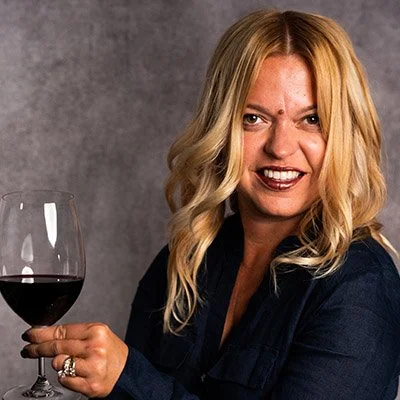
Rhonda Motil, Vice President of Marketing at J. Lohr Vineyards & Wines, leads the family-owned winery’s industry-admired in-house marketing program, while also managing key communications, design, and digital media initiatives. Prior to joining J. Lohr in 2013, Rhonda served as the Executive Director of the Monterey County Vintners & Growers Association for ten years. Before entering the wine industry, she was in senior marketing roles in the technology industry. Rhonda started her career with the Department of Defense.
Rhonda has recently been recognized as a 2024 Silicon Valley Top 100 Women of Influence, a 2023 Bay Area Woman of Impact and led the marketing efforts behind the Best Marketing Campaign in Beverage & Alcohol for the #JLohrWomen initiative.