

How Polystyrene Recycling Is Winning The Circular Economy Debate With Justin Riney
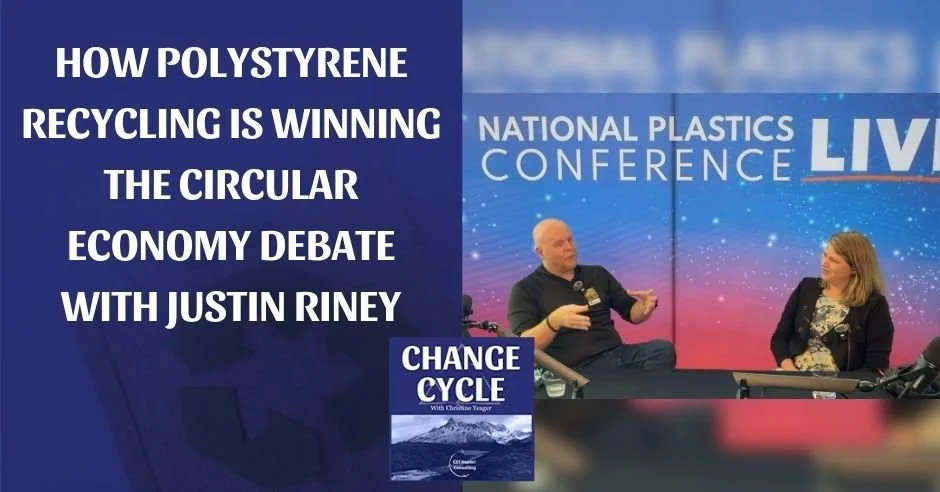
Polystyrene often faces immense public scrutiny, but expanding polystyrene recycling requires building robust infrastructure rather than relying on empty slogans. In this episode, host Christine Yeager sits down with Justin Riney, Commercial Sustainability Manager for the Americas at INEOS Styrolution and Chair of the Polystyrene Recycling Alliance, to discuss what it truly takes to shift perception and drive material circularity. Together, they dive into the realities of extended producer responsibility (EPR), the power of narrative-driven industry change, and how collaboration successfully removed expanded polystyrene from problematic plastic lists.
---
Watch the episode here
Listen to the podcast here
How Polystyrene Recycling Is Winning The Circular Economy Debate With Justin Riney
Re-Evaluating The Polystyrene Recycling Landscape
Polystyrene has a lot of baggage when you talk about recycling it and using it. It's hard material to make the case for in this whole circular economy conversation. Justin Riney’s job is to make that case with infrastructure, not slogans. As Commercial Sustainability Manager for the Americas at INEOS Styrolution, he drives the company's eco portfolio of recycled and renewable drop-in alternatives to virgin material.
He's also chair and a founding member of the Polystyrene Recycling Alliance, which is working to expand access to polystyrene recycling across North America. That puts him on the controversial edge of EPR. Once a material is labeled a problem, it bans these schedules and brand decisions often move faster than the recycling system can catch up. Justin and the Polystyrene Recycling Alliance have been pushing for a rebrand of polystyrene and plastics, in general.
In fact, polystyrene has been taken off of the US Plastics Packs list of problematic plastics because of its recycling rate. The Polystyrene Recycling Alliance drove that. Justin and I have a conversation about what it would take to change the perception of plastic and view of where plastic can be used. We also have a conversation about all of that.
He’s very honest and open about what it takes to change the minds of folks related to how they perceive plastic He is doing that and a large way through his podcast, Redefining Plastics, where he talks with multiple people about how we can rethink, what the benefits are of plastic and the confines of all of the challenges, the material faces. I hope you enjoy the conversation.
---
I start all my interviews with, how do you live with intention?
That’s an interesting one. I don't think I’ve ever been asked that question. Everything in my life is intentional. I've been told that I was a 80-year-old man by the time I was like twelve because I was very serious about everything. I get so laser focused on what I care about that that's all I do. Until I'm done with whatever it is that I've set my mind to, I can't stop thinking about it.
The easy answer to that is, I need to live with a little less, a fair attitude probably. There's a level of burnout that's going to come from the way I operate. I think it's what makes me get what I do because every single day I wake up and I think, “What do I need to do?” I need to make sure I get this done, this done, and have this conversation. I need to prepare for something that happens next week. I've got a plan for everything.
Except for your show.
Exactly, which is why I do it that way. I do it that way because if I plan that in the same way that I plan everything else in my life, the conversation would be all about what I want to talk about and not about what you want to talk about or whoever I'm interviewing. People listen to this show or any show to listen to the guests. At first, when I put it together the way I wanted to, people say, “You should let your guests talk a little bit more.” Ever since then, I've decided to do a little more hands off. I don't know if I even answered your question or if I just rambled.
At a certain point in my career, especially during COVID, I have intentionally muted myself to let other people talk.
Smart. I work from home, so I don't get a lot of human interaction outside of Zoom calls or Teams or whatever this. When I do get an opportunity to talk to somebody, I talk. There are times when I have to tell myself, “Not everything you think is worth saying.” I'm very intentional in that way. I had a boss once that was like, “We know you're intelligent. We know what you're talking about. You don't have to tell everybody all the time. There are times when you can just shut up.” I take that to heart, so I intentionally don't talk sometimes, which I think it's better.
Driving Commercial Sustainability And Advocacy
Tell us about your show but then also what you do at INEOS.
EPR when done well is a phenomenal thing.
The show is Redefining Plastics. You can find that anywhere, especially on YouTube. I do videos for that. That's where most of the people that pay attention to the show are around, but anywhere you find a podcast, you'll find it. It's all about recycling and talking honestly about the industry issues that we have but then not shying away from the fact that we are a great industry with great people. We shouldn't be afraid to talk about that.
That is 90% of what I do. In INEOS Styrolution, I am the commercial sustainability manager, which is a fancy way of saying, “I'm around to try to sell more recycled content material,” which I'm a huge believer in. Not just for cycle content, but a bio-circular alternative to our virgin materials. It’s all very important. About 50% of my role as advocates. I spend a lot of time doing what we're doing together, which is dealing with State's regulators, CAA, and trying to make sure that our materials are treated fairly when you compare it to other plastics or even non-plastic.
What we're doing together is we're looking at organ fees and EPR, because we founded PSRA, which we'll talk about in a second. It stands for Polystyrene Recycling Alliance. We started that organization about eighteen months ago. We found that the fees were inconvenient with the actual track record of our materials. It's because we found that the ways in which our material is recycled is not typical. It's not the traditional, you put it on the curb and then that goes to a Murph. That's where a lot of the data collection is happening when it goes to a Murph.
We had to come together as an industry to provide the data to Oregon. You know more about this than we do, so we have hired you because you're smarter at this than we are. Now, we are working together to work with DEQ in Oregon, the Department of Environmental Quality. I use a lot of acronyms that I might have to explain.
I do. I explain a lot of acronyms on the show.
CAA.
They've heard those too a couple times.
The PRO which is the Producer Responsibility Organization. We're doing a lot of good work there. I'm very pleased with how that's going. We brought you out to this conference because I was going to be on a panel. I wasn't smart enough to do it on my own, so I recommended, “Christine can do this. Let’s bring her out. She knows way more about this than I do.” We talked about eco modulation. Do you want to explain that one too?
We have a good story. If we do this the right way, we'll be successful. There's some hope involved in that, too. It's not just fear.
I have a whole episode about these and eco modulation.
That's what I do in a nutshell. I'm the chair of the Polystyrene Recycling Alliance. We’re a small organization. Typically, in an organization, you would have an actual professional leader, an executive director or something like that, but we're very small. Our chair is a defective executive director because we don't have anybody that's a full-time employee.
Did you convince the Plastic Association to add the Polystyrene Recycling Alliance?
Convince is probably a strong word. Patrick Krieger, who's the sustainability and advocacy guy, who is great and then Matt Seaholm who's their CEO, were on board from the very beginning. It wasn't convincing. It was more of, “How would this work?” We're a self-funded group within the Plastics Industry Association, which means we have the same protection from a legal perspective, anti-trust and all of that stuff, to make sure we're above board legally. What they do is they provide us with a lot of support from banking to administration. We fit right in with what they want to do which is recyclable more material. That's the only reason the Polystyrene Recycling Alliance exists.
We're trying to recycle rigid polystyrene. Think of your red party cups or yogurt cups or expanded polystyrene. If you buy an appliance, people will call it styro foam and it will make everyone in this industry cringe when you call it styro foam because that's not what it's called. It's expanded polystyrene. Those are the two things that we've got and we're trying to make sure that we can recycle more because we believe in that. We know that we've got to do some more work to let people know that we are recycling. It is recyclable, but we want to do more and that is the whole goal of the organization.
Overcoming Misconceptions In Plastics Packaging
As a part of this alliance, you got the plastic packed to change their stance on as a problematic plastic.
Expanded polystyrene transport packaging. The first time ever they took anything off the list.
Walk me through. What did you bring to change their mind?
It's a long story. INEOS Styrolution is an activator, which in other groups that would be called a member of the US plastic. We've been there since the very beginning where one of two polymer producers was a member. We do it very intentionally because polystyrene is always on the list for removal. We wanted to make sure that we are at the table having conversations and be able to advocate, which was a great decision. It's something that should be highlighted. That even before my time there, somebody made the decision rightly so that we should do this.
Polystyrene Recycling: If you can't tell that story, you're not going to be able to make any change anywhere. We're all self-interested creatures. You've got to be able to tell why you want to do what you want to do and how it's going to help you.
I've been very pleased with that. We struggled for about the first two years that I was with the company to get any dialogue with the plastic spec. I'll say that publicly. I'm not worried about that. Leadership changed there and a guy named Jonathan Quinn came in who I'd known for a while from the industry. He opened the dialogue and he allowed us to have conversations about the material. He let us know what we would need to do if we wanted to get any of our materials off the list.
His primary point to me was, “You need a narrative. You guys have the data. You need to put a narrative together to show what's been collected here, how it's being recycled, the end market and how it all works together.” That was the thing that we had never had in the past. We kept throwing data at him. It's safe. It's recycled. It fell on deaf ears because we weren’t answering the question that they wanted answers.
That conversation set us up for about an eighteen-month effort to put together a business case on behalf of expanded polystyrene transport packaging and rigid polystyrene food packaging, which is still under review. The reason why we came off the list is when you look at expanded polystyrene transport packaging, it has over 30% recycle rate nationally. When you look at the criteria on the problematic list, if you're above 30%, you're automatically taking off this. We validated the data that EPS Industry Alliance put together.
They've done excellent work on that and we collaborate with them quite a bit. They specifically focus on transport packaging. The data that we were able to provide along with the narrative made it so the Plastics Pact made a brand-new process to remove materials from the list because they didn't anticipate this. They never thought that they would have to take something off the list. They thought they would be adding things to the list. To their credit, they've been really good to work with.
The new Executive Director, Crystal Bayliss, we had run into each other when she was a brand previously. She has been great to work with. Jonathan Quinn to start and then Crystal Bayliss now. She's been a true collaborator and partner in this because she sees that we truly believe in this. We want to not only highlight the fact that we're 30% recycle rate for this, but we wanted to be 40%, 50%, 60%, 70%, 80%, or whatever we can get to.
It's not just PR's. This is what we believe. This is why we're here. This is why we exist. It was a whole lot of partnership and working together. Collaboration is my number one word over the years. None of this would have happened if we didn't have every single one of the members and all the different groups working together. It's been a wild ride. We didn't make a bunch of noise about it because we don't want to gloat.
We’re not trying to say, “Look what we did.” What we're saying is, “Look at what the industry has done.” The EPS industry as a whole came together years ago because they knew that they needed to recycle their products. They have actively invested and made it. It is being recycled. That is who deserves credit. Not necessarily us. All we did was put the story together. They did the work. That's why we're not all off.
We need to convince consumers because that will convince elected officials who answer to the consumers.
It's true that the story is important because you know people understand. It's one of the key elements of driving change. It’s making sure. As you said, as you backed up this data and action, telling a compelling story is what puts your house in crucial.
The Power Of Storytelling In Change Management
We like to talk about change. Every time I've been successful in driving any change, anytime anywhere, it is not numbers. It is not figures. It is not saving. It is not new revenue. It is a story that drives it every single time. I can consistently say that if I wasn't a good storyteller, I would not be as good a change manager or driver that I am because I sucked at it when I first started this. I was a brash young kid that thought he was smart.
I would walk into a room and say, “Here's the answer.” I would be frustrated because people didn't want to go the direction I wanted to go. I said, “Look at all this data. Why would you not agree with this?” I never sat down and said, “What does that person need to be convinced of this?” It wasn't that. It was like, “I'm convincing myself, so obviously you should be able to see what I see,” then it became, “I need to talk to this person about how it's going to make their lifestyle, or how is it going to make the organization better or what fringe benefit are we all going to get.”
If you can't tell that story, you're not going to be able to make any change anywhere because we're all self-interested creatures. A lot of it is to protect our sanity. If everybody's trying to change stuff up all the time, that's stressful for people. You gotta be able to tell, “This is why I want to do what I want to do and here's how it's going to help you. Here's how it's going to help the industry.” We're talking polystyrene. You got to be a good storyteller in my opinion.
What change do you think that the industry is going to see or is seeing that you feel like a sucker punch or keeping up at night?
EPR is an extended producer responsibility. It’s difficult. You and I are in agreement that ETR is a good thing. EPR when done well is a phenomenal thing. I want to make it very clear. The industry as a whole, so the Plastics Industry Association would say the same thing. “We want to recycle more of our material.” You think our materials are great but we still feel like we need to be doing more. We need to be better every single day.
The echo chamber is so real that it's nearly impossible to break through that to get into that person's algorithm to give them the other side of the story. The easiest way to keep humans engaged is pisses them off.
When EPR is built like that, Colorado, for example. That's a good bill, in my opinion. It's pretty balanced. It's all about how we invest more infrastructure to solve problems in Colorado. It's a very expansive State. There's a lot of distance between different population centers. How do you make that work? That's a great system. They're looking at it like, how do we solve that? You look at California, which is a fan bill. It's a plastic ban bill masquerading its EPR. It's in the title of the bill. It's like the Plastic Packaging Reduction Act. It's very clear what they're trying to do.
Dealing with that and trying to work through misinformation about our products and letting people know that we are recycled at a higher rate than they think they are but it's outside of where they can gather that data because it's not going through the Murph. It's a whole lot of conversations with those folks, but it does cause me a lot of stress because California drives national supply chains. If national supply chains think polystyrene is not going to be accepted in California, they're going to take it out of all of their packaging portfolio, which means people that I care about are going to lose jobs.
That stresses me out. There's a lot of pressure on me and the organization and the rest of the industry. There's a lot of us being able to tell our story in a positive way. They can consume it, which is why we work with you because you know how to speak that language better than we do. We know what we want to say, but we want to say it in a way that is acceptable to the group. That is making these decisions. It stresses me out a lot. Every single day, there are people's jobs writing on this and it sounds hyperbolic but I do feel that way.
I would say that I feel as though that is the vibe of the conference. There's a lot of people's jobs writing in the changing plastic industry. I don't think you're a lot.
We feel a little more cute because polystyrene in of itself has been singled out as a problem child when we know it's not. We know it's a great product, and it does things that nobody else can do. No other products can do it. It reduces carbon impact and we are recycling it. When you look at other plastic materials, they're not under the same amount of threat as we are.
Navigating Extended Producer Responsibility And Fear
It's a little more of an existential fear for me and for our industry than for polypropylene or polyethylene or PET. They're worried. I'm terrified. Let me put it that way, but we have a good story. If we do this the right way, we'll be successful. There's some hope involved in that, too. It's not just fear. There's a lot of hope there.
I'm not going to accept that getting rid of plastic is going to make anything better because it's not. We're going to cut down more trees because you can only use recycled content for so long.
You said you talked to policymakers a lot. Was there anything when you're trying to convince policymakers to open the door to always hiring a guy that generally will help for what happens?
It depends on the legislator, first and foremost. Certain legislators are into this stuff. Typically, the people that write the bills are the ones that know a little bit more about what's going on. That's a different conversation. You rank-and-file member. Your rank-and-file member is just a consumer. I'm just having a conversation like I would have with anybody on the street. It’s like, “Here's our material. Here's how we're recycling it. Here's what we want to do. Work with us and we'll recycle more.” It's that simple.
They don't understand product carbon footprint or life cycle analysis. I'm not going to have that conversation. If I was talking to DEQ, they do. I would have that conversation. CalRecycle typically understands that. What we need to do is convince consumers because if you convince consumers, that convinces elected officials because elected officials answer to the consumers. That’s the biggest thing that I'm trying to do. That's the most important part of this is. I want to make sure that they are just normal people. Your neighbor understands what we’re doing.
Consumers are constituents. I remember talking to someone a while back. He was talking to Colorado or California, different like California but legislators. We were talking about the carbon footprint of recycled PET versus virgin PET. No matter what factor they gave her, they talked about how to find the size of micro plastic.
Which is debunked. Don't get me started on that junk science.
It's like the turtle with the straw on their nose.
Also, that wasn't straw. I understand that it's a huge uphill battle because of these common misconceptions. If you go on TikTok, 90% of messaging about plastics is not going to be me and it's not going to be me talking about the positives of it. It's going to be somebody who knows where they're from reiterating some message that they heard because anti-plastic organizations are good at this. They're good TikTok and things like that. I don't even know how to log into TikTok. I'm not going to win at that.
We need to recycle more. Why? Do you want to be able to continue to sell your products? Do you want a job? That's a pretty easy sell.
I did have an Instagram for a while and I realized I didn't know what I was doing there. I just said, “I don't have time for this. I do it all by myself.” I don't have time for that. It's a real challenge to talk to people when they have preconceived notions, specifically with social media. It’s the bane of my existence for multiple reasons. I was talking to Patrick. If we agree on a lot of things, Patrick, you and I. I guarantee you if we pull up our Instagram feeds and put them right next to each other. We'll get completely different because I'm more interested in this and you're more interested in this. The same thing happens when you're an environmentalist who's anti-plastic, versus somebody who's in the plastic industry.
The plastic industry person is going to see all the positive messages because it's self-affirming. The echo chamber is so real that it's nearly impossible to break through that to get into that person's algorithm to give them the other side of the story because the system is in such a way that it wants to keep you engaged. The easiest way to keep humans engaged just pisses them off. Show them something else that's going to make them angry, like, “Look at this. These are terrible appliances, too.” I’m still trying to figure out how we get through to your neighbor, my neighbor, and consumers, because I'm not a marketer.
All I know is I have a good story and I would love to tell everybody that I come in contact with that's what I do. That's all I can do. Everybody in this industry needs to be doing the same thing. Plastics people need to step up and say, “We're tired of apologizing for making good materials that are misunderstood. We have great people that are trying to do great things. We have problems, but we're going to do everything we can to solve them.”
That coaching is very strong. Also, I don't think everybody gets asked a bunch of questions about their job in the way that I always have. Coca-Cola is a very emotional brand. Everyone one time was like a rugby game and this guy was like, “You work at Coca-Cola.” I was in South Africa and they would be like, “Coca-Cola,” so excited. Now, it's like recycling and everyone's talking about recycling.
Engaging Consumers And Breaking Echo Chambers
Is it real? Does it work? Is it just going to the landfill? I have to judge based on who's asking me what I do and how I answer the question. If I'm on a flight and I'm sitting next to somebody. It's probably a good chance I'm not going to answer the question because I just don't want to have this conversation for four hours while I'm flying. Typically, if it's somebody that I know and somebody I know I can communicate with. I'm more than happy to have any discussion about plastics and what I do.
I know that even in that conversation, you never know what the butterfly effect of that's going to be. That person can go talk to somebody who then knows the husband of the senator, which then becomes something real. I try to always do that unless I'm captive and I know I'm going to have to have a weird conversation for four hours, then I probably won't do it. That's the only time I will shy away.
Everybody has a solution, “If you would just do this.”
Why don't we just ban plastics?
Do this and then it will fix all your problems.
We ran out of paper real quick. Another interesting piece of information. Not to bash the paper industry because the paper industry is a good one. I used to work there. More than three times the amount of plastic, paper goes to a landfill. That's a huge number. Paper does a great job of recycling, but they still have work to do to get even better than what they are now. We all can be better. I’m not going to accept that getting rid of plastic is going to make anything better because it's not going to. We're going to cut down more trees because you can only use recycled content for so long. Fibers breakdown. What are you going to do? There's no silver bullet for any of this.
Core Advice For Driving Sustainable Change
That's true. If you were to give somebody advice who was leading and is comfortable with change, what would be the common to do?
Number one is to have empathy for whoever you talk to because change is hard for most people. I like change. I like new stuff. I like doing new things but I'm weird. I'm not typical, but most people are terrified of chance. You have to have a lot of patience and empathy for the people that you are trying to get to change. That's the easiest number one I can think of. Number two, you have to tell the story. You have to tell the story in which they see the benefit to them.
If they don't see the benefit to them, you're going to have certain people within an organization that are going to push back and make your life more difficult. They will attempt to make projects fail. I've seen that 100 times. I used to be in procurement and I would try to bring in new materials to save money for a company. It would fail qualification. It failed qualification because that person didn't want to make an adjustment on the machine and they purposely did. That stuff happens a lot because change is hard for people. You have to tell them how it's going to benefit them and why they should do this.
The third thing is to be open-minded and to have discussions with everyone. Listen to feedback. If you go to them and you tell the best story that you can, people are still going to have questions. People are still going to push back. Don't get defensive. Listen to what they have to say and you may learn something. You may learn a better way to do it in future.
Those three things for me have driven the most growth in leading change because that's what I do on a daily basis. I don't have any real authority to drive change. I've got to work with other people to get that to happen. You have to be good at those three things or you're never going to be successful. I'm sure I'm missing something but that's top of mind. That's what I would say.
Most sustainability needs some authority. They need to connect the collective.
We need to recycle more. Why? Do you want to be able to continue to sell your products? Do you want a job? That's a pretty easy sell.
Economic impact. Thank you. It's a great conversation.
Every time we talk it’s a great conversation. You make me feel smarter every single time we get together. You carry us on our panel, which is very appreciated. We do it in all seriousness. We appreciate the work that you're doing on our behalf to make sure that we get a fair hearing in these states with EPR and to change the narratives. It's very important to us and we're very thankful for you.
Thank you.
Thank you.
---
I hope you enjoyed that interview with Justin. We are at the Classics Industry Association Conference. If you've tuned in to the show for a while, I've only done one other live session at sustainable brands a few years ago. There's about 4 or 5 interviews that are going to be like this. I hope you like them. and
It was fun hearing from folks that are in an industry that is put under the microscope a lot. A lot of folks were trying to try recycling in the positive industry. I enjoy the conversation with Justin. Some of the few things that I feel like I want to reiterate from the conversation are something that I struggle with a lot, which is letting other people talk. Especially when you're trying to learn, when you’re trying to understand somebody else's perspective, especially if it's hard for you. Take a moment. Pause. Make a space for letting other people share their ideas especially if it's uncomfortable for you.
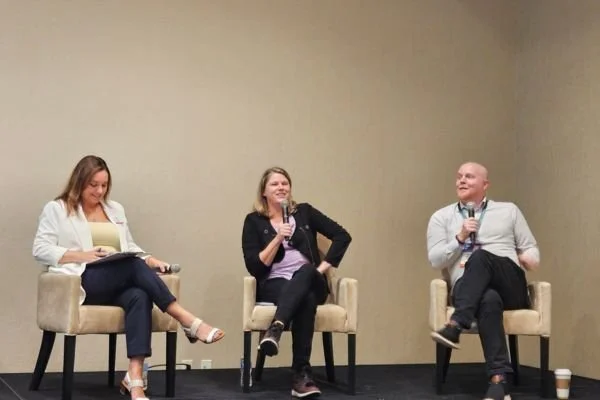
That was something that Justin and I had in common. That is a challenge but also a key element of him living intentionally. Something that wasn't overtly said and the conversation, but I felt the whole time I was at the conference alongside Justin. He mentioned it and passed as like to lift others up. He mentioned a couple of times the work that I'm doing with him but when I shared the stage with him at the conference, I think that he did a good job. He's only known me for a little time, and he saw a lot of specific kind words about the work that I was doing with him in a way that felt he was paying attention. It felt real.
It's a good reminder that when you're working with other people and you're trying to deliver that to folks, the power of lifting value up and making sure other people see it, can motivate someone. Another thing that we talked about that I think is worth reiterating is how important creating a narrative is. That the narrative becomes the thing that people were kept back. Not just the data. If you can get a stat in there into the narrative, that's helpful but the emotional aspect of what you're driving is so powerful that you have to weave that in.
They were able to use that to change the status of a problematic plastic, which as the organization didn't have a process to do that. Nobody thought that that was an option. Also, he mentioned a couple times how many jobs are written on these decisions. It's important to think about not just industry change, but thinking about the person that's impacted by the change that's happening and how important and powerful it is when you start to think about someone specifically that you may not know being impacted by the teacher trying to drive.
Meeting your audience where they are. Keep it simple, but then go into the details when they're able to handle that. At the end of the day, we can all do better. I love that idea. We're all working towards something and we can all do better. We're all improving. I hope you enjoyed the conversation and thank you for tuning in.
Important Links
About Justin Riney

Justin Riney is the Commercial Sustainability Manager, Americas at INEOS Styrolution, the number one producer of styrenics resins, an essential material used in industry sectors ranging from automotive and healthcare to electronics, construction, packaging, toys, and household appliances. He is also the current Chair of the Polystyrene Recycling Alliance, which is a group that looks to expand PS recycling in all its forms in North America.
He drives initiatives to expand recycling access and accelerate circular solutions through the company’s ECO product portfolio, made with renewable and recycled materials - offering drop-in alternatives to virgin styrenics. Justin also represents INEOS Styrolution as a founding member of the Polystyrene Recycling Alliance (PSRA), an industry-wide effort to increase access to polystyrene recycling in the U.S. He is a strong advocate for both mechanical and advanced recycling technologies, recognizing their essential role in scaling sustainable materials and achieving both INEOS Styrolution’s and the plastics industry’s sustainability goals.
Justin also produces his own podcast, Redefining Plastics, which focuses on changing the narrative around plastics. He meets with experts in the plastics industry and those who do the real work to expand the recycling of plastic products. The podcast is available on YouTube, or wherever you get your podcasts today.